Click here to get this post in PDF
Processes, support systems, and communication are often designed only for a specific customer size or type. A scalable customer experience (CX) is possible when systems are designed to accommodate a wide range of customer needs, enabling businesses to grow exponentially without sacrificing quality. Keep reading to learn how to build a customer experience that scales from hobbyists to enterprise-level businesses.
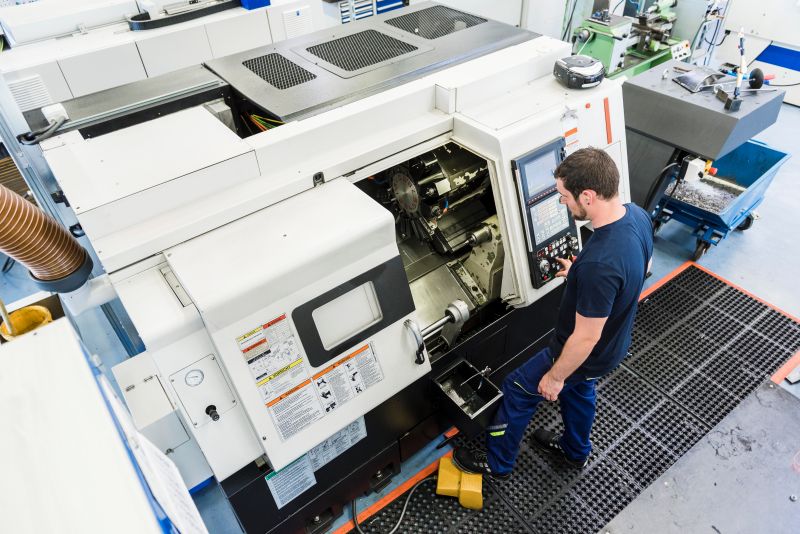
Tiered CX Systems
Persona-Driven Onboarding Systems
The first way to tier your customer experience is by creating distinct onboarding systems for each customer type. Overly complex systems for hobbyists and small businesses will hurt conversion rates, while larger businesses need a thorough onboarding process to feel properly taken care of.
For example, an industrial machine manufacturer’s woodworking line will appeal to hobbyist craftspeople who need project-based onboarding, while their fiber laser lines are reserved for technical buyers who need spec sheets and integration details upfront. Those hobbyist craftspeople will need a faster setup that minimizes the time and effort required to convert.
Large businesses, especially those as big as enterprise ones, will need a more elaborate onboarding process, including trial periods with dedicated salespeople who can customize the CX for their unique needs. The CX should remain singular while the onboarding system is customized to meet each customer or client’s needs.
CX Value Mapping
Customer experience should be mapped according to the value it brings customers, and every tier of a business must meet the needs of its specific customer base. For example, a CNC manufacturer may structure its offerings with an entry-level tier for hobbyist machines, a mid-tier focused on production CNC routers for small to mid-sized shops, and a top tier designed for large-scale industrial manufacturing systems. Each segment reflects distinct production requirements, levels of automation, and expectations for service, training, and ongoing technical support.
Hobbyists want buying processes with little friction or commitment, and they require less expensive products or services with less business support. Smaller to medium-sized businesses then need a tier of service that saves them time and involves a certain amount of reliability and integration work that hobbyists do not require.
Enterprise businesses require a high level of compliance, control, and service-level agreements (SLAs). Most importantly, they also need a dedicated human relationship that helps negotiate the needs of the enterprise with the provider business. Clear, segmented tiers ensure that the right kind of value and support is being given to each respective customer.
Scalable Technologies
Support System Stacks
To be fully scalable, a business needs to have the right support system stacks. Hobbyist buyers are naturally going to need the least amount of support, and they will rely mostly on external sources after purchase. They also may consult knowledge bases or instruction guides rather than needing to reach out to the business post-sale.
Small businesses will need more support, including dedicated chat and/or email support so that they can have pressing issues escalated and quickly solved. Medium-sized businesses might need a bit more support and even training sessions before they are ready to return to more minimal systems.
Enterprise businesses require a level of support tailored to their needs, which may include quarterly reviews and even a dedicated CSM. Enterprise businesses need a support system that further reinforces the idea of a human relationship between them and the provider. Bridge support systems can also be put in place (e.g., escalation paths, tiered SLAs) until enterprise support personnel are needed.
Trust and Compliance Infrastructure
To make your customer experience scalable at the enterprise level, a certain level of trust and compliance infrastructure must be established in advance. Hobbyist buyers and even smaller businesses will not need a high level of trust and compliance, but massive companies need login systems, security certifications, and other compliance-based features that suit their customers.
Enterprise procurement teams will often not even come to the table if a business does not have such infrastructure already in place. However, most enterprise-level trust and compliance infrastructure takes up to 18 months to build, so businesses should start that work early if they want to be fully scalable.
Cross-Context CX Consistency
One of the biggest challenges of CX scalability is that customer experience needs to remain functional and close to identical across various contexts. The surrounding scaffolding will be different and necessary for each customer size and type, but the base product or service needs to remain the same.
For instance, another manufacturer might offer only individual settings for hobbyist buyers, while businesses will need at least one team admin to handle their settings. Those same customer types will also pay for things differently, with the lowest tier likely paying a monthly, cancellable fee, while enterprise businesses require a proper invoicing system. Each new set of controls and administration should be invisible to the tiers that it does not apply to, but they are already built-in when needed.
Tiered Pricing Frameworks
Scalable CX also needs tiered pricing frameworks for each respective customer type. Some businesses implement free tiers that temporarily feature products and incentivize hobbyists to eventually upgrade. Other businesses skip the free tier and start with pro tiers that involve less friction or limits for a set fee.
Full businesses will naturally pay a higher tier to cover the costs of various admin controls and the collaboration needed to get the product set up. Common examples of this would be annual fees or basic contracts that involve everything included beyond the hobbyist pro tier. Enterprise pricing tends to revolve around customized contracts that involve dedicated support teams and other premium features.
Critical Insights
Customer experience needs to be scalable so that a wide range of customer sizes and types can be accommodated. Businesses can make their customer experience scalable by establishing tiered CX systems, creating cross-context CX consistency, embracing scalable technologies, and using tiered pricing frameworks.
Scalable features maintain the same level of product or service quality but with the conditions that each customer size requires. With the right multi-faceted CX model, a business should be able to support anyone from a hobbyist to an enterprise business.
About the Author

Jess Muehlfeld is the Marketing Supervisor at Laguna Tools, bringing a performance focused, content first approach to the woodworking, furniture, cabinet, sign, CNC routing, and metalworking spaces. She works closely with CNC experts, operators, technicians, and makers to help translate shop feedback into clear, practical content that supports real workflows. From hobby projects to high output manufacturing, Jess focuses on building trust and driving qualified demand, guided by a simple idea: built for makers, built for production.
Image source: elements.envato.com