Click here to get this post in PDF
The Role of Precision 5-Axis CNC in Tube Mill Equipment Manufacturing
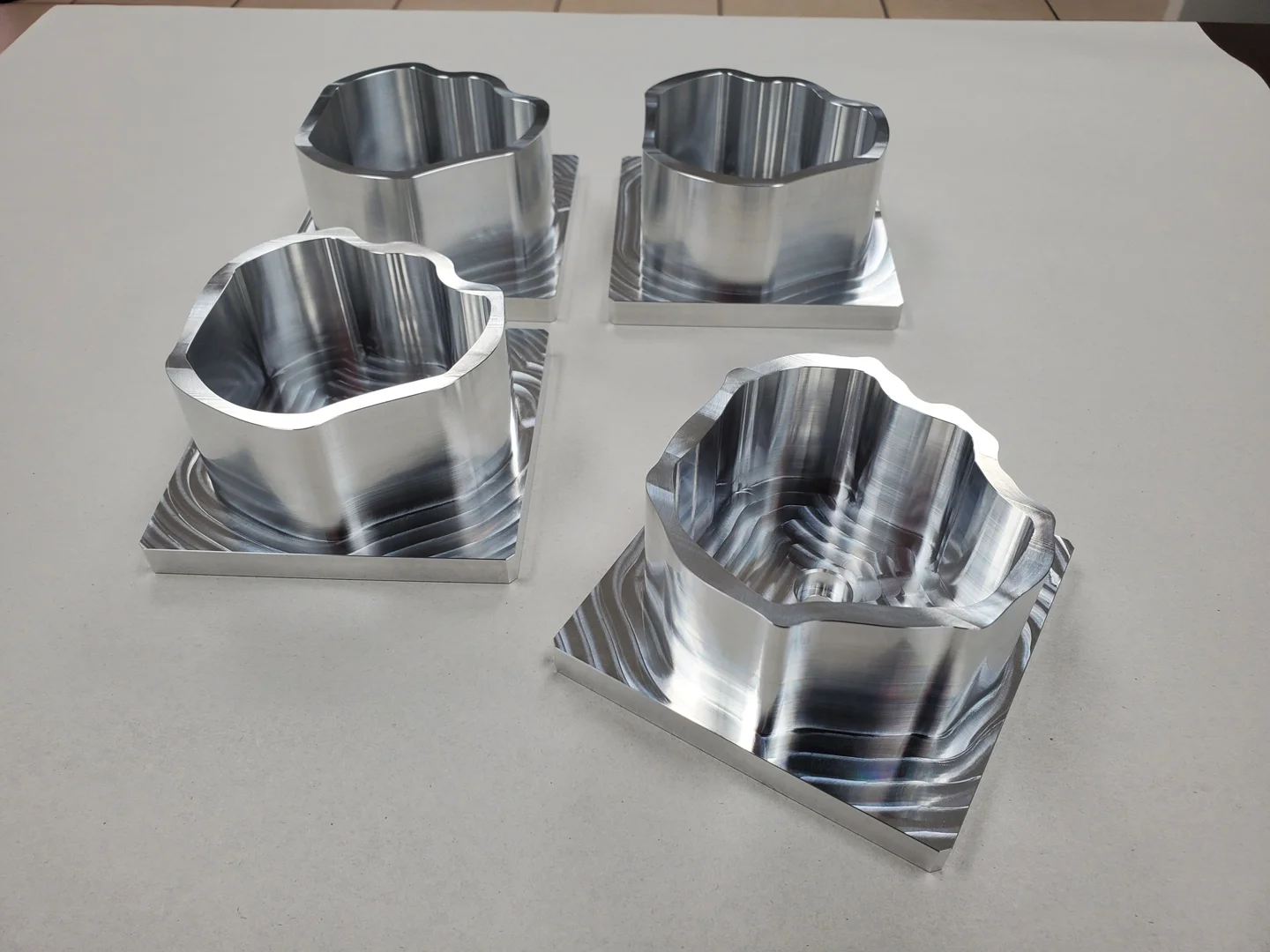
The manufacturing of tube mill equipment is a highly specialized field, demanding components that can withstand extreme conditions and operate with unwavering reliability. This is where precision 5-axis CNC machining plays a transformative role. Unlike traditional 3-axis or even 4-axis machining, 5-axis technology introduces two additional rotational axes (typically A and C, or B and C), allowing the cutting tool to approach a workpiece from virtually any angle in a single setup. This capability fundamentally alters how complex geometries are produced, offering unparalleled advantages for the creation of critical tube mill components.
In 3-axis machining, the tool moves along the X, Y, and Z linear axes, limiting its approach to a part. A 4-axis machine adds one rotational axis, often around the X-axis, enabling cylindrical or indexed machining. However, 5-axis machining elevates this by providing simultaneous movement along all five axes. This means a part can be machined from multiple sides, and even complex, contoured surfaces can be created without needing to re-fixture the part. For tube mill equipment, which often features intricate internal and external geometries, specialized wear parts, and custom tooling, this capability is invaluable.
The primary benefits of this advanced approach for tube mill equipment manufacturing include a significant reduction in setup times, enhanced accuracy, and the ability to produce highly complex parts that would be impossible or prohibitively expensive with less advanced methods. By completing multiple operations in a single setup, we can achieve tighter tolerances and superior surface finishes, which are crucial for the high-performance demands of tube production. For instance, creating specialized components like those found in custom tube mill equipment benefits immensely from the ability to machine intricate features without interruption. This not only streamlines the manufacturing process but also contributes directly to the longevity and efficiency of the final machinery.
How 5-Axis Milling Enhances Tube Mill Equipment Manufacturing Reliability
The reliability of tube mill equipment is directly tied to the precision and integrity of its individual components. 5-axis milling significantly contributes to this reliability through several key enhancements:
- Setup Time Reduction: One of the most impactful benefits is the drastic reduction in setup time. Research indicates that 5-axis CNC machining can cut setup time by up to 66% compared to 3-axis machining. For complex tube mill parts, which might otherwise require multiple setups and re-fixturing, this single-setup capability minimizes human error and significantly shortens lead times. Fewer setups mean less handling, which in turn reduces the risk of part damage or misalignment.
- Vibration Minimization: The ability to use shorter, more rigid cutting tools, combined with optimized toolpaths, inherently reduces tool vibration during machining. This is critical for achieving superior surface finishes and maintaining tight tolerances, especially when working with hard or exotic materials common in tube mill applications. Reduced vibration translates to less tool wear and a more consistent, higher-quality part.
- Superior Surface Finish: With continuous, simultaneous 5-axis motion, the tool can maintain an optimal cutting angle relative to the workpiece. This results in smoother surface finishes, often eliminating the need for secondary finishing operations. For components exposed to high friction or wear in a tube mill, a finer surface finish can dramatically improve performance and extend operational life.
- Optimized Toolpath and Error Elimination: Advanced CAD/CAM software, often integrated with 5-axis machines, allows for highly optimized toolpaths that consider tool geometry, material properties, and part complexity. This optimization minimizes material removal steps and ensures efficient, precise cutting. By machining a part in a single clamping, the cumulative errors that can arise from multiple setups and re-fixturing are virtually eliminated, leading to parts with exceptional geometric accuracy.
Advanced Materials Used in Modern Tube Mill Equipment Manufacturing
The demanding environment of tube production requires components made from materials that offer high strength, wear resistance, and durability. Precision 5-axis machining is adept at handling a wide array of these advanced materials, ensuring that tube mill equipment can perform reliably under strenuous conditions. Local machining providers often work with:
- Tool Steel: Known for its hardness and resistance to abrasion, tool steel is frequently used for cutting tools, dies, and other wear-intensive components within tube mills. Its ability to retain shape and strength at elevated temperatures is crucial.
- Stainless Steel: Offering excellent corrosion resistance and good mechanical properties, various grades of stainless steel are utilized for parts exposed to moisture, chemicals, or high temperatures, ensuring longevity and preventing degradation.
- Titanium Alloys: Valued for their exceptional strength-to-weight ratio and corrosion resistance, titanium alloys are increasingly used in high-performance or lightweight tube mill applications where material efficiency and durability are paramount.
- Aluminum: While lighter, specific aluminum alloys provide good strength and are often chosen for structural components or parts where weight reduction is beneficial, without compromising on performance.
- High Wear Resistance Alloys: Beyond these, specialized alloys like Inconel, Hastelloy, and Kovar are machined for extreme applications requiring resistance to heat, corrosion, and wear, ensuring the longest possible service life for critical tube mill components.
The versatility of 5-axis machining allows for the precise shaping of these challenging materials, unlocking new possibilities for performance and durability in tube mill equipment.
High-Precision Tooling and Wear Components in Tube Production
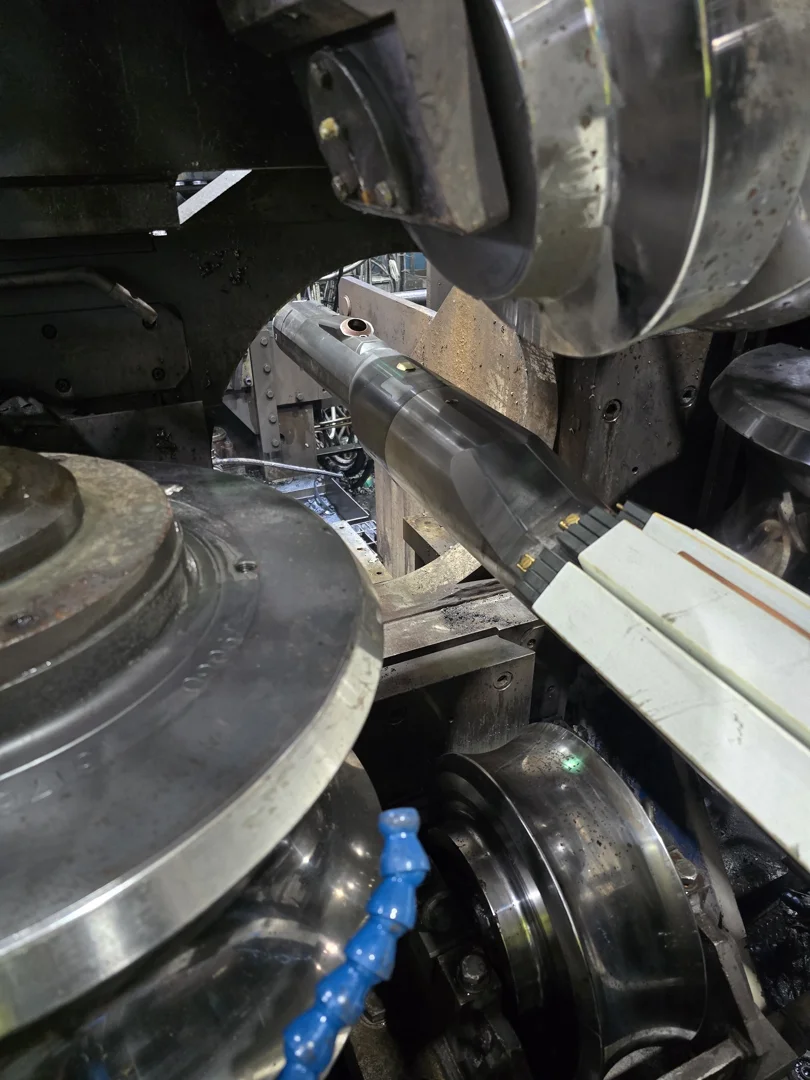
The heart of any high-performing tube mill lies in its precision tooling and wear components. These parts, often subjected to immense forces, high temperatures, and abrasive materials, must be manufactured to exacting standards to ensure the quality and efficiency of the tube production process. 5-axis CNC machining is indispensable in creating these specialized components, which include:
- ID Scarfing Systems: These critical components are responsible for removing the internal weld bead from tubes, ensuring a smooth interior surface. Their complex geometries and tight tolerances are perfectly suited for 5-axis machining, which can achieve the necessary precision for optimal performance.
- OD Bead Choppers: Similar to ID scarfing, OD bead choppers remove the external weld bead. The precise angles and cutting edges required for these tools demand the capabilities of multi-axis milling to ensure effective and consistent operation.
- Custom Roll Tooling: Tube mills rely on a series of precisely shaped rolls to form metal strips into tubes. These rolls, often with complex profiles, are manufactured with high accuracy using 5-axis machines to ensure seamless forming and minimal material stress.
- High-Speed Fixtures: Used to hold workpieces securely during machining or assembly, high-speed fixtures for tube mill applications must be robust and precisely manufactured to maintain stability and accuracy, even under rapid operations.
The ability to machine these components in a single setup not only enhances their accuracy but also reduces manufacturing time and cost, directly benefiting the overall efficiency of tube production.
Reverse Engineering Legacy Machinery Parts
Maintaining older or specialized tube mill equipment often presents a unique challenge: obtaining replacement parts for which original drawings or CAD models may no longer exist. This is where reverse engineering becomes a vital service, allowing for the faithful reproduction of legacy components.
Reverse engineering involves taking a physical part and meticulously measuring its dimensions, features, and material properties to create a new 3D CAD model. Local providers skilled in this area utilize advanced techniques, often employing software like SolidWorks, to reconstruct the part’s design digitally. This process includes:
- Physical Measurement: Using precise measurement tools, including CMMs (Coordinate Measuring Machines), to capture every critical dimension of the existing component.
- 3D CAD Modeling: Translating the physical measurements into a comprehensive 3D model, ensuring all geometric complexities are accurately represented.
- Material Analysis: Identifying the material composition of the original part to ensure the replacement is manufactured from an equivalent or improved material.
- First-Article Validation: Once manufactured, the first replacement part undergoes rigorous inspection to validate its accuracy against the original and the new CAD model, ensuring it meets all functional requirements.
This service is invaluable for facilities operating legacy tube mill machinery, enabling them to quickly and accurately produce replacement parts, minimize downtime, and extend the operational life of their equipment without needing original documentation.
Quality Assurance Standards and Precision Tolerances
In the realm of precision manufacturing for tube mill equipment, quality assurance is not merely a step in the process; it is an overarching philosophy. Achieving the tight tolerances and consistent quality demanded by this industry requires adherence to rigorous standards and sophisticated inspection methodologies.
Many leading precision machining providers operate under internationally recognized quality management systems, such as ISO 9001:2015 and AS9100. While ISO 9001 sets the benchmark for general quality management, AS9100 specifically addresses the stringent requirements of the aerospace industry, which often align with the high-stakes demands of critical industrial machinery like tube mills. These certifications ensure that processes are documented, controlled, and continuously improved, from initial design review to final inspection.
Key aspects of quality assurance in 5-axis machining for tube mill components include:
- In-Process Inspection: Integrating inspection systems directly into the CNC milling process allows for real-time quality control. This can involve touch probes on the machine itself to verify dimensions during machining, reducing the need for extensive post-machining inspection.
- CMM Inspection: After machining, critical components undergo thorough inspection using Coordinate Measuring Machines (CMMs). These highly accurate devices can measure complex geometries with micron-level precision, ensuring that parts meet all specified tolerances.
- Design for Manufacturability (DFM) Reviews: Collaborating with clients early in the design phase to optimize part geometry for CNC machining helps prevent potential manufacturing issues and ensures that designs are both functional and efficiently producible to high quality standards.
- Comprehensive Documentation: Maintaining detailed records of materials, processes, and inspection results provides full traceability for every component, which is essential for critical applications.
To illustrate the inherent advantages in precision and efficiency, consider a comparison of key metrics between 3-axis and 5-axis machining:
Feature 3-Axis Machining 5-Axis Machining Axes of Movement X, Y, Z (linear) X, Y, Z (linear) + A, C (rotary) Part Complexity Limited to simpler geometries, prismatic shapes Highly complex, organic, and intricate shapes, undercuts Setups Required Multiple setups for complex parts, increased handling Often single setup, significantly reducing errors and time Tool Access Limited tool angles, potential for collision Tool can approach from virtually any angle, avoiding collisions and improving finish Surface Finish Can require secondary finishing for complex areas Generally smoother, finer finishes due to shorter, optimized toolpaths Lead Time Longer for complex parts due to multiple setups Shorter due to single setup and faster processing Accuracy/Precision Good for simpler parts, compromises for complex Superior for complex parts, consistent high precision across all features Tool Length Often requires longer tools for deep pockets Can use shorter, more rigid tools, reducing vibration and improving finish.
Future Technological Trends in Machinery Fabrication
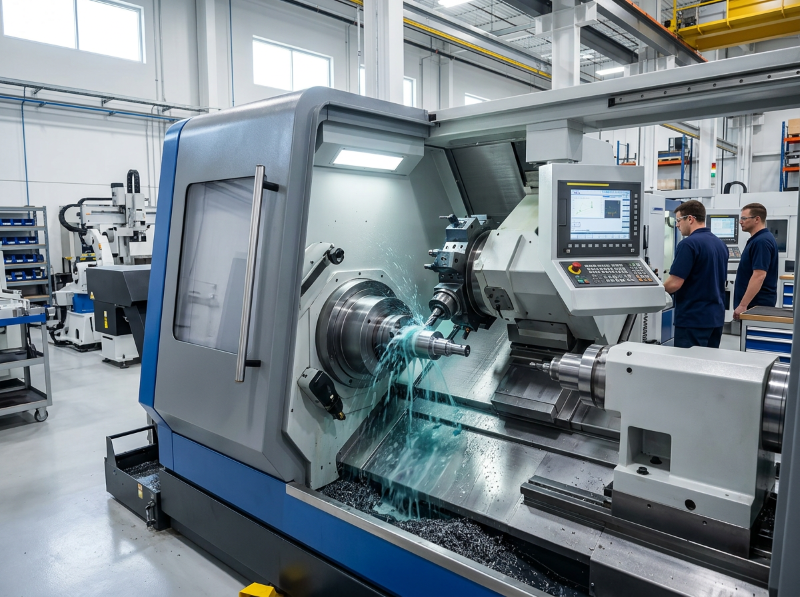
The landscape of precision manufacturing is continuously evolving, driven by innovations in automation, software, and machine capabilities. For tube mill equipment fabrication, these trends promise even greater efficiency, accuracy, and flexibility. We are seeing a significant shift towards more integrated and intelligent manufacturing processes.
One of the most prominent trends is the increasing integration of CAD/CAM software with CNC machines. This seamless connection allows for direct translation of design models into machine instructions, optimizing toolpaths and minimizing programming errors. Advanced software solutions, such as Siemens NX CAD/CAM, are at the forefront, offering sophisticated features like collision avoidance, adaptive milling strategies, and multi-axis simulation. These tools enable machinists to tackle even the most challenging geometries with confidence, ensuring optimal material removal and surface quality.
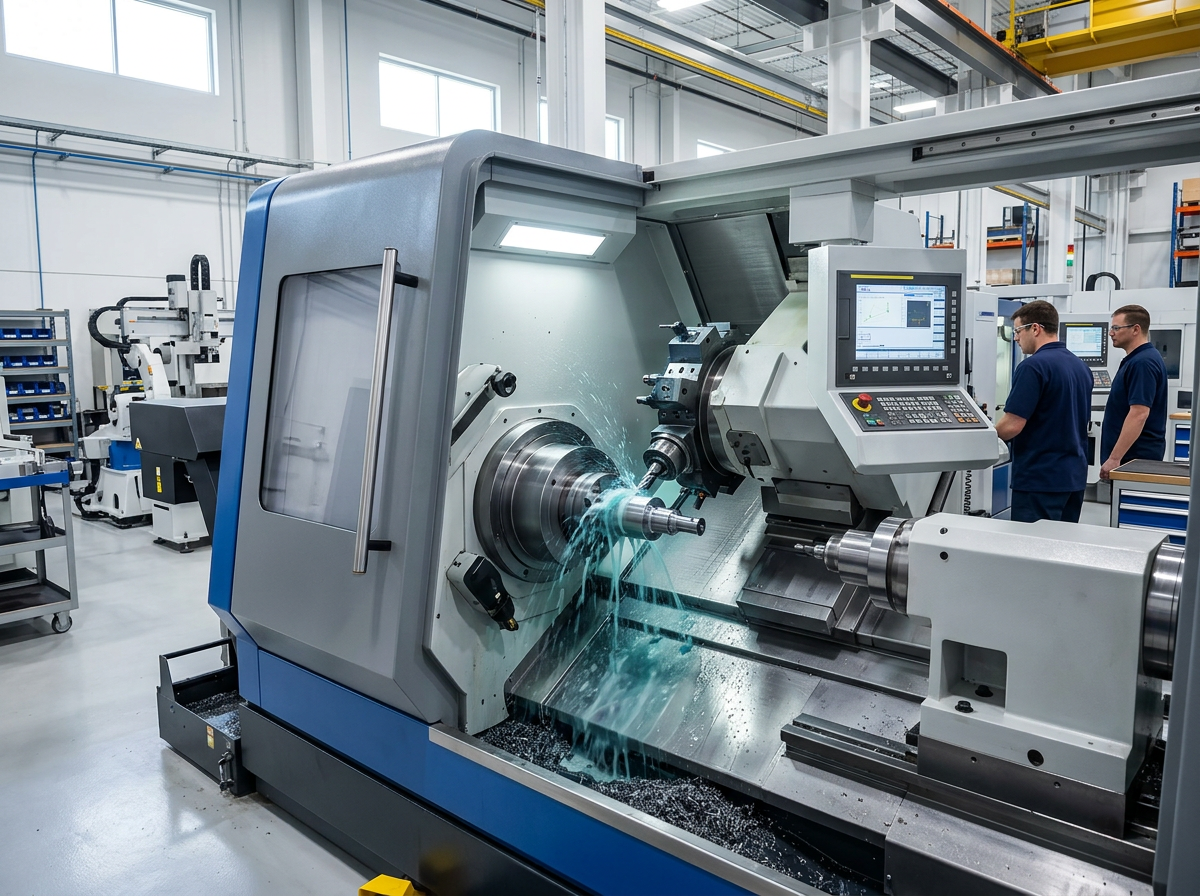
Another significant development is the rise of multi-axis turn/mill centers. These hybrid machines combine the capabilities of both milling and turning operations into a single platform. For complex tube mill components that require both rotational and prismatic features, these machines can consolidate multiple operations into a single setup. This not only reduces setup time and handling but also improves part accuracy by eliminating potential errors introduced during transfers between different machines. Equipped with live tooling and sub-spindles, these centers represent the pinnacle of machining efficiency.
Automation is also playing a pivotal role. While 5-axis machines already reduce human intervention through single-setup operations, the future involves more extensive automation. This includes automated loading and unloading systems, often utilizing robotics, to feed raw materials and retrieve finished parts. This enables lights-out manufacturing, where machines can operate autonomously for extended periods, significantly boosting productivity and reducing labor costs.
Here is a list of key automation trends shaping tube machinery production:
- Integrated CAD/CAM systems for seamless design-to-manufacturing workflows.
- Advanced simulation and collision detection software to optimize toolpaths and prevent errors.
- Multi-axis turn/mill centers that combine milling and turning operations in a single machine for comprehensive part production.
- Robotic automation for part loading, unloading, and inspection, reducing manual intervention and increasing throughput.
- Real-time monitoring and data analytics for predictive maintenance, process optimization, and quality control.
- Adaptive machining capabilities that adjust to material variations, tool wear, and environmental factors for consistent precision.
- Digital twin technology for virtual prototyping, process validation, and performance optimization before physical production.
These advancements are not just about speed; they are about achieving unprecedented levels of precision, consistency, and cost-effectiveness, ensuring that tube mill equipment continues to push the boundaries of industrial capability.
Frequently Asked Questions about Tube Mill Equipment Manufacturing
What is the main advantage of 5-axis machining for tube mill components?
The primary advantage of 5-axis machining for tube mill components is its ability to complete complex parts in a single setup. This means the cutting tool can approach the workpiece from virtually any angle, allowing for intricate geometries, undercuts, and complex angular cuts that would be impossible or require multiple setups on 3-axis or 4-axis machines. This single-setup capability drastically improves geometric accuracy, reduces setup time, minimizes handling, and shortens lead times, all of which are critical for the demanding nature of tube mill equipment.
What materials provide the longest service life for tube mill tooling?
For tube mill tooling, materials that offer exceptional hardness, wear resistance, and the ability to withstand high temperatures are crucial for long service life. Hardened tool steels are a common choice due to their durability and ability to maintain a sharp edge. Specialized cobalt alloys also provide superior wear resistance. Additionally, certain grades of stainless steel and titanium, selected for their specific mechanical properties and corrosion resistance, contribute to the longevity of components, especially those exposed to harsh operating conditions.
How does reverse engineering support legacy tube mill maintenance?
Reverse engineering is invaluable for maintaining legacy tube mill equipment by providing a solution for obsolete or undocumented parts. When original drawings or CAD models are unavailable, reverse engineering allows a physical part to be measured, scanned, and digitally reconstructed into a 3D CAD model using software like SolidWorks. This process enables the precise reproduction of critical components, ensuring dimensional accuracy and material compatibility. It significantly reduces downtime by allowing for rapid replacement production, extending the operational life of older machinery and ensuring continuous production.
Conclusion
The advancements in precision 5-axis CNC machining have profoundly impacted the manufacturing of tube mill equipment. From the initial design phase to the final production of complex components, this technology offers unparalleled accuracy, efficiency, and reliability. The ability to produce intricate geometries in a single setup, coupled with the capacity to machine a wide range of advanced materials, ensures that tube mill equipment can meet the rigorous demands of modern industrial applications.
As we look to the future, the ongoing integration of automation, sophisticated CAD/CAM software, and multi-axis turn/mill centers will continue to drive innovation in machinery fabrication. These technological trends promise even greater precision, faster production cycles, and enhanced overall performance for the tube manufacturing industry. By embracing these advancements, manufacturers can ensure their equipment remains at the forefront of efficiency and productivity, delivering tight-tolerance components that are built to last. The journey towards ever-greater precision is continuous, and 5-axis machining stands as a cornerstone of this progress.
You may also like:
All About CNC Machines You Need To Know