Click here to get this post in PDF
Usman Tariq, Founder and CEO of DentalAssist.ai, has released AI-Powered Patient Communication in Dental Practices, an e-book exploring how an AI Communication Layer can help dental offices capture patient requests, manage routine interactions, and involve staff when human assistance is needed.
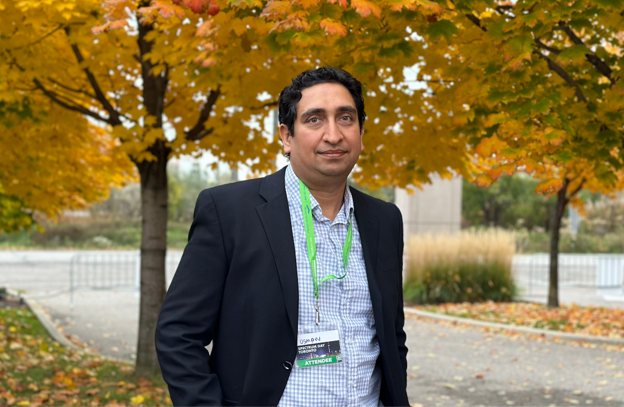
15 December 2024 – Missed patient calls are not always a sign that a dental practice needs more staff. Often, they reflect outdated front-desk workflows that require a small team to manage phone calls, greet patients, handle billing and coordinate care simultaneously. When these competing responsibilities leave calls unanswered, practices risk losing potential patients before a conversation even begins. In AI-Powered Patient Communication in Dental Practices, Usman Tariq, Founder and CEO of DentalAssist.ai, explores how an AI Communication Layer can help address this challenge by capturing patient requests, managing routine interactions and involving staff when human assistance is needed.
Tariq developed DentalAssist.ai after observing a recurring problem across dental practices: patients were calling clinics but could not always reach someone available to help them. Because unanswered calls may not appear in production reports, practices can struggle to understand the scale of these missed opportunities. Tariq estimates that many average-volume practices miss 80 to 100 calls per month, while high-volume practices may miss 300 to 400. These figures are the author’s estimates, not independently verified industry statistics.
The e-book places the emphasis on systems rather than individual performance. Front-desk teams often manage several responsibilities at once, making it difficult to maintain consistent communication throughout the day and after hours. Additional staff can ease the pressure, but staffing alone does not guarantee continuous availability.
Patient expectations have also evolved. As Tariq observes, the standard for responsive service is increasingly shaped by experiences outside healthcare, including banks that respond to messages within seconds and airlines that allow passengers to rebook flights without making a phone call. Dental practices face growing pressure to offer similarly accessible, timely and convenient communication.
The AI Communication Layer
The book’s central concept is the AI Communication Layer: a real-time system positioned between patients and a clinic’s existing workflows. Across phone calls, website chat and text messages, it identifies patient needs, provides routine assistance and resolves or routes requests according to the clinic’s approved policies.
When connected to scheduling systems and supported by appropriate practice management system (PMS) integrations, the AI can also facilitate appointment booking, confirm availability, support appointment requests and assist with recall outreach. The level of automation depends on the integrations available, the clinic’s approved workflows and the permissions granted to the system.
Tariq presents this approach as communication infrastructure rather than simply an upgraded voicemail service, phone tree or chatbot. The goal is to extend the front desk’s capacity, including during busy periods and after hours, while ensuring that complex, sensitive or clinical matters reach the appropriate staff members.
As the book explains, the significance of AI extends beyond answering calls: it can change how a dental practice manages communication and organizes its daily operations. The e-book therefore emphasizes maintaining a human fallback throughout the patient communication process, ensuring that patients can reach a staff member when a situation requires personal attention.
From Missed Call to Booked Patient
Missed-call recovery is one of the first workflows the e-book recommends addressing. Capturing a patient’s inquiry is an important first step, but the opportunity is only valuable when it leads to meaningful follow-up and, where appropriate, an appointment.
Depending on the practice’s technology and approved workflows, AI can help recover missed inquiries, follow up with prospective patients, check scheduling availability and book appointments directly through an integrated PMS. Where direct booking is unavailable or unsuitable, the system can capture the patient’s details and route the request to staff for completion.
The book stresses that every captured lead needs a clear owner and an expected response time. Without accountability, even an effective communication system can fail to convert patient interest into appointments.
Introducing It in Stages and Measuring Results
The e-book recommends a phased approach to implementation. Practices can begin by capturing and routing patient requests, then introduce automated responses to common questions before expanding into appointment booking and recall campaigns as confidence in the system grows.
Integration should follow the practice’s operational readiness rather than happen all at once. The depth of PMS connectivity, the level of booking automation and the scope of patient outreach should be determined by the system’s capabilities, security requirements and the clinic’s policies. Staff should also understand applicable consent requirements before the system goes live.
Measurement is equally important. The book recommends tracking answered interactions, captured patient opportunities, appointment requests, bookings influenced by AI, escalations to staff and average response time each month. Reviewing call transcripts and interaction records can help practices identify recurring issues and improve the system over time.
To estimate the potential financial impact of missed calls, the e-book offers a simple formula:
Recoverable opportunity = missed interactions × conversion potential × average appointment value.
The estimate should be compared with the system’s actual monthly cost. Figures used in the book’s worked example are illustrative assumptions, not industry benchmarks or measured outcomes.
Who It Is For
The e-book is intended for dentists, practice owners, office managers, dental service organizations (DSOs) and healthcare innovators seeking practical ways to improve patient communication.
Rather than presenting AI as a universal solution, the book encourages practices to identify the workflow where they are losing the most patient opportunities. For many clinics, this may be missed calls and after-hours inquiries. Establishing measurable value in an initial workflow can provide a foundation for expanding AI into other areas of practice operations.
About Usman Tariq
Usman Tariq is a technology entrepreneur and the Founder and CEO of DentalAssist.ai, an AI-powered communication platform for dental practices. His work combines software engineering and conversational AI to address practical communication challenges in dental offices.
Through AI-Powered Patient Communication in Dental Practices, Tariq examines how technology can support front-desk teams, improve responsiveness and help practices build more consistent patient communication workflows. The book reflects his view that many operational challenges in dental care extend beyond clinical services to the systems that connect patients with the people and care they need.
The e-book is also featured on a dedicated blog page on DentalAssist.ai, available at AI-Powered Patient Communication for Dental Practices, where readers can explore the resource and learn more about how AI is transforming patient communication and dental practice operations.
You may also like: The Benefits of Using WhatsApp Business API in the Healthcare Industry
Image source: Usman Tariq