Click here to get this post in PDF
Table of Contents
- What Happens in the First Few Minutes
- Why Medical Care Comes First
- How Crash Scene Evidence Is Collected
- Truck and Driver Details That May Matter
- Witnesses, Police Reports, and Video
- How Insurers and Claims Adjusters Respond
- Records a Trucking Company May Preserve
- Injuries and Financial Losses Under Review
- Common Mistakes After a Truck Crash
- A Simple Family Action Plan
- Frequently Asked Questions
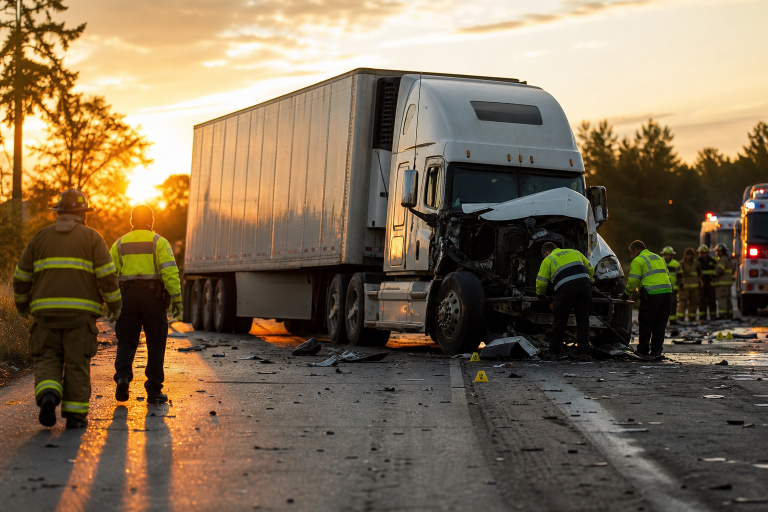
A collision involving a commercial truck can set several response systems in motion at once. Emergency responders focus on safety and injuries, while the trucking company, its insurer, and sometimes outside investigators begin gathering information about the event. People affected by the crash should focus first on their health and safety, not on trying to interpret every company representative’s role. Those dealing with related passenger-injury concerns may also find Motorcycle Passenger Injuries: Rights and Legal Claim Options useful when considering steps to take after a serious roadway collision.
Truck crash scenes can be more complex than ordinary vehicle crashes because they may involve a tractor, a trailer, a cargo owner, a broker, a maintenance provider, and multiple insurance policies. A carrier’s early actions do not determine fault on their own. They are often part of a process designed to protect people, secure equipment, meet reporting duties, and preserve information for insurance and safety reviews.
What Happens in the First Few Minutes
The first priority is preventing further harm. Drivers may call 911, activate hazard lights, move to a safe location when possible, and follow directions from police, firefighters, and medical personnel. If fuel, damaged cargo, smoke, or fast-moving traffic creates danger, the scene may be blocked off quickly.
At roughly the same time, a truck driver may contact dispatch or a safety manager. The carrier may arrange towing, cargo recovery, replacement equipment, and communication with its insurer. Serious crashes can also lead to a response from a company safety representative, an insurer’s adjuster, or an accident reconstruction professional.
Why Medical Care Comes First
Medical needs should never be delayed to collect photographs or speak with insurance representatives. Adrenaline can mask injuries, and symptoms such as headaches, dizziness, neck pain, abdominal pain, numbness, confusion, or anxiety may appear or worsen later. Prompt evaluation can protect health and create a clearer record of symptoms and treatment.
How Crash Scene Evidence Is Collected
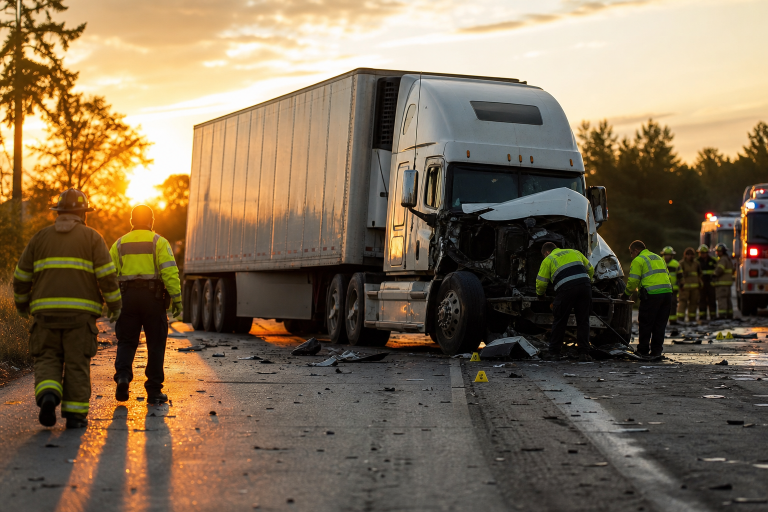
Once the area is secure, investigators may document vehicle positions, impact points, debris, roadway marks, traffic controls, weather, lighting, and visible damage. They may photograph the tractor and trailer, inspect tires and brakes, and note cargo conditions. Law enforcement may conduct its own investigation, which is separate from a carrier or insurer review.
Commercial carriers may need to maintain crash information in an accident register. Federal guidance on accident recordkeeping outlines details such as the crash date, location, driver, injuries or fatalities, and certain hazardous material releases that may be recorded.
Truck and Driver Details That May Matter
Identifying the correct businesses and vehicles is an important early step. Useful details can include:
- The driver’s name, commercial license information, and employer.
- The carrier name, USDOT number, unit number, and trailer number.
- License plate numbers for the tractor and trailer.
- The name of any cargo, leasing, or maintenance company shown on documents or equipment.
- The names and badge numbers of responding officers.
A truck may display one company name while operating under another company’s authority. That does not establish responsibility, but it can help identify parties connected to the truck’s operation.
Witnesses, Police Reports, and Video
Neutral witnesses can provide valuable observations about traffic movement, lane positions, signals, speed, or events immediately before impact. Nearby businesses, homes, dashcams, and traffic cameras may also hold recordings, although many systems overwrite footage quickly. Keeping original photos and videos, rather than edited copies, helps preserve context.
Police reports are important records, but they may be preliminary and may not contain all the facts. Post-crash information can come from emergency personnel, inspections, reconstruction work, and interviews. The Federal Motor Carrier Safety Administration describes how crash data is collected from state and local response procedures and other sources.
How Insurers and Claims Adjusters Respond
An insurer may assign an adjuster soon after receiving notice of a crash. The adjuster may review the report, inspect damaged vehicles, request photographs, assess property damage, speak with involved parties, and evaluate coverage. For severe incidents, the insurer may retain specialists to inspect equipment or analyze the collision.
Anyone contacted by an insurer should confirm the caller’s name, company, and role. It is reasonable to provide accurate basic facts, but guessing about fault, injuries, speed, or what another person did can create confusion. Keep notes of conversations, ask for settlement proposals in writing, and read releases carefully before signing them.
Records a Trucking Company May Preserve
Depending on the circumstances, relevant company materials may include driver logs, dispatch messages, inspection reports, maintenance records, repair invoices, training files, cargo documents, electronic logging data, and vehicle camera or telematics data. A carrier and insurer may preserve these materials for internal reviews, regulatory obligations, or anticipated claims.
People affected by the crash should also preserve their own records. A single paper or digital folder can hold medical bills, treatment instructions, photographs, repair estimates, towing receipts, missed-work records, insurer correspondence, and a daily journal of symptoms and limitations.
Injuries and Financial Losses Under Review
Truck crashes can create substantial physical, emotional, and financial consequences. Insurers commonly assess emergency care, follow-up treatment, rehabilitation, medication, vehicle damage, lost income, transportation costs, and the practical effects of an injury on daily life. Serious injuries may include fractures, spinal injuries, brain injuries, burns, internal injuries, and psychological trauma.
Common Mistakes After a Truck Crash
- Leaving before police or emergency responders say it is appropriate.
- Ignoring new or worsening medical symptoms.
- Deleting photos, videos, messages, or dashcam files.
- Repairing or disposing of a vehicle before documenting its condition.
- Providing a recorded statement without understanding its purpose.
- Posting crash details, injuries, or activities on social media.
- Assuming the driver is the only business connected to the crash.
A Simple Family Action Plan
Families can reduce stress by choosing one person to organize documents, track medical appointments, save receipts, and record important phone calls. They should also watch for changes in pain, sleep, mood, memory, or mobility. Before signing significant insurance or settlement documents, it may be wise to seek qualified advice about the available options.
Frequently Asked Questions
Why does a trucking company send someone to the crash scene?
The company may need help with safety, towing, cargo, equipment preservation, driver support, insurance reporting, and internal investigation. A rapid response does not by itself prove that the company believes its driver caused the crash.
Can the insurer inspect the damaged vehicle?
Often, yes. Insurers commonly inspect damaged vehicles before repairs or disposal. Vehicle owners should document the condition thoroughly and retain repair estimates, photographs, and records of any work performed.
What should a person do if an insurer offers a quick settlement?
Request the terms in writing and consider whether all injuries, treatment needs, property losses, and future expenses are known. A signed release can affect the ability to pursue additional payment later.
How long can the response and claim process take?
Timing varies based on injury severity, available evidence, insurance coverage, disputed facts, multiple parties, and the laws of the jurisdiction where the crash occurred. Careful documentation and prompt medical follow-up can make the evaluation process easier.
You may also like:
Why Getting in a Commercial Truck Accident Means You Need a Great Attorney
What Type of Insurance Do You Need As a Commercial Trucking Company?