Click here to get this post in PDF
The Evolution of Modern Lead Generation

In the dynamic digital landscape of June 2026, maximizing online visibility and consistently generating high-quality leads are paramount for business success. The sheer volume of data, the rapid evolution of consumer behavior, and the complexity of advertising platforms can overwhelm even the most seasoned marketing teams. This is where Artificial Intelligence (AI) emerges not just as a tool, but as a transformative force.
AI is fundamentally reshaping how businesses connect with their target audiences, analyze market trends, and optimize every aspect of their customer acquisition strategies. It moves beyond traditional methods, offering unprecedented levels of precision, personalization, and efficiency.
In this comprehensive guide, we will delve into AI marketing agencies. We’ll explore what these specialized entities do, the core services they provide, and how they leverage cutting-edge AI to enhance traditional marketing efforts. You will learn the significant benefits of partnering with an AI marketing agency, including how they drive superior outcomes for functions like AI marketing lead generation. We will also discuss how to choose the right agency for your needs, highlight key AI tools they utilize, and examine AI’s profound impact on the future of marketing and advertising.

The journey of lead generation has been one of continuous evolution, driven by technological advancements and shifting consumer expectations. From mass advertising to the rise of digital marketing, we’ve seen a constant push towards more targeted and efficient methods. In June 2026, this evolution has accelerated dramatically, largely due to the pervasive influence of AI. Marketing automation platforms, once cutting-edge, are now being supercharged with AI capabilities, fundamentally changing how teams approach productivity and customer engagement.
The core of this transformation lies in the ability to process vast amounts of data at speeds and scales impossible for humans. This data-driven approach allows for unprecedented levels of personalization and an intimate understanding of consumer behavior. We’re moving beyond simple demographic targeting to a nuanced appreciation of individual user intent and preferences, enabling marketers to connect with potential customers on a deeper, more relevant level.
Shifting from Demographics to Dynamic Personas
The traditional marketing playbook often relied on broad demographic segmentation – age, gender, location. While still relevant, this approach is increasingly insufficient in a world where individual preferences and real-time behaviors dictate purchasing decisions. AI, particularly through deep learning, has ushered in an era where we can move from static demographics to dynamic personas.
AI marketing agencies leverage advanced algorithms to analyze complex datasets, uncovering subtle patterns in user intent and behavior. This allows for the creation of highly granular audience segments that are not fixed but evolve in real-time based on new interactions and data points. For instance, a user’s recent search history, website visits, social media engagement, and even the sentiment of their online comments can all contribute to a dynamic profile. This continuous analysis enables real-time optimization of campaigns, ensuring that messages are always relevant and delivered at the most opportune moment. As one leading AI adtech firm aptly puts it, deep learning reveals the unexpected, allowing marketers to uncover valuable, often surprising, customer segments by connecting context and behavior beyond surface-level targeting.
The Cost of Inefficient Targeting and Bid Shading
While AI offers immense potential, the absence of proper expertise can lead to significant inefficiencies. In programmatic advertising, where automated bidding, targeting, and ad placements are commonplace, the stakes are particularly high. Without AI-driven precision, ad spend can be wasted on irrelevant audiences or suboptimal placements.
One critical issue that AI helps mitigate is “bid shading.” This practice, often opaque, can cost advertisers billions annually by artificially inflating bid prices in real-time bidding auctions. For instance, studies have shown that bid shading can cost programmatic advertisers as much as $6.6 billion each year. AI marketing agencies combat this by employing sophisticated machine learning models that optimize bidding strategies, ensuring clients pay the true market value for ad impressions and maximize their return on investment. These AI systems constantly analyze market conditions, competitor bids, and conversion signals to dynamically adjust bids, leading to more efficient ad spend and stronger lead generation.
Here’s a simplified comparison of how traditional versus AI-driven bidding strategies stack up:
Feature Traditional Bidding (Manual/Rule-Based) AI-Driven Automated Bidding Optimization Based on predefined rules & manual adjustments Real-time, dynamic, self-optimizing Data Analysis Limited, human-scale Vast, multi-dimensional, machine-scale Efficiency Prone to human error, slower adaptation High, continuous, reduces wasted spend Cost Control Requires constant monitoring, less precise Optimizes for specific KPIs (e.g., CPA, ROAS) Adaptability Slow to react to market changes Rapid, adapts to micro-trends instantly Conversion Signals Basic, often delayed Advanced, real-time, predictive Bid Shading Mitigation Limited Advanced algorithms detect and counter.
Integrating AI and Machine Learning into Customer Acquisition

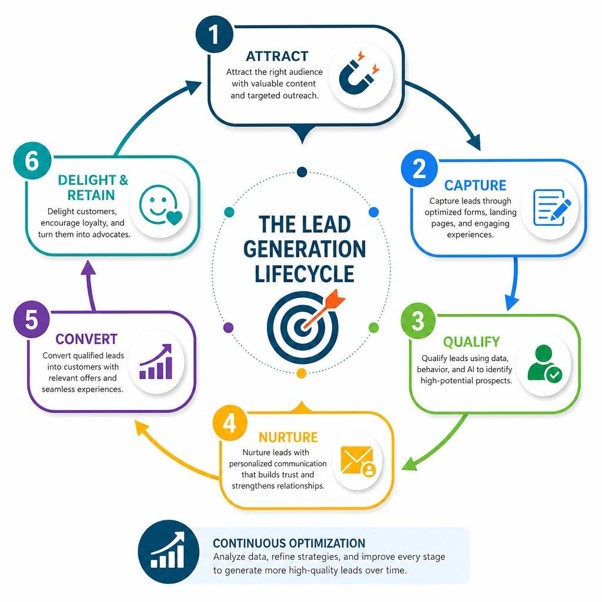
The true power of AI in lead generation lies in its seamless integration into every stage of the customer acquisition funnel. Machine learning algorithms can analyze vast quantities of data to identify high-potential leads, predict future customer behavior, and automate repetitive tasks, freeing up human marketers for more strategic initiatives. From initial contact to conversion, AI tools are transforming how businesses attract, engage, and nurture prospects. This includes everything from intelligent automation of email campaigns and social media management to sophisticated CRM integrations that provide a 360-degree view of the customer journey.
Leveraging AI for B2B Lead Generation
In the B2B landscape, the sales cycle is often longer and more complex, making efficient lead generation even more critical. AI marketing agencies specialize in engineering campaigns that deliver high-quality leads, focusing on pipeline growth and closed deals rather than just vanity metrics. They leverage AI to move beyond basic form fills and Marketing Qualified Leads (MQLs), connecting marketing efforts directly to bottom-line revenue.
For businesses seeking to optimize their B2B lead generation, AI offers a robust solution. Agencies employ AI-driven targeting, CRM scoring, and data-backed strategies to identify and engage the most promising prospects. This involves automating workflows, such as personalized email sequences and content delivery, and using lead scoring models that continuously learn and adapt to identify leads with the highest conversion probability. Our comprehensive guide to AI marketing lead generation delves deeper into how these strategies can be implemented to achieve significant growth and efficiency in B2B markets.
Predictive Analytics and Audience Segmentation
At the heart of effective AI-driven lead generation is predictive analytics. By analyzing historical data, AI models can forecast future trends and outcomes, allowing businesses to anticipate consumer needs and optimize their marketing strategies proactively. This capability is built upon strong data fidelity – ensuring the accuracy, consistency, and reliability of data across all platforms.
AI marketing agencies excel at collecting, cleaning, and structuring data to enable sophisticated pattern recognition. This allows them to map complex customer journeys, identifying key touchpoints and potential drop-off points. Through predictive modeling, they can then segment audiences with unprecedented precision, delivering hyper-personalized content and offers that resonate deeply with individual prospects. This not only improves conversion rates but also enhances the overall customer experience, building stronger brand loyalty.
Aligning Search Visibility with Conversion Funnels
Online visibility is the first step in any digital lead generation strategy. In 2026, simply appearing in search results is no longer enough; businesses must align their search presence with a seamless conversion funnel to capture and convert interested prospects. This requires a synergistic approach combining advanced search engine optimization (SEO), conversion rate optimization (CRO), and a deep understanding of user experience across all digital touchpoints. AI plays a crucial role in achieving this alignment, from optimizing content for search algorithms to personalizing the on-site experience.
Optimizing Content Strategy for Organic Lead Generation
Content remains king, but the way we create and optimize it has been revolutionized by AI. AI marketing agencies leverage sophisticated tools to analyze search intent, identify high-value keywords, and even assist in generating content outlines and drafts. However, the prevailing insight in June 2026 is that while AI can assist, human oversight is paramount. Studies indicate that while AI-generated content can be prevalent, high-quality, AI-assisted content with a “human in the loop” consistently outperforms fully unassisted AI content in terms of SEO performance and engagement.
Here are some best practices for optimizing content strategy for organic lead generation in 2026:
- Prioritize Search Intent: Use AI tools to deeply understand what users are truly looking for when they type a query.
- Human-in-the-Loop Content Creation: Leverage AI for research, outlining, and drafting, but ensure human writers refine, fact-check, and infuse unique insights and brand voice.
- Semantic SEO: Move beyond keyword stuffing to optimize for topics and entities, helping AI-driven search engines understand the depth and breadth of your content.
- Readability and Clarity: Employ AI-powered editing tools to ensure content is easy to understand and engaging for a broad audience.
- Continuous Optimization: Use AI analytics to monitor content performance, identify areas for improvement, and update content to maintain relevance and rankings.
Answer Engine Optimization and the Future of Search
The landscape of search is rapidly evolving beyond traditional keyword-based results pages. With the rise of large language models (LLMs) and generative AI, “answer engines” are becoming increasingly prominent, directly providing answers to user queries rather than just links. This shift necessitates a new approach: Answer Engine Optimization (AEO).
AI marketing agencies are at the forefront of this transformation, developing strategies for generative engine optimization (GEO) to ensure brand visibility and authority within these new search paradigms. This involves optimizing content not just for keywords, but for clarity, conciseness, and directness, making it easily digestible by AI models. Understanding and adapting to these changes is crucial for maintaining online visibility. For a deeper dive into navigating this new era, explore our AI Search Optimization Complete Guide and our comprehensive overview of Answer Engine Optimization AEO Geo LLM SEO.
Frequently Asked Questions about Lead Generation
As businesses increasingly integrate AI into their marketing strategies, several common questions arise regarding its application and impact on lead generation.
What is the role of AI in modern lead generation?
AI’s role in modern lead generation is multifaceted, primarily focusing on enhancing efficiency, personalization, and predictive capabilities. It enables businesses to:
- Predictive Modeling: Forecast which leads are most likely to convert based on historical data and behavioral patterns.
- Automated Targeting: Deliver highly relevant ads and content to specific audience segments in real-time.
- Efficiency Gains: Automate repetitive tasks like data analysis, lead scoring, and initial outreach, freeing up human teams for strategic engagement.
- Hyper-Personalization: Tailor marketing messages and customer journeys at an individual level, significantly increasing engagement and conversion rates.
How do offline conversions impact campaign optimization?
Offline conversions play a critical role in providing a complete picture of campaign performance and optimizing future efforts. Many significant conversions, especially in B2B or high-value consumer purchases, happen offline after initial digital touchpoints. By tracking these “down-funnel events” and integrating them back into digital campaign data, AI systems can:
- Improve CRM Scoring: Enrich lead scores with real-world conversion data, allowing for more accurate prioritization of prospects.
- Enhance Data Accuracy: Provide AI algorithms with more comprehensive data, leading to more intelligent optimization decisions for bidding and targeting.
- Optimize for Revenue: Shift campaign optimization from purely digital metrics (like clicks or form fills) to actual revenue generated, ensuring marketing spend is aligned with business goals.
Why is data fidelity critical for scaling acquisition?
Data fidelity refers to the accuracy, consistency, and completeness of your marketing data. It is absolutely critical for scaling acquisition efforts because:
- Accurate Attribution Modeling: Without high-fidelity data, it’s impossible to accurately attribute conversions to the correct marketing channels, leading to misinformed budget allocation.
- Effective Marketing Spend: Poor data leads to inefficient targeting and wasted ad spend. High-fidelity data allows AI algorithms to optimize campaigns for maximum ROI.
- Reliable Decision-Making: All AI-driven insights and strategic decisions are only as good as the data they’re based on. Clean, accurate data ensures that marketing leaders can make confident, impactful choices that drive scalable growth. Our Digital Marketing AI Guide 2025 offers more insights into the importance of data quality in AI-powered marketing.
Conclusion
In June 2026, the digital marketing landscape is defined by constant change and increasing complexity. Maximizing online visibility and generating high-quality leads demands more than traditional approaches; it requires strategic alignment, technological integration, and a forward-thinking mindset. AI marketing agencies are not merely service providers; they are essential partners in navigating this new era, offering the expertise and tools to transform marketing challenges into opportunities for sustainable growth.
By leveraging AI for dynamic personalization, predictive analytics, efficient automation, and advanced search optimization, businesses can achieve unprecedented levels of precision and performance. Partnering with an AI marketing agency ensures that your lead generation strategies are not just keeping pace with the market, but actively shaping its future. Embrace the power of AI to unlock new possibilities, drive measurable results, and secure your competitive edge.
To learn how AI can revolutionize your approach to search and optimize your presence in the evolving answer engine landscape, explore our comprehensive guide on Answer Engine Optimization.
You may also like:
The Evolution of Online Search: How AI is Transforming Information Retrieval