Click here to get this post in PDF
Key Takeaways
• Semi-truck accident claims in Colorado are governed by both state law and federal motor carrier regulations.
• FMCSA rules — especially hours-of-service limits — often supply the strongest evidence of fault.
• Black box (ECM/EDR) data can reconstruct speed, braking, and driver behavior, but it must be preserved fast.
• Truck crashes frequently involve multiple defendants: the driver, the carrier, maintenance contractors, and cargo loaders.
Introduction
Collisions with semi-trucks and 18-wheelers are among the most destructive on Colorado roads. The physics are unforgiving, and the aftermath brings serious injuries, major property damage, and an insurance fight that starts before the wreckage is cleared. Because these cases sit at the intersection of federal motor carrier law and Colorado tort law, injured people often turn to an 18 wheeler accident lawyer early — the evidence that decides these cases can disappear within weeks.
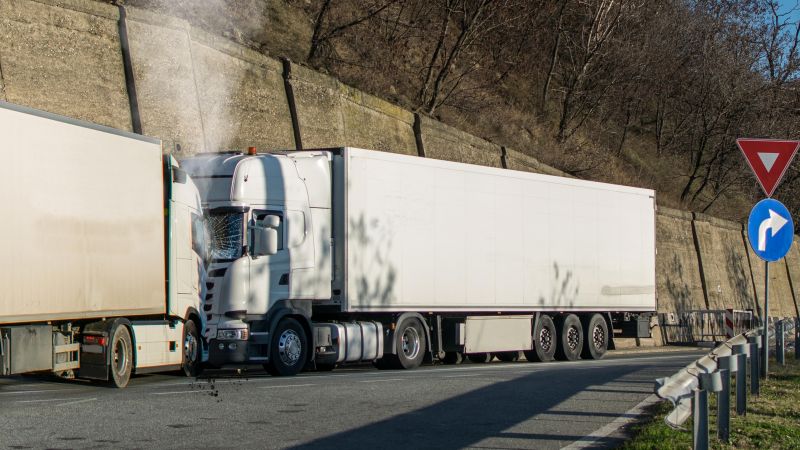
Trucking accidents differ from ordinary car crashes in kind, not just degree. Federal Motor Carrier Safety Administration (FMCSA) rules, electronic logging devices, and layered corporate responsibility create a web of liability that takes real investigative work to untangle. The claims strategy has to account for all of it from day one.
Colorado adds its own complications: mountain grades, sudden weather, and heavy cross-country freight traffic along I-70 and I-25 make serious truck crashes a recurring problem on the state’s highways. Victims need to move quickly to secure evidence after any collision with a commercial truck.
Timelines matter more in trucking cases than almost anywhere else in injury law. Carriers are permitted to destroy certain records in the ordinary course of business, and Colorado’s three-year deadline for motor-vehicle injury suits (C.R.S. § 13-80-101(1)(n)) is far longer than the practical window for locking down the proof.
Unique Challenges of Colorado Semi-Truck Accident Claims
Truck accident claims demand fluency in both state and federal trucking regulations. Colorado commercial vehicle crashes draw extensive investigation from law enforcement and, often, competing teams of private experts. Injured people face a difficult recovery made harder by aggressive insurance tactics, contested accident reconstruction, and multiple stakeholders each working to shift blame elsewhere.
Trucking companies and their insurers typically dispatch rapid-response teams — investigators and defense counsel — to the scene within hours of a serious crash. That head start puts injured parties at a disadvantage unless digital records, driver logs, and maintenance files are locked down promptly. The earlier a preservation demand goes out, the better the odds of holding the responsible parties accountable. Colorado’s modified comparative negligence rule (C.R.S. § 13-21-111) raises the stakes further: your recovery is reduced by your percentage of fault and eliminated entirely at 50% or more, which is exactly the argument carrier-side insurers push to shrink payouts.
FMCSA Regulations and Their Impact on Your Case
The FMCSA sets the operating rules for commercial trucking: hours-of-service limits that cap driving time and require rest breaks, cargo securement and weight standards, drug and alcohol testing, and mandatory vehicle inspection and maintenance programs. A violation is often the clearest available evidence of negligence. If a driver exceeded the hours-of-service limits, or a carrier’s electronic logging device (ELD) records were falsified or incomplete, those facts can substantially strengthen a claim — and in some cases expose the company, not just the driver, to liability.
Attorneys and courts lean on these federal standards when sorting out fault, and they are equally useful for uncovering systemic problems: skipped maintenance intervals, inadequate driver training, or pressure to run illegal schedules. Matching the crash facts against the applicable rules is foundational work in any trucking case. The full text of the safety regulations is published by the agency itself at the FMCSA’s federal trucking regulations portal.
The Role of Black Box Data in Truck Accident Investigations
Most commercial trucks carry “black box” systems — Electronic Control Modules (ECMs) and Event Data Recorders (EDRs) — that log speed, braking, throttle position, engine performance, and steering inputs around the time of a collision. Paired with ELD driving-hours data, this record can establish whether the truck was speeding, when (or whether) the brakes were applied, and whether fatigue was likely a factor.
The catch is that this data does not preserve itself. ECM data can be overwritten in normal operation, and a truck returned to service — or repaired, or salvaged — may lose it entirely. That is why attorneys send spoliation letters immediately after a crash: a written demand that the carrier preserve the black box data, driver logs, dispatch records, and the vehicle itself, on pain of court sanctions if the evidence disappears. Reconstruction experts then translate the raw data into a second-by-second account that often decides the negotiation.
Multiple Defendants: Who Could Be Liable?
Unlike a typical two-car collision, a trucking crash can implicate a chain of potentially responsible parties: the driver, the motor carrier, the trailer or vehicle owner, third-party maintenance shops, cargo loading contractors, freight brokers, and manufacturers of defective components.
Each of those parties carries separate insurance, and each has an incentive to point at the others — the carrier blames the brake shop, the driver blames a tire defect, the shipper blames the loader. A thorough claim identifies every defendant, issues preservation demands to each, and pursues them in parallel so no responsible party quietly exits the case. Federal crash data and safety research on large trucks, published by NHTSA and FMCSA, help put an individual collision in context and can support arguments about known, preventable risks.
Conclusion
Trucking accident claims in Colorado reward speed and preparation: federal regulations frame the negligence case, black box and ELD data prove it, and multiple defendants mean multiple insurance policies — and multiple opportunities for blame-shifting. Sending spoliation letters early, mastering the applicable FMCSA rules, and identifying every liable party are what separate fully compensated claims from discounted ones.
You may also like: 5 Common Forms of Driver Negligence That Lead to Truck Accidents
Image source: elements.envato.com