Click here to get this post in PDF
Errors, no matter how small, can’t exit an aerospace or medical job shop’s door. The liability picture is too costly and complicated to risk it. Fixturing, cutting tools, measuring instruments, and CNC machines all need to come together in a perfectly aligned system for the shop to machine these parts profitably, maintain paperwork control, and keep managers out of court. If the system cracks anywhere, parts don’t fit or fail in use, a shop’s size now comes more from liability than from sales, and no one wants that growth.
The certification layer you can’t skip
Before you cut your first qualified part, there’s a ton of work that must come first. The most onerous is probably implementing and maintaining a quality management system that’s already approved by your customer’s auditors. For aerospace, that’s AS9100. For medtech, it’s ISO 13485. You can’t just put off getting this over with and start making parts anyway because (a) they’re not one and the same, and (b) manufacturing is just one slice of the pie.
In both cases, your quality system (already implemented, remember?) includes a clause for material traceability. This means you should be able to retrieve an exhaustive list of documentation that records the receiving inspection, production, and every single part and process in the machining of a specific part as per a customer’s request. This isn’t easy. It gets even tougher if you have to track that part, lot or batch over more than one delivery of that component.
Back to our task at hand. AS9100, as you should have guessed, specifies the minimum content of your QMS. But where it gets more granular and demanding, specifically for flight safety, is in its finer clauses. For example, 7.5.3 on Customer Property, and 8.1 on Production Planning. That last one goes like this: “The organization shall establish and maintain documented information that defines the process to determine the production control methods and other requirements necessary to meet the required quality of the product, and the criteria for retaining this information.”
Reading and holding GD&T tolerances
Geometric Dimensioning and Tolerancing (GD&T) may sound like a techy skill to refine if you’re not an engineer, but it actually impacts production quality downstream of every part’s design. Most modern CAD/CAM programs will help you apply the proper standard GD&T to a design, but they require at least a little human taste to properly interpret the functional requirements of the design and then apply them geometrically.
Tightly toleranced parts in the technical sectors that require this level of manufacturing include orthopedic implants, jet engine nozzles, and silicone wafers for computer chips. GD&T is the language these drawings are written in, and it’s not optional to understand it deeply. A drawing that calls out a true position tolerance of ±0.001 inches on a bolt pattern is communicating something specific about how that feature is allowed to vary relative to the datum reference frame – not just a simple linear dimension. Getting that wrong in inspection means you’re either shipping bad parts or scrapping good ones.
In these sectors, tolerances as tight as ±0.0001 inches on critical features are common. That’s not a typo. At that level, thermal expansion in the part and the machine structure becomes a real variable. A shop running in an unconditioned building in summer will see dimensional drift between morning and afternoon that can push you out of tolerance. Climate-controlled machining and inspection environments aren’t luxuries at this level – they’re requirements.
A Coordinate Measuring Machine (CMM) is the verification tool that makes tight GD&T meaningful. Modern CMM setups with automated probing routines can validate complex features before a part is even un-clamped from the fixture. In-process probing on the machine tool itself lets you catch problems while there’s still stock to clean up, rather than discovering them at final inspection after you’ve already put 14 hours into a titanium block.
Sourcing the right equipment to compete in these sectors
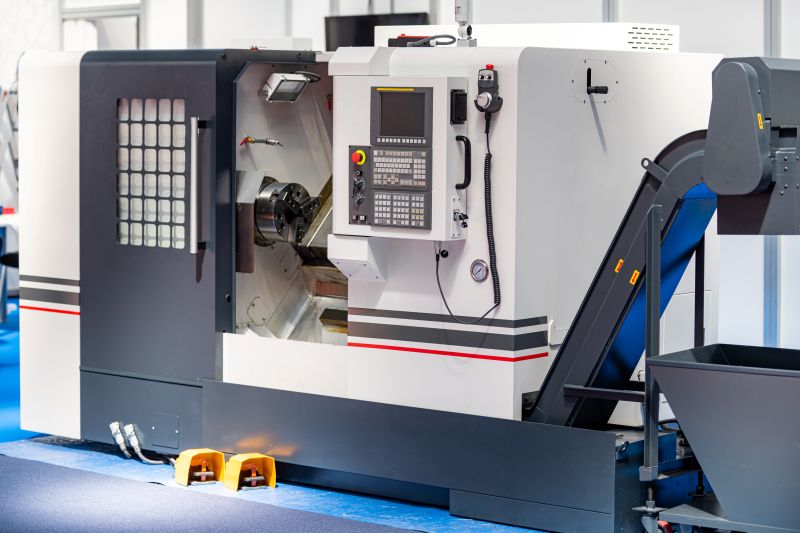
You can’t meet aerospace and medical tolerances on machinery that lacks the spindle stiffness, thermal stability, and control resolution these specifications demand. Shops entering these sectors often need to upgrade their equipment significantly, and the economics of that upgrade require careful thinking.
Brand-new multi-axis machining centers capable of holding ±0.0001 inches have lead times measured in months and price tags that reflect the current demand for precision equipment. A faster and often cost-effective path is sourcing certified, high-quality used CNC machines from reputable dealers like https://premierequipment.com/ when they need to add rigid 5-axis or Swiss-type capacity quickly, without waiting on factory lead times or paying new-machine premiums. The key is verifying spindle health, machine geometry, and control capability before purchase – the same diligence you’d apply to any capital equipment decision.
Real-time tool load monitoring is another capability worth investing in regardless of machine age. When you’re cutting Inconel or titanium from certified material billets that cost hundreds of dollars per pound, an unexpected tool breakage doesn’t just ruin the part – it may render a certified block of material unusable, destroying the traceability chain at the same time. Adaptive feed control systems that back off automatically when tool load spikes are available on most modern controls and are worth enabling.
Cutting exotic materials without destroying tooling
Titanium, Inconel, and PEEK all have unique machining challenges, and none of them like being machined the way you’d machine metals like aluminum or mild steel.
Ti-6Al-4V Grade 5 titanium is lightweight, strong, and biocompatible, which makes it a popular material for orthopedic implants, as well for aerospace structural components. Low cutting speeds cause the material to work harden, making it even harder to cut. And because the material is a poor thermal conductor, heat is generated at the tip of the tool instead of being whisked away through the part and chip. The solution to both problems is to keep your spindle turning as fast as you can. Use the sharpest tools you have. Send coolant right into the cut. And make sure your setup is as rigid and vibration-free as possible. Twangy titanium loves to sing, and you’re not making beautiful music. You’re just wearing out your tool and scoring the surface of the part.
Inconel is more difficult to work with compared to titanium, there’s no doubt about it. The nickel-chromium superalloy is famously tough on cutting tools, making its machining a similar exercise in managing heat and wear resistance to titanium just with a higher level of difficulty required in every area. Smaller sweet spots for speed and feed, more wear on tools despite those conservative parameters, and more aggressive abrasion on inserts. With some grades, you’ll also deal with work hardening resistance similar to hardened steel used in tooling.
Tool deflection involves and links these materials together. Under the cutting force, a cutting tool bends and deviates from the expected trajectory. The produced part is defective. For high-precision processing, even a small deflection is not allowed. To address this issue, the tool selection (choosing a shorter stickout, larger diameter when the geometry permits), the rigidity of the tool holder, and the spindle condition are considered. For example, even if it is usable on ordinary tasks, a worn spindle bearing poses a problem when you have a tolerance of ±0.0002 inches.
Why multi-axis machines matter for these geometries
The natural shape of an orthopedic implant – the contour of a hip stem or tibial tray – physically cannot be produced with the precision required to ensure proper functionality using a 3-axis machine. A 3-axis tool can’t reach the underside of a cutout or into a deep pocket without the tool shank colliding. That means multiple setups and fixture changes, which necessarily introduce positioning error. Enough of those errors stack up and you’re outside tolerance on the finished part.
5-axis machining simply allows the tool to approach the part from almost any angle in a single setup. The part stays located on the datum surfaces that your CMM program references, which means your measured geometry is the geometry you intended. For aerospace turbine blades with twisted airfoil profiles, 5-axis machining isn’t just easier than the alternatives – it’s the only viable approach to the problem.
Swiss-type lathes exploit the benefits of 5-axis machining for small-diameter components. Bone screws, dental implants, and catheter components share the typical requirements of being very small and extremely high-precision. The Swiss configuration – where the part is supported by a guide bushing & collet close to the cutting zone – eliminates the deflection that would otherwise make these parts impossible to produce in tolerance.
Surface finish requirements and how to meet them
A common surface roughness specification on medical implants that contact bone or soft tissue is within 4 microinches Ra, with lower values increasingly requested. Rough surfaces cause stress concentrations that can result in crack initiation under cyclic loading, and for medical applications, they lead to areas where bacteria can attach. Similar to medical devices, load-bearing aerospace components have fatigue concerns.
Hitting a surface roughness below 4 Ra doesn’t just happen by itself. Yes, the fine, finishing pass is critical, but so is optimizing the feed rate. The relationship between feed rate, tool nose radius, and the lowest theoretically possible surface roughness is no mystery, but getting there in practical terms demands the coordinated management of every variable in the cut. Micro-burr elimination is typically necessary after machining, facilitated through an abrasive slurry or by vibratory finishing, based on part geometry. Additional surface treatments are often required by the implant manufacturer, which must be either coordinated by the machine shop or done in-house.
The cost of getting it right – and getting it wrong
The global medical device contract manufacturing market was valued at USD 78.9 billion in 2022 and is projected to grow at a compound annual growth rate of 11.4% through 2030. Aerospace demand for precision-machined components shows a similar trajectory. These aren’t marginal markets, and the shops that build genuine capability in them command margins that general job shops can’t approach.
The catch is that the consequences of failure are proportionate to the rewards. A non-conforming aerospace part can trigger a full customer audit, suspension from the approved supplier list, and liability exposure. A compromised medical device moves into product recall and regulatory action territory. This is why the shops that succeed long-term in these industries treat quality systems as a genuine operational advantage rather than compliance overhead. The documentation, the traceability, the calibrated inspection equipment – these aren’t bureaucratic burdens. They’re the proof that you know what you’re doing, and they’re what keeps you on the approved supplier list when a customer’s quality engineer shows up unannounced.
Getting into aerospace and medical machining is genuinely hard. The technical requirements, the capital investment, and the administrative discipline required all create a barrier that filters out shops that aren’t serious. For the shops that clear that bar, it’s also genuinely sustainable work.
Also read: Decoding the Art of Selecting the Ideal CNC Press Brake Machine for Your Business
Image source: elements.envato.com