Click here to get this post in PDF
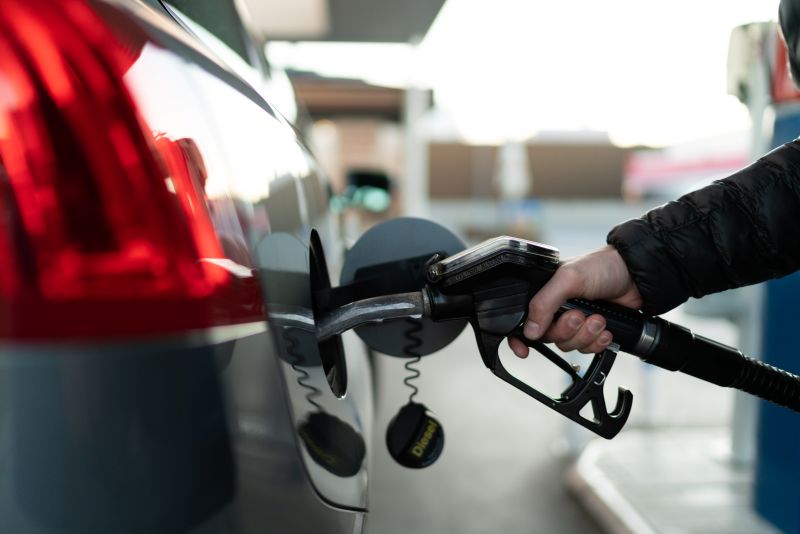
While an engine’s “appetite” can easily be checked via the onboard computer, its readings are not always reliable, and many older vehicles lack an onboard computer entirely.
The experienced mechanics at Autoland Jax have seen hundreds of pre-owned cars for sale in Jacksonville, and here are their tips for accurately calculating fuel consumption on any vehicle: estimate how often to refuel, plan long-distance routes with confidence, and avoid running out of gas in remote areas during a vacation trip.
How to Calculate a Car’s Fuel Consumption
Steadily rising fuel prices are one of the most pressing issues for Florida drivers. Consequently, many buyers prefer cars with high fuel economy in 2026. Their MPG ratings are impressive, but your car’s fuel economy during daily driving is another thing.
Without specialized equipment, it is impossible to achieve “laboratory-grade” precision. However, such accuracy is rarely necessary. For the average car owner, it is quite sufficient to calculate how much gasoline or diesel their vehicle consumes based on mileage, yielding a margin of error of just 0.04–0.08 gallons per 100 miles traveled.
The method for this calculation is simple: average fuel consumption is determined empirically through a practical test. To do this, simply follow these straightforward steps:
- Drive to a gas station and fill the tank completely with gasoline or diesel.
- Reset the trip odometer or record the current odometer reading immediately after refueling.
- Drive until you have consumed a significant amount of fuel – ideally until the low-fuel warning light comes on, as this will increase the accuracy of your calculation.
- Measure and record the total distance traveled.
- Return to a gas station (preferably the same one) and fill the tank “to the brim” once again.
- Note down exactly how much fuel went into the tank.
Now, all that remains is to use a calculator to determine your fuel consumption. This is calculated using the following formula:
Fuel Consumption (MPG) = Distance Driven / Volume of Second Refill
For example, if a car travels 430 miles and subsequently takes 17 gallons of fuel at the gas station, the figure is calculated as follows:
Consumption = 430 ÷ 17 = 25 MPG
The primary source of error in this method lies in determining the exact “full tank” level, which is influenced by the car’s tank design and the gas station pump’s calibration. Drivers know that even after the pump nozzle “clicks off,” it is often possible to add more fuel, sometimes several gallons, to the tank. In the previous example, if the car had actually consumed 18 gallons instead of 17, the average fuel consumption figure would have been 24 MPG.
The accuracy of these calculations can be improved using two methods. The first involves manually refueling the car with calibrated containers rather than using a gas station pump. In this scenario, the tank must be carefully filled exactly “to the brim” on two separate occasions, with the volume of fuel added measured each time.
Measurement accuracy can also be improved by using a simpler method: extending the test duration. To do this, you must fill and subsequently consume the contents of the tank several times, recording the volume of fuel added during each visit to the gas station. Afterward, calculate the average fuel consumption using the same formula, but use the total volume of fuel added across all visits as the denominator, and the total distance traveled from the first refill to the last as the numerator.
By covering a significant distance and making multiple visits to the gas station, the potential errors associated with the gas station pumps will have a much smaller impact on the accuracy of the calculated average fuel consumption.
If you wish to gather more detailed statistics, it makes sense to conduct one measurement cycle under typical city driving conditions and another during a long-distance highway trip. In this way, you can determine not only your vehicle’s “appetite” in various driving modes (and the results of these measurements are bound to vary significantly) but also your own specific “combined MPG.” To do this, you need to estimate what proportion of your regular trips consists of driving on city streets versus driving on highways.
Next, fuel consumption is calculated using a simple formula:
Average MPG = Total Miles Driven ÷ Total Gallons Used
Example: On your way to work, you drive 16 miles on the highway, followed by another 9 miles navigating city streets and avenues. Your city fuel economy is 22 MPG, while your highway fuel economy is 30 MPG. Based on this driving pattern, your combined fuel economy is approximately 26 MPG.
Factors Influencing a Car’s Real-World Fuel Consumption
After calculating their vehicle’s fuel consumption in this manner, most owners discover that it differs noticeably from the figures stated by the manufacturer. However, this is entirely understandable.
At manufacturing plants and certification laboratories, measurements are conducted according to a standardized methodology in which driving conditions are close to ideal, ensuring that results are repeatable across different vehicles and enabling valid comparisons of fuel economy ratings. Such a standardized test cycle cannot account for every possible external factor, such as weather conditions, traffic congestion, terrain, and so forth.
However, certain parameters do influence a specific vehicle’s fuel consumption – parameters that the owner actually can control:
The vehicle’s mechanical condition
If all components and systems are in perfect working order—or show only negligible signs of wear—there will be no significant excess fuel consumption. However, a dirty air filter, old spark plugs, a faulty idle speed sensor, worn injectors, seized brakes, improper wheel alignment, and many other malfunctions will negatively impact the vehicle’s fuel efficiency.
Aerodynamics
Air inevitably slows the car down. At high speeds, a significant portion of the engine’s power is expended in overcoming aerodynamic resistance. Modifying standard body panels or installing additional external equipment (such as deflectors, roof racks, etc.) can substantially reduce aerodynamic efficiency. Consequently, actual fuel consumption increases.
Cargo Weight
The heavier the vehicle, the more energy the engine must expend to accelerate it. Consequently, this requires more fuel.
Tire Pressure
In addition to air resistance, the vehicle’s wheels themselves generate significant resistance to forward motion. If tire pressure falls below the recommended level – even by just a few PSI – the tires deform more significantly as they rotate; once again, this forces the engine to expend more energy.
Fuel Quality
Using low-grade gasoline or diesel fuel can, among other issues, result in a loss of engine power. This typically compels the driver to press the accelerator more aggressively, which in turn increases fuel consumption.
Driving Style
High engine RPMs, frequent acceleration, and abrupt braking place heavy demands on the engine. During such moments, the engine’s “appetite” for fuel will be noticeably higher than when driving at a relatively constant speed.
Temperature
During the colder months, a vehicle does not coast as efficiently – due, at the very least, to the thickening of lubricants within the vehicle’s various components. Furthermore, snow on the road significantly increases rolling resistance, while ice can cause the drive wheels to slip – a phenomenon that also results in wasted fuel.
Depending on external factors, the discrepancy between actual and manufacturer-claimed fuel economy figures can reach 30–40 percent; this is considered normal. Under extreme conditions, such as off-road driving, consumption may increase by as much as 50 percent, even in a vehicle that is in perfect working order.
However, if excessive fuel consumption persists during standard driving conditions, it serves as a clear indication that the vehicle’s mechanical condition requires inspection.
Also read: The Impact of Telematics on Shaping the Future of Fleet Management and Road Safety
Image source: elements.envato.com