Click here to get this post in PDF
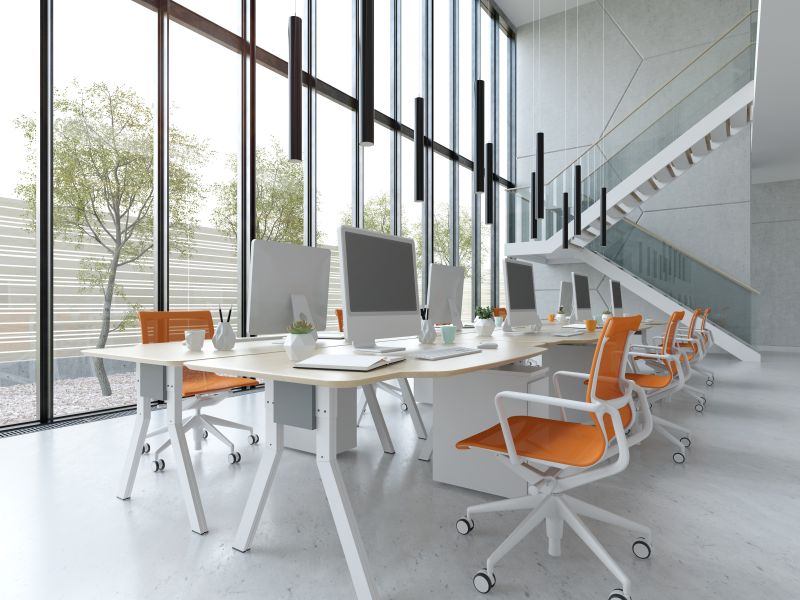
Most workplace wellbeing conversations start with the same list: better chairs, standing desks, mental health days, maybe a wellness app. Almost none of them start with the building itself. That’s a gap, because the amount and quality of daylight reaching a desk turns out to affect sleep, mood, and decision-making in ways that are measurable, not just anecdotal, and a growing number of architects and facilities teams are starting to treat daylight as a design input rather than a lucky side effect of where the windows happen to be.
The starting point for this shift is a fairly stark statistic: people in developed countries now spend roughly 87% of their time inside buildings. That’s a dramatic change from the conditions our biology evolved under, and it matters more than it sounds, because humans didn’t evolve to run on artificial light.
Why Your Body Still Runs on a 24-Hour Light Cycle
Buried in the brain is a cluster of cells called the suprachiasmatic nucleus, which acts as the body’s internal clock. It uses light exposure, specifically, to time the release of melatonin and cortisol, the hormones that govern when you feel sleepy and when you feel alert. Bright, blue-heavy daylight during the day suppresses melatonin and keeps cortisol at levels that support focus. Dim, artificial lighting all day sends a much weaker version of that signal, and the clock drifts.
That drift has a name, circadian misalignment, and it’s been linked in academic literature to chronic sleep deficits, mood disorders including seasonal affective disorder, and general cognitive fog. None of this is exotic; it’s the same mechanism behind jet lag, just caused by a windowless office instead of a flight across time zones.
What the Data Says About Daylight and Performance
The interesting part for anyone managing a workplace is that this isn’t just a comfort issue. Studies using wrist-worn actigraphs to track office workers found that people in daylight-optimised environments slept, on average, 37 minutes longer per night than colleagues working in daylight-poor conditions. Separate research on higher-order decision-making found a 42% improvement in performance among workers in well-daylit spaces compared with those in dimly lit ones. For a business, that’s not a soft benefit, that’s fewer errors, faster decisions, and a workforce that’s less likely to be running on a sleep deficit by Wednesday.
The catch is that not all “daylight” is equal. A single window wall at one end of an open-plan floor gives strong light to the desks nearest it and does very little for everyone else, while also creating glare and hot spots that make those front-row seats less desirable, not more. The fix architects have landed on isn’t more glass, it’s better-diffused light spread more evenly across the space.
Bringing Daylight Into Entrances, Walkways and Break Areas
One of the more visible parts of this trend is happening outside the building rather than inside it. Covered walkways, building entrances, and outdoor break areas used to default to solid opaque canopies, good for keeping rain off, useless for daylight. Increasingly, these are being specified as translucent canopies instead, letting employees step outside for a break or walk between buildings under diffused natural light rather than a shadowed strip of roofing. Because these structures sit outdoors, they need to hold up to UV exposure and impact from hail or debris in a way indoor materials don’t, high-performance polycarbonate panels used in this application typically offer close to full UV protection and an impact resistance roughly 250 times that of standard glass, which is the reason they’ve become a common substitute for both awnings and skylight-style canopy roofing in exposed locations.
Rethinking the Facade Itself
The bigger structural shift, though, is happening at the facade level. Instead of treating the wall as a solid barrier with punched window openings, some newer commercial buildings use a translucent facade system across a much larger portion of the wall, so daylight is diffused evenly across the depth of the floor rather than concentrated near a handful of windows.
The material doing most of the work here is usually a multicellular polycarbonate panel, a structure with many more internal ribs than a standard sheet, which scatters incoming light instead of transmitting it directly. A Danpalon panel is a well-documented example: its microcell structure has roughly ten times more internal cells than a conventional multiwall polycarbonate sheet, which is what allows it to diffuse daylight evenly across a room while still holding up structurally. On the thermal side, panels used in these facade system can reach U-values around 1.13 W/m²K in a 35mm profile, which is a meaningful factor in whether the desks nearest an exterior wall feel like the best seats in the office or the ones nobody wants in July.
A Practical Note for Facilities Teams
None of this means every office needs to rip out its facade. A daylight retrofit is a genuinely large capital project, and for a lot of buildings the more realistic starting point is auditing where the darkest, least-used corners of a floor plate are and asking whether smaller interventions, light shelves, interior glazing, better placement of breakout spaces near existing windows, could close some of the gap cheaply.
But for anyone planning a new build, an extension, or a full facade replacement, daylight is worth treating as a line item alongside HVAC and insulation, not an afterthought decided by whoever’s picking window sizes. The research on sleep and decision-making didn’t come from an aesthetics survey, it came from tracking real office workers, and the numbers are large enough that ignoring them is itself a design decision, even if nobody frames it that way.
It’s also worth asking the same question about outdoor space, since that’s usually the cheaper fix. A shaded courtyard, a covered walk to the car park, or a break area with a translucent roof rather than a solid one costs a fraction of a facade overhaul and still gives staff a genuine daylight top-up during the parts of the day they’re most likely to step outside. Facilities managers auditing wellbeing spend often find that the outdoor upgrade pays for itself faster than the indoor one, simply because it touches every employee who leaves the building at lunch, not just the ones sitting near a window.
The common thread across all of this is that daylight is a measurable input, not a mood board choice. Whoever is signing off on the next fit-out or extension doesn’t need to become a lighting engineer to act on it, they just need to ask, before the drawings are finalised, how much of the daily floor plate actually sees diffused daylight, and whether the entrances and breakout areas people pass through every day are working with that light or blocking it out entirely.
Also read:
The Business Benefits of Window Tinting: Why Every Office Should Consider It
Why Your Windows Could Be The Most Important Part Of Your Office
Image source: elements.envato.com