Click here to get this post in PDF
An innovation using engineered viruses to tackle antibiotic-resistant bacteria secured £8,000 at the 2026 ESBF Champion of Champions competition, as ten STEM student teams competed on the national stage.
PhageLink.bio, from the University of Exeter, won the Startup category and the Enterprise Award at the event, held at the Royal Academy of Engineering in London on Friday 13 November.
The team’s approach uses engineered viruses to kill antibiotic-resistant bacteria and prevent infections before they start. Its £3,000 category win and £5,000 Enterprise Award, recognising the innovation with the greatest commercial potential, made it the biggest prize winner on the day.
Now in its eighth year, the Champion of Champions competition brings together some of the UK’s most promising STEM student and graduate entrepreneurs. Organised by the Engineers and Scientists in Business Fellowship (ESBF), it helps students develop the business skills, confidence and experience to turn their ideas into solutions to real-world challenges.
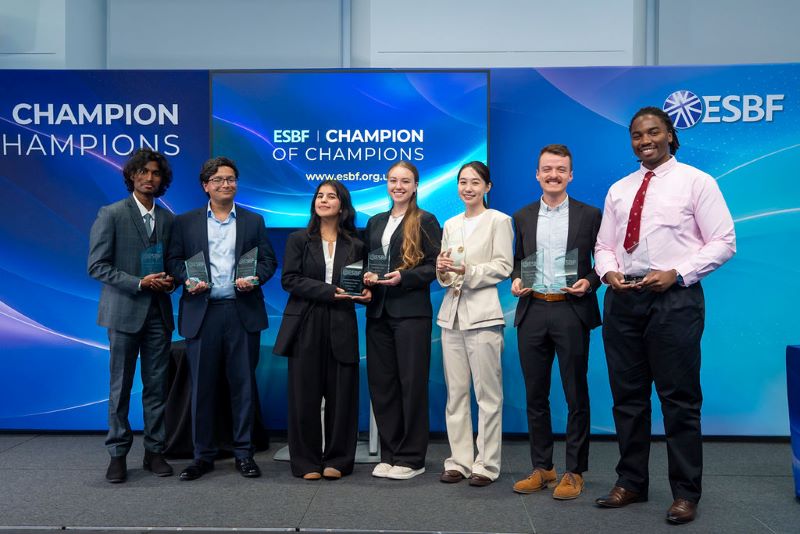
Other winners
VaultBox, from the University of Bath, won the undergraduate Big Ideas category, receiving £3,000 for its door delivery system designed around parcel deliveries. The team also secured the £500 Audience Prize following a vote.
Virtual Medic, from Queen’s University Belfast, was named Big Ideas runner-up, receiving £1,500 for its AI-powered virtual patients designed to help train healthcare practitioners. The team also won the £1,000 Best Presentation Award, sponsored by PurpleCV.
In the postgraduate Startup category, Urify, from Imperial College London, received the £1,500 runner-up prize for its new approach to testing for kidney disease.
Smart Medical Box, from the University of the West of England, won the £500 Pre-show People’s Prize for its device designed to help patients keep track of their medication.
Muromo, from Anglia Ruskin University, secured the £500 Social Media Prize for its dental system designed to clean, dry and store oral appliances.
Liam Boot-Handford, founder of PhageLink.bio, said: “This money will allow us to tackle a couple of different things at once – intellectual property is expensive, but running science is expensive so having this extra stream of income means I can spend some money on some time in the lab which will be fantastic.”
The final marked the culmination of a year-long programme of enterprise competitions held at universities across the UK, giving thousands of students the chance to develop their entrepreneurial skills and put their ideas to the test.
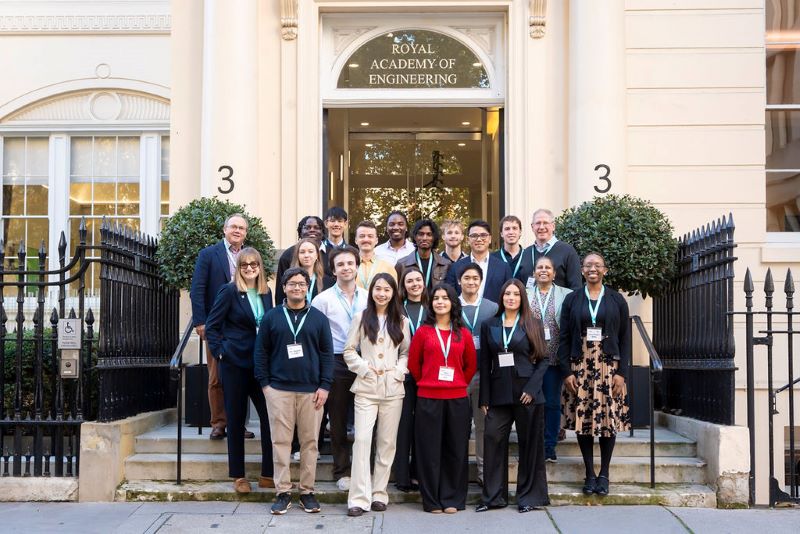
Intensive coaching and day of pitching
Alongside the prize winners, the finalists included ClearedToGo from the University of Exeter, CVSuite.AI from Durham University, Epile-X from Imperial College London and ISARS from the University of Southampton.
Before taking to the stage, all ten teams received support from Sainsbury Management Fellows, including a day of intensive coaching.
The Fellows – business leaders who benefited from an MBA scholarship awarded by ESBF – shared their experience to help the finalists sharpen their business ideas, presentations and pitches.
The following day, the teams presented their innovations to an expert judging panel, explaining the needs they were addressing and making the case for their ideas’ potential.
Image source: Champion of Champions