Click here to get this post in PDF
Last update September 2026
Podcasting gives businesses another way to share useful information, demonstrate expertise and build stronger relationships with their audiences. Listeners can access episodes through smartphones, computers, smart speakers and in-car systems, making podcasts a flexible content format.
Many entrepreneurs and business owners have considered starting a podcast but are unsure where or how to begin.
Podcasting can initially seem daunting. However, once you understand the basics, it becomes easier to decide whether the potential benefits justify the time, effort and cost involved.
A business podcast does not have to consist solely of interviews. It could include solo episodes, discussions, customer stories, practical guides, industry commentary or answers to frequently asked questions. The most important consideration is whether the content is relevant to your audience and supports your wider business offering.
With that in mind, here are five essential questions to help you decide whether podcasting is right for your business.
1. What is your objective?
Podcasting should help you achieve your business objectives; it should not become an objective by itself.
Begin by deciding what you want the podcast to accomplish. Your goal could be to:
- Build awareness of your business
- Demonstrate your industry knowledge
- Develop trust with prospective customers
- Strengthen relationships with existing clients
- Generate leads for a service
- Support a wider content-marketing strategy
- Build a professional network
- Recruit employees or attract business partners
Choose one primary objective so that you can evaluate whether the podcast is producing meaningful results.
For example, if your goal is to generate enquiries, you could direct listeners to a relevant service page or downloadable resource. If your goal is to build authority, you could track invitations, partnerships, backlinks and mentions as well as downloads.
A podcast may take time to build an audience, so avoid judging its success solely by the number of listeners during its first few weeks.
2. Who is the podcast for?
If you already have an audience, such as an email list, social media following or customer community, you have a useful starting point. If you do not, clearly define who you want the podcast to reach.
Consider the following questions:
- Who is your ideal listener?
- What problems are they trying to solve?
- What questions do customers regularly ask your business?
- When and where are they likely to listen?
- What other podcasts or content do they already consume?
- What perspective can your business offer that they cannot easily find elsewhere?
You could speak to customers, survey your email subscribers or review questions received through sales calls and social media. This helps you create episodes based on genuine audience needs rather than assumptions.
There are already podcasts covering almost every broad subject, but that does not mean you should abandon your idea. A clearly defined audience, specialist perspective or distinctive format can help your programme stand out.
3. What topics and format will you cover?
Once you understand your objective and audience, you can begin planning topics that connect the two.
Create a list of potential subjects before launching. Ideally, you should be able to identify enough relevant ideas to support at least your first series or several months of episodes.
Your format could include:
- Solo educational episodes
- Interviews with guests
- Conversations between co-hosts
- Panel discussions
- Customer stories or case studies
- Industry news and commentary
- Short question-and-answer episodes
- Audio or video versions of webinars and presentations
You do not necessarily need a complete word-for-word script for every episode. Some presenters prefer a detailed script, while others work more naturally from an outline containing key points, examples and a clear call to action.
If you plan to interview guests, consider the value they can provide to your listeners rather than choosing them only because of their profile. Prepare questions in advance, but allow enough flexibility for a natural conversation.
Podcasting benefits from careful planning. Create a simple content calendar showing the topic, guest, recording date, publication date and promotional activity for each episode. Planning several weeks ahead can help you remain consistent without rushing production.
4. Who will produce the podcast?
If you work alone, you may initially handle most of the work yourself. However, podcasting involves more than speaking into a microphone.
The production process may include:
- Researching and planning topics
- Contacting and preparing guests
- Writing scripts or outlines
- Recording audio or video
- Editing the episode
- Writing titles, descriptions and show notes
- Creating artwork and promotional clips
- Uploading and scheduling episodes
- Sharing the episode
- Reviewing audience analytics
Before committing to a schedule, estimate how much time one complete episode will require.
Decide how frequently you can publish without compromising quality or creating unnecessary pressure. A weekly programme may be suitable for some businesses, while a fortnightly, monthly or seasonal format may be more sustainable for others.
Consistency matters, but it does not mean you must publish every week. It is better to choose a realistic schedule and maintain it.
As your podcast grows, you could outsource editing, artwork, transcription, guest coordination, show notes or promotional content. Retain control over the strategy and subject matter while getting help with production tasks that consume too much of your time.
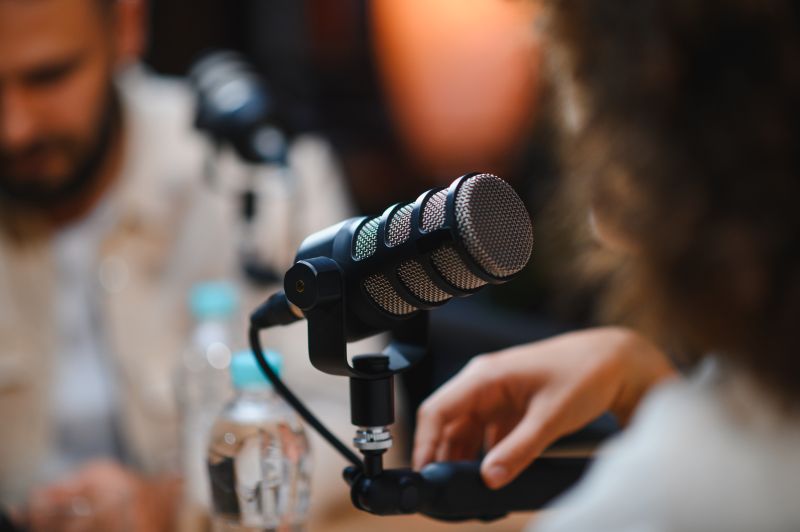
Basic equipment can include a suitable microphone, headphones and recording software. A quiet room with soft furnishings may improve the sound more than immediately buying expensive equipment. If you record video, also consider lighting, framing and the appearance of your background.
5. Where will you host, distribute and promote it?
A podcast hosting service stores your audio files and produces an RSS feed. That feed allows your programme to be submitted to podcast directories and listening applications.
Current distribution options include:
- Apple Podcasts
- Spotify
- Amazon Music and Audible
- YouTube and YouTube Music
- Other podcast applications that access RSS feeds
Choose a hosting provider based on factors such as storage, pricing, analytics, website integration, distribution tools and support. Check the current terms of any free plan before choosing it, as limits and features can change.
Your business website should remain an important central point for the podcast. Create a page for the programme and, where possible, a page for each episode containing:
- An embedded audio or video player
- A brief episode summary
- Guest information
- Useful links or resources
- A transcript or key takeaways
- A relevant call to action
Publishing supporting content on your website gives visitors another way to discover your expertise and helps connect the podcast with your products or services.
You should also decide whether your programme will be audio-only or whether you will record video. Video podcasts and clips can be published on YouTube and adapted for platforms such as LinkedIn, Instagram and TikTok. However, video also adds production and editing work, so choose the format that fits your resources.
Your existing audience needs to know when a new episode is available. Promote episodes through your email list, website, social channels and professional network. Guests may also share their appearances with their audiences.
Instead of posting only a link, repurpose each episode into several useful pieces of content. These could include short video clips, audio extracts, quotations, blog posts, email content and social media posts.
Measure what matters
Podcast platforms and hosting providers offer analytics such as downloads, plays, viewing time, completion rates and audience location. These figures can help you understand which topics and formats attract attention.
However, business results may matter more than audience size. Depending on your objective, you could also measure:
- Website visits from podcast content
- Email subscriptions
- Enquiries and sales
- Downloads of supporting resources
- Guest referrals
- Collaborations and speaking opportunities
- Engagement with repurposed content
Review your results regularly and use them to improve future topics, episode lengths, formats and promotional activity.
Starting a podcast requires planning and commitment, but it does not have to be complicated. Begin with a clear objective, understand your audience and choose a schedule that your business can realistically maintain.
In my next article, I cover the practical elements of podcasting, including equipment to consider.
You may also like: Actionable Ways to Grow Your Business Today
Image source: elements.envato.com
About the Author

Viv is an Audio and Podcast Specialist. She has over 20 years of marketing experience working for companies such as Walt Disney, NatWest, Barclaycard, RBS, BMW and Thames Water. Alongside Audio Byte, she presents her radio show Dream Corner, interviewing female entrepreneurs and female leaders in the City; and over 250 women have shared their journey with Viv. In her spare time, she loves running, reading and chocolate.

[…] Thinking of Podcasting for Your Business? […]