Click here to get this post in PDF
Running a large-scale commercial facility comes with unique safety challenges. If you’re a manager or a business owner, certain environments like warehouses and manufacturing plants demand a proactive approach to risk management. With the right safety essentials, you reduce hazards and create a secure space where operations can thrive and where employees and visitors can feel safe.
In this article, we’ll share five critical elements every facility should prioritize for safety and security.
Emergency Exit Systems and Evacuation Planning
One of the most fundamental aspects of safety in large facilities is ensuring that emergency exits are clearly marked and accessible. In the event of a fire or other emergency, employees must be able to evacuate quickly, so exit doors should remain unlocked during operating hours, pathways must be free of clutter, clear directional markings should be placed along corridors, and lighting should be sufficient even during power outages.
Beyond the physical infrastructure, facilities should also establish evacuation plans that are regularly practiced through drills. These rehearsals help staff understand their roles and reduce panic when real emergencies occur, ultimately saving lives and minimizing damage.
Fire Suppression Systems and Preventive Measures
Large commercial facilities often house equipment and materials that can increase fire risks. In such cases, installing advanced fire suppression systems is not just a regulatory requirement but a practical safeguard against devastating losses. Managers should ensure sprinkler systems and foam-based suppression units are installed in high-risk areas, and that preventive measures are in place, like routine inspections of electrical wiring and machinery.
When combined with employee training on responding to fire alarms and extinguishers, these systems create a layered defense that ensures rapid response and containment before flames spread uncontrollably.
Safety Signs and Hazard Communication
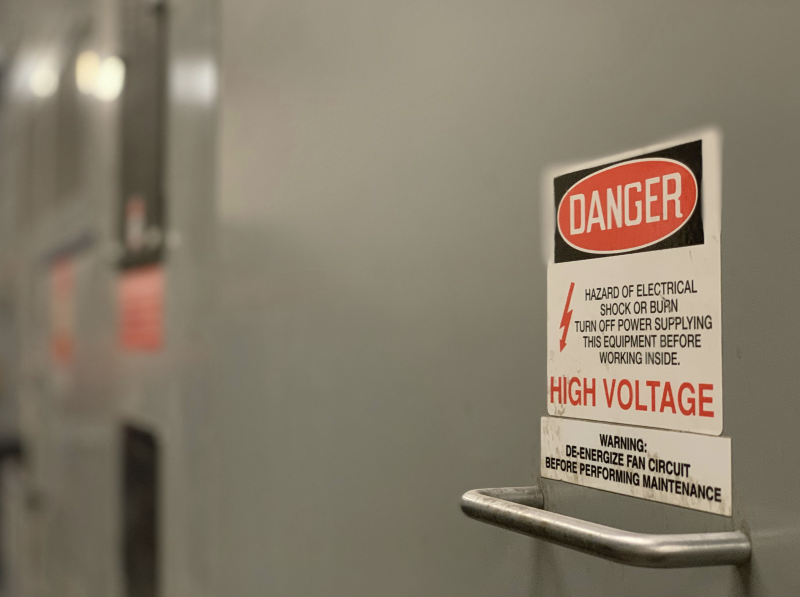
Clear communication is essential in environments where multiple teams and visitors interact daily. Properly placed safety signs serve as constant reminders of potential hazards and restricted zones, and should be durable and compliant with OSHA and ANSI standards for consistency across facilities.
Safety signs reduce accidents by guiding behavior and reinforcing awareness. There should be warnings about high-voltage equipment, slippery floors, chemical storage areas, and caution areas, among others. In addition, hazard communication programs should include labeling systems and accessible safety data sheets. This ensures that everyone understands the risks within the facility.
Surveillance Systems and Access Control
Security is a critical component of safety, especially in large-scale facilities where unauthorized access can lead to theft or even workplace violence. Modern surveillance systems, like high-definition cameras and motion sensors, provide real-time monitoring that deters misconduct and supports investigations when incidents occur. Access control measures further restrict sensitive areas to authorized personnel only.
By integrating surveillance with access control, facilities can maintain a secure perimeter while also protecting internal operations. More importantly, this enhances safety and builds trust among employees and managers.
Personal Protective Equipment and Training Programs
Even with advanced systems in place, the human element remains central to workplace safety. Providing employees with appropriate personal protective equipment (PPE), such as helmets, gloves, goggles, and respiratory gear, ensures they are shielded from common hazards.
However, PPE is only effective when paired with comprehensive training. Employees must be trained on proper usage, maintenance, regular checks, and situational awareness. It’s helpful to conduct regular workshops and hands-on demonstrations so your staff can take responsibility for their own safety and that of their colleagues. Overall, this fosters a culture of accountability and preparedness that creates a safer, more productive environment.
Conclusion
Large-scale commercial facilities face complex safety challenges, but with the right essentials in place, risks can be managed effectively. Emergency exit systems, fire suppression measures, safety signs, surveillance and access control, and PPE with training programs form a comprehensive framework that protects people and property.
These safeguards ensure compliance with regulations, but more importantly, demonstrate a commitment to employee well-being and operational resilience.
You may also like:
How to Properly Maintain a Loading Bay
Lifting Safely: Essential Health and Safety Tips for Working with Heavy Loads
Image source: Unsplash.com