Click here to get this post in PDF
For a long time, the office was simply part of working life. It’s where you went to work, there weren’t any questions asked, it’s just how things were done. But we all know there’s been a shift. Powered by ever evolving technology that’s reached a stage where a whole swathe of the population can work effectively from anywhere in the world. Naturally, this raises the question of what is the point of the office? And a lot of businesses are struggling to find a suitable answer, even after years of investing into vibey commercial property, and more recently struggling to find a mutually beneficial solution to WFH culture that refuses to see the benefits of being around their colleagues.
Because if an employee can spend the day at home doing exactly the same work they would have done in the office, without commuting, spending money on travel or food, or losing several hours of their day, then simply telling them to come in doesn’t provide much of an argument. The office needs to offer something more, or at a minimum employers need to be able and willing to translate what the value is to them, aside from any benefit to the company’s bottom line.
None of this should come as a surprise, we’ve already seen it in other scenarios. Stores turned themselves into experiential destinations to compete with retail. Restaurants with lines cracked the code a while ago – they’re giving people a reason to be there because they deliver something that people value. Atmosphere, occasion, community; something that can’t quite be replicated elsewhere. And why should this apply to the office space, too.
That doesn’t mean filling it with beanbags, free beer and expensive coffee machines; people already have their own amenities. And while a pleasant environment is obviously preferable to a miserable one, it still must deliver value. Value comes from people as much as it does place. So, the most beautiful office in the world is still going to feel pointless if everyone spends the day sitting at separate desks with headphones on, communicating through Teams or Zoom. It misses the point altogether.
What makes the office worth its keep is the opportunity for interaction. The conversation that happens before a meeting, the friendships that build in corridors, and the ideas that spin over coffee. That’s what the office can bring and remote working can’t, because they’re the interactions that can‘t be scheduled.
So, how do you make that apparent to your teams?
People who started their careers before the pandemic may remember what office life can offer. They’ve experienced it. They understand how ideas can grow, and careers can be shaped by an unexpected conversation. But for younger employees, that correlation simply isn’t there, so the commute can never be seen as worthwhile if the pay off is basic at best.
The solution? Do you mandate attendance and accept that people will turn up only because they have to? Or do you create a workplace that gives people a genuine reason to turn up? How do you teach that spontaneity and corridor is a far better incentive that will pay off so much more in the future?
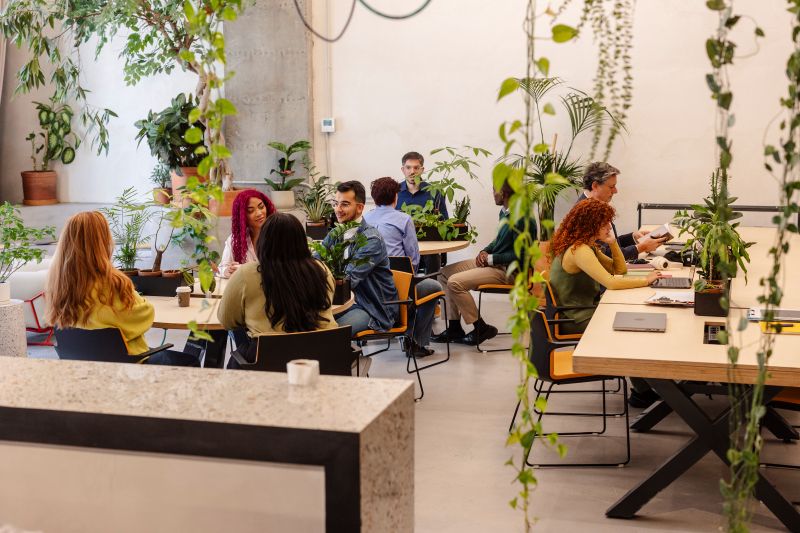
To me, the answer seems obvious. Mandates never bring out the best in anyone, so I look at the office as a destination, which means changing the physical environment and creating a space that encourages movement and interaction, while using natural light, good acoustics and access to nature to make that space feel comfortable and welcoming. While places for concentration are a must, there also needs to be spaces where people can talk, collaborate, and exchange ideas without having to book a meeting room ahead of time. And to have a space that offers inspiration and conversation on its own. Not a bunch of beige, rows of tables and chairs, and the like.
And the potential doesn’t stop with your own employees. What happens when you open your door to teams outside of your own? Offering room to freelancers, entrepreneurs, contractors, clients, suppliers and other businesses? When you let them become part of the environment, you create a living ecosystem of opportunity and inspiration.
That’s one of the reasons why flexible workspaces now carry such appeal and why the industry is growing by double digits each year. It’s not just about the flexibility to scale according to need, but creating workplaces that can adapt to the way businesses actually operate in a way that traditional leases simply can’t afford. Businesses change; it’s in their nature. And the office needs to be prepared to reflect and accommodate change.
The argument over remote, hybrid, and office working is tired. We’ve already had it; there are benefits on all sides, particularly for the workers. And that should be the guiding light for employers: showing people why the office is there and what it can do for them – in both the short term and long. Yes, the day-to-day will have added value and benefit, but the people teams work with today become their network tomorrow and connecting via Zoom doesn’t create lasting relationships.
The office should be the place where a company’s culture becomes tangible. But when processes and policies mean that workers have exactly the same experience when working from home, minus the soul-destroying commute, the argument for attending the office dies.
It’s time to make the office valuable again, by giving it a purpose beyond desk storage and conference room coffee. In a world where people can work almost anywhere, an office can no longer rely on being the default. It has to be a destination that’s more than work, offers community driven incentives and requires this to be clearly communicated across all layers of the organization.

Jamie Apostolou is CEO of Second Home, a creative workspace and cultural venue with locations in London and Lisbon, built at the intersection of design, community, and culture.
You may also like:
How to maintain a positive working environment within a hybrid workplace
The Crucial Elements Of Hybrid Office Design
Image source: elements.envato.com