Click here to get this post in PDF
Building the Core of Your Online Branding

In today’s hyper-connected world, simply having an online presence is no longer sufficient for businesses to thrive. Consumers today expect more than just products or services; they crave meaningful interactions, authentic stories, and a sense of belonging with the brands they choose. This profound shift lifts the importance of Online Branding, changing it from a mere marketing tactic into a fundamental business imperative.
Online Branding, often referred to as internet branding or e-branding, is the strategic process of creating and promoting a distinct brand identity across all digital channels. Unlike traditional branding, which often relies on one-way communication and physical media, online branding thrives on interactivity. It allows us to communicate messages instantly, engage directly with consumers, and build relationships in real-time. This dynamic environment profoundly shapes how audiences perceive, connect with, and ultimately trust a brand.
For modern businesses, a strong Online Brand is crucial for building brand awareness, identifying a loyal customer base, and significantly improving customer relationships. It’s about crafting a digital footprint that resonates, fosters loyalty, and drives sustainable business growth in an increasingly crowded marketplace. The ability to measure success in this digital field far surpasses that of offline brands, offering invaluable insights for continuous refinement.
Achieving this level of digital mastery requires a multi-faceted approach, integrating various digital marketing disciplines into a comprehensive online branding strategy. This guide aims to explain the complexities of establishing and growing your brand’s digital footprint.
We will explore the core components of a powerful online brand identity, dig into effective strategies for its development, and examine how diverse elements – from SEO and social media to content marketing and influencer collaborations – collectively contribute to a memorable and impactful digital presence. We will also discuss common challenges, measurement techniques, and future trends, empowering you to define and amplify your brand’s digital voice.
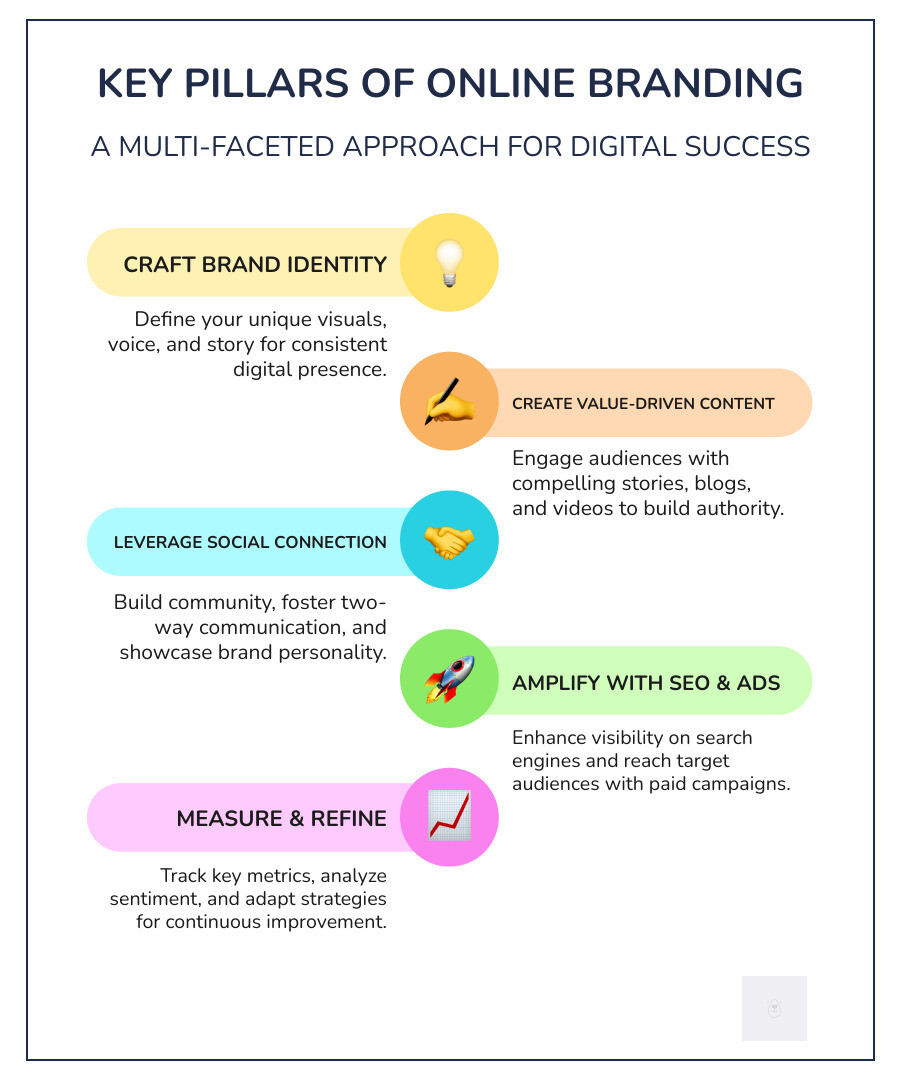
At the heart of every successful online brand lies a carefully crafted foundation. This core defines and distinguishes us, and forms the basis of every interaction we have with our audience. Without a strong, consistent core, our efforts in other areas of online branding will lack coherence and impact.
Crafting a Cohesive Brand Identity
Our brand identity is the overall look and feel of our brand – it’s the visual and verbal shorthand that tells our story and communicates our values. In the digital field, where first impressions are often made in seconds, a cohesive brand identity is paramount. It encompasses everything from our visual assets to our unique brand voice.
Visual Elements: This includes our logo, color palette, typography, imagery style, and iconography. These elements must be consistent across all digital touchpoints, including our website and social media profiles, email campaigns, and digital advertisements. A well-designed logo serves as an immediate visual marker, creating instant recognition. Our chosen color palette evokes specific emotions and associations, while consistent typography ensures readability and reinforces our brand’s personality. Think of a brand style guide as the blueprint for these visual elements, ensuring that every piece of content, every digital asset, and every campaign adheres to the same aesthetic standards. This consistency prevents confusion and helps imprint our company’s image in our customers’ minds, fostering a dedicated customer base.

Brand Voice and Tone: Beyond visuals, how we communicate is equally vital. Our brand voice is the consistent personality and emotion expressed in our communications. Is it authoritative, playful, empathetic, or innovative? The tone, on the other hand, adjusts to the specific situation or audience but always remains true to the overarching voice. For instance, a lawyer’s brand voice will differ significantly from that of a fashion brand. Maintaining a consistent tone and voice across all channels – from website copy and blog posts to social media replies and customer service interactions – builds trust and familiarity. This distinct voice helps us connect with different types of customers, making them feel seen and understood.
Consistent Messaging: Our brand message is the core idea we want to convey to our audience. It should articulate our unique value proposition, our mission, and what sets us apart. This message needs to be unified and clear across all digital platforms. Whether it’s through a catchy tagline like Nike’s “Just Do It” or a detailed “About Us” page, our messaging should consistently reinforce who we are and what we stand for. This consistency is crucial; if our LinkedIn profile presents us as corporate strategists but our X (formerly Twitter) feed is filled with unrelated content, it creates confusion and dilutes our brand’s impact.
Unique Value Proposition (UVP): Our UVP is what makes us different and why customers should choose us over competitors. It’s not just about what we offer, but the unique benefit or solution we provide. Clearly defining and communicating our UVP through our online branding efforts helps us carve out a distinct niche in the market. It answers the fundamental question: “Why us?” This clarity allows us to attract the right audience and build a brand that truly resonates with their needs and desires.
Crafting this cohesive brand identity is a continuous process that requires regular assessment and adaptation. It’s not just about creating a pretty logo; it’s about building a digital personality that is authentic, memorable, and deeply connected to our audience. For businesses seeking to establish or refine their digital presence, working with a specialist in RJP.design online branding is an essential step to ensuring every element works in harmony.
The Role of Content in Shaping Perception
Content marketing is the engine that drives our online branding efforts, breathing life into our brand identity and communicating our message to the world. It’s how we tell our story, share our expertise, and build meaningful relationships with our audience.
Storytelling: Humans are hardwired for stories, and brands that master the art of digital storytelling can create powerful emotional connections. This involves sharing our journey, values, challenges, and successes in an authentic and relatable way. Whether it’s through blog posts, videos, or social media narratives, compelling storytelling helps our audience understand who we are beyond our products or services. It allows us to showcase the human side of our brand, fostering a sense of belonging and trust.
Value-Driven Content: In today’s information-rich environment, our audience seeks value. This means creating content that educates, entertains, inspires, or solves problems for them. Instead of constantly pushing sales messages, we should focus on providing useful information that positions us as experts and trusted resources. This approach builds credibility and establishes us as thought leaders in our industry.
Blog Posts: A well-maintained blog is a cornerstone of content marketing. It allows us to delve into topics relevant to our audience, share industry insights, and offer practical advice. Informative blog posts that include links to our company’s website can not only drive traffic but also imprint our company’s image into customers’ minds. A distinctive blog style, characterized by a unique voice and consistent design, helps reinforce our brand identity. Regularly refreshing and optimizing old content also ensures its continued relevance and visibility.
Video Marketing: Video content, particularly short-form videos, continues to dominate the digital landscape. Platforms like TikTok, Instagram Reels, and YouTube Shorts offer immense opportunities for brands to engage audiences with tutorials, behind-the-scenes glimpses, customer stories, and quick tips. Videos are highly engaging and can convey emotion and personality more effectively than text alone. High-quality, concise, and emotionally resonant video content can capture attention and evoke strong emotional responses, making our brand more memorable.
Podcasts: For audiences on the go, podcasts offer another powerful avenue for content delivery. They allow us to share in-depth discussions, interviews with industry experts, and unique perspectives, building a loyal listenership. Podcasts help establish authority and create a more intimate connection with our audience, as listeners often feel a personal connection with the hosts.
Establishing Authority: By consistently producing high-quality, value-driven content across various formats, we establish ourselves as experts in our field. This thought leadership builds credibility and trust, making our brand the go-to resource for our audience’s needs. Engaging in thought leadership also involves writing guest articles for reputable industry blogs or speaking at virtual events, further amplifying our expertise.
User-Generated Content (UGC): Encouraging our audience to create and share content related to our brand is a powerful endorsement. UGC can include customer photos, testimonials, reviews, and social media posts. It provides authentic social proof, builds familiarity, and shows prospective customers how real people interact with our products or services. Brands can encourage UGC through contests, hashtags, or by simply featuring customer content on their own channels. Human-written user-generated content tends to be more interactive and helpful for enhancing search rankings, providing a more authentic voice than AI-generated content.
Here is a list of high-impact content ideas for brand building:
- How-to Guides and Tutorials: Solve common problems for your audience.
- Behind-the-Scenes Content: Showcase your team, processes, and company culture.
- Customer Spotlight/Success Stories: Highlight satisfied customers and their experiences.
- Industry Trend Analysis: Position your brand as a thought leader by analyzing current and future trends.
- Q&A Sessions/AMAs (Ask Me Anything): Directly engage with your audience and answer their questions.
- Infographics and Data Visualizations: Present complex information in an easily digestible format.
- Interactive Quizzes and Polls: Increase engagement and gather audience insights.
- Live Streams and Webinars: Offer real-time value and foster direct interaction.
- Personal Stories from Founders/Employees: Humanize your brand and build emotional connections.
- Comparison Guides: Help customers make informed decisions by comparing your products/services with alternatives.
Leveraging Social Media for Community and Connection
Social media platforms are not just broadcasting channels; they are vibrant communities where brands can engage in direct, two-way conversations with their audience. Effectively leveraging social media is crucial for building brand awareness, fostering loyalty, and creating a sense of belonging.
Platform Selection: Not all social media platforms are created equal, and our strategy should reflect this. We need to identify where our target audience spends most of their time online and tailor our presence accordingly. LinkedIn is ideal for professional networking and thought leadership, while Instagram and TikTok excel at visual storytelling and reaching younger demographics. X (formerly Twitter) is great for engaging in industry discussions and real-time updates, and Facebook remains a powerful tool for community building and targeted advertising. Focusing our efforts on platforms where our audience is most active ensures maximum impact and efficient resource allocation.
Audience Engagement: The core of social media success lies in engagement. This means actively listening to our audience, responding to comments and messages, and initiating conversations. Engaging directly on social media platforms is crucial for online branding, as it allows us to build relationships and gather valuable feedback. We should aim to be responsive and approachable, fostering a sense of community where our audience feels heard and valued. This interactivity helps companies communicate brand messages instantly and engage consumers directly, enabling exclusive, individual interactions.
Community Building: Beyond individual interactions, social media allows us to build dedicated communities around our brand. This can involve creating private Facebook Groups, Discord servers, or simply encouraging the use of branded hashtags. These spaces provide a platform for our audience to connect, share experiences, and feel part of something larger. Brands that focus on creating meaningful spaces for their audience are thriving, building long-term relationships, and turning customers into loyal advocates. Rewarding participation and sharing value-driven content within these communities further strengthens these bonds.
Two-Way Communication: Social media breaks down the traditional one-way communication barrier of conventional marketing. It enables a dynamic dialogue where brands can not only share their message but also receive instant feedback, answer questions, and address concerns. This real-time interaction is invaluable for reputation management and for adapting our strategies based on audience insights. It allows us to be agile and responsive, which is essential in the digital environment.
Showcasing Brand Personality: Social media is an excellent canvas for showcasing our brand’s unique personality. Whether it’s through humorous posts, inspirational stories, or behind-the-scenes glimpses, we can use these platforms to express our brand’s character. This helps humanize our brand and makes it more relatable to our audience. Consistency in visual style, tone of voice, and content themes across all social media profiles reinforces this personality, making our brand instantly recognizable.
Interactive Content: To maximize engagement, we should leverage interactive content formats such as polls, quizzes, Q&A sessions, and live videos. These formats encourage active participation from our audience, making them feel more invested in our brand. For example, we can run online contests and add Uniqode-generated QR codes that link directly to the contest page or submission form, making it fast and easy for users to participate. This not only boosts engagement but also provides valuable insights into audience preferences and opinions.

By strategically selecting platforms, fostering genuine engagement, building communities, embracing two-way communication, showcasing our personality, and utilizing interactive content, we can transform our social media presence into a powerful engine for online branding.
Strategic Amplification and Measurement
Once we’ve established a strong brand core and are consistently producing valuable content, the next step is to amplify our message and measure our impact. This involves the strategic use of digital marketing channels to reach a wider audience and the use of analytical tools to understand what’s working and what needs refinement.
Enhancing Visibility with SEO and Digital Ads
For our online brand to thrive, it must be findable. Search Engine Optimization (SEO) and digital advertising are two powerful levers we can pull to ensure our brand is seen by the right people at the right time.
Search Engine Optimization (SEO): The practice of optimizing our online content to rank higher in search engine results. When potential customers search for products, services, or information related to our industry, we want our brand to appear prominently. This involves a range of tactics:
- Keyword Strategy: Identifying relevant keywords that our target audience uses and integrating them naturally into our website content, blog posts, and meta descriptions. This includes branded keywords (searches specifically for our brand name) and non-branded keywords (searches for products or services we offer).
- Technical SEO: Ensuring our website is technically sound, with fast loading times, mobile-friendliness, and a clear site structure. These factors contribute to a positive user experience, which search engines reward.
- Content Optimization: Creating high-quality, valuable content that directly answers user queries and provides in-depth information. This aligns with our content marketing efforts, ensuring that our informative articles and guides are findable.
- Backlink Building: Earning high-quality backlinks from reputable websites. These links act as “votes of confidence” for our content, signaling to search engines that our brand is an authority in its field. While guest blogging has faced scrutiny for becoming “spammy,” strategic outreach and genuine collaborations remain valuable.
- Local SEO: For businesses with a physical presence, optimizing for local search terms (e.g., “best coffee shop near me”) helps ensure we appear in relevant local search results.
Brand Visibility on Search Engines: Strong SEO directly contributes to brand awareness. When our brand consistently appears at the top of search results, it builds credibility and familiarity. It also means we are present at critical moments in the customer journey, from initial research to purchase intent.
Reputation Management: SEO also plays a role in online reputation management. By optimizing positive content about our brand (e.g., customer testimonials, press releases, and positive reviews) and ensuring it ranks highly, we can mitigate the impact of any negative search results. Addressing customer complaints promptly and publicly (where appropriate) also helps manage our online image.
Paid Advertising: While SEO focuses on organic visibility, digital advertising offers immediate reach and precise targeting. Platforms like Google Ads, social media ads (Facebook, Instagram, LinkedIn), and display networks allow us to place our brand directly in front of our ideal audience.
- Targeting Capabilities: Digital ads offer unparalleled targeting options, allowing us to reach users based on demographics, interests, behaviors, and even specific websites they visit. This ensures our ad spend is highly efficient.
- Brand Awareness Campaigns: We can run campaigns specifically designed to increase brand awareness, using engaging visuals and compelling messaging to introduce our brand to new audiences.
- Lead Generation and Sales: Ads can be optimized for specific actions, such as website visits, lead form submissions, or direct purchases, driving measurable business growth.
- Retargeting Campaigns: A highly effective strategy involves retargeting users who have previously interacted with our brand (e.g., visited our website, watched a video). These ads serve as gentle reminders, nurturing leads, and encouraging conversion.
By combining robust SEO strategies with targeted digital advertising, we can significantly improve our brand’s visibility and capture attention across the digital landscape. Leveraging AI-powered online branding tools can further refine our efforts, offering advanced analytics and predictive insights to optimize our campaigns for maximum impact and findability.
Partnering with Influencers for Authentic Reach
In an age when consumers trust peer recommendations more than traditional advertising, influencer marketing has emerged as a powerful strategy for online branding. It allows us to tap into established communities and leverage the credibility of trusted voices.
Influencer Marketing: This involves collaborating with individuals who have a significant following and influence over a specific audience. These influencers can range from celebrities to everyday people with niche expertise. The goal is for them to authentically promote our brand, products, or services to their followers.
Authenticity and Trust: The success of influencer marketing hinges on authenticity. Consumers are savvy and can spot inauthentic endorsements. Therefore, partnering with influencers whose values align with our brand and who genuinely believe in what we offer is crucial. When an influencer shares their positive experience, it resonates as a trusted recommendation rather than a paid advertisement. This approach helps to build long-term relationships with customers, as brands that make their audience feel seen and understood are more likely to create lasting connections.
Niche Alignment: The most effective influencer partnerships are those in which the influencer’s niche audience closely aligns with our target demographic. A micro-influencer with a highly engaged, specific audience can often yield better results than a macro-influencer with a broader but less targeted following. For example, a beauty brand might partner with a makeup artist blogger, or a fitness brand might collaborate with a personal trainer on Instagram.
Micro vs. Macro-Influencers:
- Micro-influencers: Typically have smaller followings (e.g., 1,000-100,000 followers) but boast higher engagement rates and deeper connections with their audience. They are often perceived as more relatable and trustworthy.
- Macro-influencers: Have larger followings (e.g., 100,000+ to millions) and can offer broader reach. While engagement rates might be lower, their sheer audience size can still generate significant brand awareness.
The choice between micro and macro-influencers depends on our specific branding goals, budget, and target audience. Often, a mix of both can provide a balanced strategy.
Measuring Influencer ROI: Like any marketing initiative, measuring the return on investment (ROI) of influencer campaigns is essential. This can involve tracking metrics such as:
- Reach and Impressions: How many people saw the influencer’s content?
- Engagement Rate: Likes, comments, shares, and saves on the content.
- Website Traffic: Referrals from the influencer’s links.
- Conversion Rates: Sales or leads generated directly from the campaign (often tracked using unique promo codes or affiliate links).
- Brand Mentions and Sentiment: How our brand is being discussed and perceived following the campaign.
Influencer marketing remains an effective strategy for reaching new audiences, and when executed thoughtfully, it can significantly enhance brand credibility and drive genuine interest. To streamline the process of finding and vetting suitable collaborators, AI-driven online branding services offer advanced analytics and matching capabilities, making it easier to identify partners who truly align with our brand values and objectives.
Measuring Success and Adapting Your Online Branding Strategy
In the dynamic world of online branding, what gets measured gets managed. The digital environment provides an unparalleled ability to track, analyze, and adapt our strategies in real-time. This data-driven approach is crucial for understanding our impact, optimizing our efforts, and staying ahead of the curve.
Key Metrics: To effectively measure the success of our online branding initiatives, we need to focus on a range of key performance indicators (KPIs) that reflect our brand’s health and growth:
- Website Traffic: Metrics like unique visitors, page views, and time spent on site indicate how many people are engaging with our owned digital properties. An increase in direct traffic (users typing our URL directly) is a strong indicator of brand recognition.
- Social Media Engagement: This includes likes, comments, shares, saves, and follower growth across our social platforms. High engagement rates suggest our content resonates with our audience and fosters community.
- Brand Mentions: Tracking how often our brand is mentioned online, whether on social media, news sites, blogs, or forums, gives us a sense of our brand’s visibility and share of voice. Tools for social listening are invaluable here.
- Sentiment Analysis: Beyond just mentions, understanding the tone of those mentions (positive, negative, neutral) is critical. Sentiment analysis helps us gauge public perception and identify any emerging issues that require attention.
- Brand Awareness Surveys: Periodically conduct surveys to ask our target audience whether they recognize our brand, recall our messaging, or associate us with specific values, to gain qualitative insights into our branding efforts.
- Customer Loyalty and Retention: Metrics such as repeat purchase rates, customer lifetime value (CLV), and Net Promoter Score (NPS) directly reflect the strength of our brand’s relationship with customers. Brands that focus on creating meaningful spaces for their audience are thriving, and this translates directly into loyalty.
Future Trends: The digital landscape is constantly evolving, and so too must our online branding strategies. Staying informed about emerging trends allows us to adapt proactively and maintain a competitive edge.
- AI in Branding: The use of AI in every content creation process is now the new norm. AI tools can assist with keyword research, content generation, personalized recommendations, and even sentiment analysis. However, it’s crucial to strike a balance; while AI-generated content can be efficient, it can sometimes sound unnatural and be detected by AI detectors, potentially impacting reach and SEO. The human touch remains essential for authenticity and emotional connection.
- Hyper-Personalization: Consumers expect custom experiences. AI and data analytics enable us to deliver hyper-personalized content, product recommendations, and communication based on individual preferences and behaviors. This deep level of personalization fosters stronger connections and loyalty.
- Voice Search Optimization: With the rise of smart speakers and voice assistants, optimizing our content for voice search queries (which tend to be longer and more conversational) is becoming increasingly important for findability.
- Interactive Content and Immersive Experiences: Beyond polls and quizzes, brands are exploring augmented reality (AR) and virtual reality (VR) to create immersive brand experiences. For example, AR in the fashion industry allows for virtual try-ons, creating shareable online moments.
- Authenticity and Transparency: Consumers increasingly value brands that are authentic, transparent, and align with their personal values, particularly regarding sustainability and social responsibility. Storytelling that highlights these aspects will continue to resonate deeply.
By continuously monitoring our performance metrics, embracing emerging technologies like AI, and staying attuned to evolving consumer expectations, we can ensure our online branding strategy remains relevant, impactful, and ready for sustained growth. The ability to measure success in the online field surpasses that of offline brands, offering invaluable insights for continuous refinement and adaptation. This iterative process of measurement and adaptation is what allows us to nurture genuine connections and build a brand that not only captures attention but also commands loyalty and drives business success.
Conclusion: Crafting a Legacy in the Digital Age
In the vibrant, ever-changing digital world, online branding is no longer a peripheral concern but the very heartbeat of a business. We’ve explored how it fundamentally differs from traditional branding, thriving on interactivity, real-time engagement, and data-driven insights. It’s clear that in today’s landscape, consumers crave not just products, but meaningful interactions, authentic stories, and a sense of belonging with the brands they choose.
From carefully crafting a cohesive brand identity that visually and verbally communicates our essence, to leveraging the power of content marketing to tell our story and establish authority, every digital touchpoint contributes to our brand’s narrative. Social media, when approached strategically, transforms into a dynamic space for community building and genuine two-way conversations, fostering loyalty and humanizing our brand.
Furthermore, we’ve dug into the strategic amplification necessary to ensure our brand is not just present, but prominent. Robust SEO strategies make us findable, while targeted digital advertising places us directly in front of our ideal audience. Partnering with influencers, chosen for their authenticity and niche alignment, extends our reach and builds trust within established communities. Crucially, the digital field empowers us with unparalleled measurement capabilities, enabling us to track key metrics, analyze sentiment, and adapt our strategies to emerging trends such as AI-driven personalization and immersive experiences.
The journey of online branding is continuous, requiring agility, authenticity, and a deep understanding of our audience. By embracing a multifaceted approach that integrates SEO, content marketing, social media, influencer collaborations, and rigorous measurement, we can build a digital footprint that not only stands out but also resonates deeply, fosters unwavering loyalty, and drives sustainable business growth. Our online brand is our digital legacy – let’s ensure it inspires, connects, and endures.
Also read:
Comprehensive Brand Visibility: From Physical Signage to Digital SEO
Why Strong Branding For Law Firms Turns Trust Into More Clients