Click here to get this post in PDF
The Core Pillars of Brand Visibility Strategies
In today’s crowded and competitive marketplace, simply having a great product or service is no longer enough. For businesses to truly thrive, they must be seen and recognized. The importance of this visibility is undeniable: 60% of consumers prefer buying new products from a familiar brand rather than switching to a new one.
This extensive guide will explore comprehensive brand visibility strategies. We’ll cover everything from foundational steps like defining your brand identity to advanced digital tactics like SEO. We will also delve into the power of physical presence, such as understanding the Box truck wrap visibility cost for mobile advertising.
By the end, you will have a clear roadmap to build and measure a strong, consistent brand presence across all channels. This will ensure your business not only stands out but also connects with its target audience effectively.
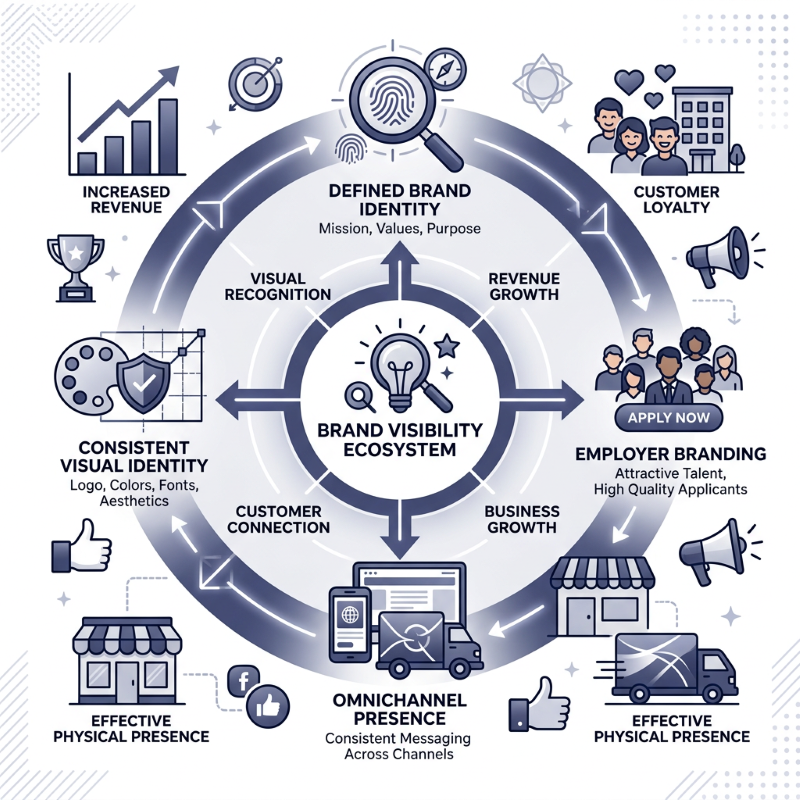
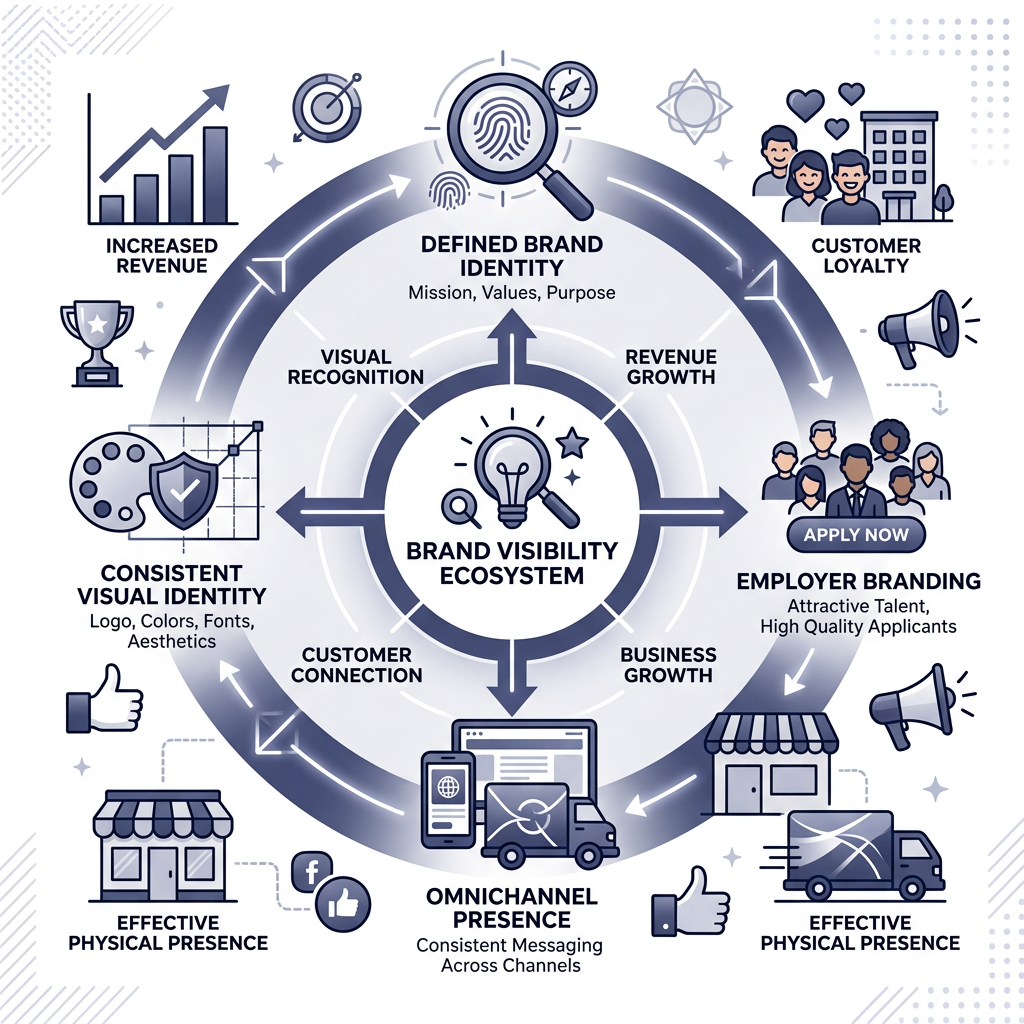
Building robust brand visibility begins with a crystal-clear understanding of your brand’s identity. This isn’t merely about a logo or a catchy slogan; it’s the very essence of what your business stands for, its mission, and its core values. When these elements are well-defined, they serve as the blueprint for every visibility strategy you implement. A strong brand identity ensures that every interaction, from a social media post to a customer service call, resonates with your core message. This consistency is paramount, as brands with consistent presentation increase revenue by as much as 33%.
The visual aspects of your brand identity, such as color, play a surprisingly significant role in visibility. Research indicates that color can boost brand recognition by up to 80%, and consumers are 81% more likely to remember your company colors than your name. This highlights the importance of thoughtful design and consistent application of your visual identity across all platforms, both online and offline. Beyond aesthetics, a well-articulated brand identity also helps attract top talent. As LinkedIn states, companies with strong branding often see 50% more applicants for jobs than their rivals, demonstrating the far-reaching impact of a visible and respected brand.
Integrating Physical Assets into Brand Visibility Strategies
While digital presence often dominates discussions around brand visibility, the power of physical assets should not be underestimated. Traditional methods, when integrated thoughtfully with digital efforts, can create a powerful, omnipresent brand experience. High-quality signage, banners, and vehicle wraps, for instance, offer continuous, localized exposure that digital channels can’t replicate. Imagine a vibrant outdoor sign catching the eye of passersby or a fleet of branded vehicles acting as mobile billboards, constantly reinforcing your brand in the community. These tangible touchpoints build trust and familiarity, especially for local businesses.
Sponsorships also present a unique opportunity to enhance visibility by aligning your brand with events, causes, or organizations that resonate with your target audience. A well-executed sponsorship can generate significant returns. Forbes, for example, highlighted how UK mobile operator O2 achieved a 6X return on their entertainment sponsorship investment by strategically maximizing brand presence and customer engagement.
Another powerful,, physical asset is your own team. Employee advocacy can significantly amplify your brand’s reach and credibility. When employees genuinely believe in and share your brand’s message, they become trusted voices in their networks. This organic promotion is highly effective, with brands using employee advocacy generating 25-40% more engagement compared to those that don’t. Encouraging your team to share their experiences and insights on platforms like LinkedIn not only boosts visibility but also humanizes your brand, making it more relatable and authentic.
Digital Dominance: SEO, Social Media, and Content
In today’s digital-first world, a robust online presence is non-negotiable for achieving comprehensive brand visibility. The internet is where the vast majority of consumer journeys begin, with over 90% of online experiences starting on search engines. This makes search engine optimization (SEO) a cornerstone of any effective visibility strategy. Ranking high in search results means your brand is seen by potential customers at the precise moment they are looking for products or services like yours. The first organic result in Google Search, for instance, garners an average click-through rate of 29%, underscoring the immense value of top visibility.

Beyond search, social media platforms offer unparalleled opportunities for brand exposure and engagement. With nearly 4 billion active social media users globally, these channels provide direct access to vast audiences. A Pew Research Center study indicates that a significant majority of Americans use at least one social media platform, with Facebook, Instagram, and TikTok leading in usage. Consistent posting, engaging with followers, and participating in relevant trends can significantly boost your brand’s visibility and foster a vibrant online community.
Email marketing, though seemingly older, remains incredibly potent. It allows for direct, personalized communication with your audience, nurturing leads and building loyalty. Email marketing boasts an impressive average ROI of $42 for every $1 invested, making it a highly efficient channel for maintaining visibility and driving conversions.
Heres a comparison of organic SEO and paid advertising for digital visibility:
Feature Organic SEO Paid Advertising (PPC) Cost Free (but requires time/resources for optimization) Pay-per-click, budget-dependent Speed Slower, long-term results Immediate visibility Credibility High (users trust organic results) Moderate (clearly marked as ads) Sustainability Long-lasting once achieved Stops when budget runs out Control Less direct control over ranking Full control over ad copy, targeting, and placement ROI Excellent long-term ROI Measurable, often quicker ROI Content Marketing as a Core Component of Brand Visibility Strategies
Content marketing is the engine that drives both SEO and social media visibility. By creating valuable, relevant, and consistent content, you establish your brand as an authority in your industry, attract organic traffic, and provide shareable material for social platforms. Businesses prioritizing blogging efforts are 13 times more likely to achieve a positive ROI in their marketing campaigns, illustrating the power of a well-maintained blog.
The essence of effective content marketing lies in storytelling. Instead of overtly selling, you educate, entertain, and inspire your audience, subtly weaving your brand’s narrative into every piece of content. This approach builds a deeper connection and trust. As highlighted in a Nielsen report, 60% of consumers prefer buying new products from a familiar brand rather than switching to a new one, emphasizing the importance of consistent content that builds familiarity and trust over time.
Beyond blog posts, diversifying your content formats is crucial. Video content, infographics, webinars, and podcasts can cater to different audience preferences and platforms. Visual content, in particular, is highly shareable and engaging. When developing visual content, focus on originality, relevance, and alignment with your brand identity. Optimizing these assets with relevant keywords in their titles and descriptions can make them more discoverable through search engines, amplifying their reach far beyond social shares.
Amplifying Reach via Partnerships and Social Proof
In an increasingly skeptical marketplace, third-party validation and strategic alliances are invaluable for boosting brand visibility. Consumers today are highly influenced by the opinions and experiences of others, making social proof and strategic partnerships powerful tools.
User-generated content (UGC), such as customer reviews, testimonials, and social media posts featuring your products, serves as authentic endorsements. An astounding 93% of consumers say online reviews impact purchasing decisions, demonstrating the critical role UGC plays in building trust and influencing potential buyers. Actively encouraging satisfied customers to share their experiences and showcasing these contributions can significantly amplify your brand’s reach and credibility.
Community engagement goes hand-in-hand with social proof. By fostering a sense of community around your brand, you transform passive consumers into active advocates. This involves engaging with comments, responding to feedback, and creating interactive content that encourages participation. When consumers feel heard and valued, they are more likely to become loyal brand champions, spreading positive word-of-mouth organically.
Collaborations, co-branding, and influencer partnerships offer direct avenues to new audiences. Partnering with complementary brands allows you to tap into their established customer base, mutually expanding visibility. These alliances can take many forms, from joint marketing campaigns to co-created products or services. Similarly, working with influencers who align with your brand values can introduce your offerings to a highly engaged and relevant audience. Influencers, particularly those with authentic connections to their followers, can generate valuable content and build trust with potential customers more effectively than traditional advertising. This is particularly true given that 46 percent of consumers would pay more to purchase from brands they trust, highlighting the importance of authentic endorsements. When executed correctly, influencer partnerships can introduce your brand to a wider audience, generate valuable content, and build trust with potential customers.
Measuring Performance and Avoiding Strategic Errors
To truly understand the impact of your brand visibility efforts, consistent monitoring and measurement are essential. Without clear metrics, it’s impossible to know what’s working, what needs adjustment, and where to allocate resources effectively. Key Performance Indicators (KPIs) for brand visibility extend beyond simple website traffic, encompassing a broader range of qualitative and quantitative data points.
Effective measurement involves tracking:
- Website Traffic & Engagement: Monitor direct traffic, referral sources, time on site, and bounce rates to understand how users interact with your online presence.
- Search Rankings & Visibility: Track your brand’s position for relevant keywords and monitor branded search volume (how many people are searching directly for your brand name).
- Social Media Reach & Engagement: Analyze impressions, follower growth, likes, shares, comments, and mentions across all active social platforms.
- Brand Mentions & Sentiment: Use social listening tools to track where and how your brand is being discussed online, assessing the overall sentiment (positive, negative, neutral).
- Share of Voice (SOV): Compare your brand’s mentions and visibility against competitors to understand your market presence.
- Backlinks & Domain Authority: Monitor the quantity and quality of backlinks pointing to your website, which signals authority and trust to search engines.
- Brand Recall & Recognition Studies: Conduct surveys to measure how easily your target audience recognizes or recalls your brand, both aided and unaided.
- Conversion Rates: Link visibility efforts to business outcomes like lead generation, sales, and customer acquisition.
For deeper insights into operationalizing brand visibility effectively, exploring resources like Operationalizing brand visibility can be beneficial. It emphasizes the importance of integrating these metrics into a cohesive strategy for continuous improvement.
While the pursuit of visibility is crucial, businesses must also be aware of common pitfalls. One of the most significant mistakes is inconsistency. Brands with inconsistent presentation can confuse their audience, dilute their message, and undermine trust. This applies to everything from visual branding and tone of voice to customer service and product quality. Another error is chasing every trend without a clear strategy, leading to scattered efforts and wasted resources. It’s better to focus on a few high-impact channels where your target audience is most active and excel there, rather than spreading yourself too thin. Lastly, neglecting customer feedback and reviews can be detrimental. Ignoring negative comments or failing to engage with positive ones can damage reputation and erode trust, directly impacting visibility.
Frequently Asked Questions about Brand Visibility
What is the difference between brand visibility and brand awareness?
While often used interchangeably, brand visibility and brand awareness are distinct but related concepts. Brand visibility refers to the frequency and prominence with which your brand is seen across various channels. It’s about how often and noticeably your brand appears to your target audience. Think of it as the initial exposure. Brand awareness, on the other hand, is the degree to which consumers are familiar with and recognize your brand. It’s about their memory and understanding of your brand once they’ve been exposed to it. Visibility is the “being seen,” while awareness is the “being remembered and recognized.” Visibility is a prerequisite for awareness; you can’t be aware of something you’ve never seen.
Why is brand visibility important for B2B companies?
Brand visibility is critically important for B2B companies for several reasons. Firstly, it builds credibility and trust in a market often characterized by high-value, long-term decisions. When a B2B brand is consistently visible across industry publications, professional networks, and search results, it signals reliability and expertise. Secondly, increased visibility can lead to lower customer acquisition costs because prospects are already familiar with your brand when they begin their buying journey, reducing the need for extensive introductory marketing. Thirdly, it contributes to higher conversion rates as visible brands are often perceived as leaders and preferred partners. Finally, strong visibility attracts top talent, which is crucial for B2B companies that rely heavily on specialized expertise.
How long does it take to see results from visibility strategies?
The timeline for seeing results from brand visibility strategies can vary significantly depending on the industry, competitive landscape, budget, and the intensity of your efforts. Generally, you can expect to see initial recognition and some measurable shifts in metrics like website traffic and social media engagement within 3-6 months of consistent implementation. However, building a strong, established market presence that translates into significant brand awareness and loyalty typically requires a more sustained effort, often taking 12-18 months or even longer. True brand leadership and deep market penetration can be a multi-year journey. It’s important to view brand visibility as a long-term investment rather than a short-term campaign, with continuous optimization and adaptation.
Conclusion
Achieving comprehensive brand visibility is a multifaceted, ongoing journey that demands strategic planning, consistent execution, and continuous adaptation. It’s about ensuring your brand is not just present, but prominently and consistently seen across every touchpoint, from physical signage and sponsorships to the intricate digital landscape of SEO, social media, and email marketing. By defining a strong brand identity, leveraging both traditional and digital channels, amplifying reach through partnerships and social proof, and meticulously measuring performance, businesses can cultivate a powerful presence.
Consistent presentation can increase revenue by as much as 33%, showcasing the tangible benefits of a well-executed visibility strategy. In today’s dynamic market, the brands that stand out are those that commit to being seen, understood, and remembered. By embracing these comprehensive strategies, your business can not only capture attention but also build lasting connections and drive sustainable growth.
You may also like: 12 Ways To Ensure Enhanced Brand Visibility Through Custom Labels