Click here to get this post in PDF
Defining the Core Components of Business Infrastructure
At its heart, business infrastructure is the comprehensive framework that supports an organization’s operations, enabling it to function, grow, and adapt. It’s more than just the visible elements; it’s the underlying system that connects every part of a business. Think of it as the nervous system and skeletal structure of an enterprise, without which no other function can perform effectively. This encompasses everything from the physical location and equipment to the less tangible but equally critical elements like human resources, established processes, and the operational tools that drive daily activities. Our goal in April 2026 is to build infrastructure that is not only robust but also agile enough to meet evolving market demands.

A truly effective business infrastructure ensures that all these components work in harmony, leading to manageable and profitable growth. It’s about creating a stable environment where every resource, from human capital to technological assets, is optimized for peak performance. Many organizations seek to establish a Certified business infrastructure to ensure their foundational systems meet rigorous industry standards and best practices, providing a clear roadmap for operational excellence and compliance.
The Role of People and Processes in Business Infrastructure
People are the lifeblood of any organization, and their integration into the business infrastructure is paramount. This involves more than just hiring; it’s about strategically defining roles, responsibilities, and workflows to maximize individual and collective potential. A key step in this is conducting a thorough job task analysis to clearly delineate what needs to be done and who is responsible for it. This clarity forms the basis of an effective organizational design, ensuring that management structures support operational goals.
Standardized procedures are the backbone of consistent performance. By documenting processes in an operations manual, businesses ensure replicability, reduce errors, and facilitate training. This also aids in workflow automation, freeing up employees from repetitive tasks to focus on more strategic initiatives. Investing in comprehensive training programs and fostering strong talent retention through competitive compensation and a positive culture are integral to leveraging human capital. Furthermore, ensuring employee safety through well-defined protocols and ergonomic workspace designs contributes to a productive and engaged workforce.
Facilities and Physical Assets
While digital infrastructure often takes center stage in modern discussions, the physical environment remains a critical component. Facilities and physical assets provide the tangible space and tools necessary for operations. This includes everything from office layouts and manufacturing plants to warehouses and data centers. Effective workspace planning considers not just square footage but also factors like ergonomics, which can significantly impact employee well-being and productivity.
Logistics and supply chain management rely heavily on well-planned facilities. This involves optimizing the location, design, and layout of physical spaces to facilitate the efficient movement of goods and materials. Specialized requirements, such as secure rooms (e.g., SCIFs for sensitive government contractor work), highlight the diverse needs that facilities must meet. Beyond the immediate physical structures, utility management, energy efficiency initiatives, and robust physical security services are essential for ensuring uninterrupted operations and protecting valuable assets.
The Evolution of IT and Digital Systems
In the past, business infrastructure was largely synonymous with physical assets: buildings, machinery, and utilities. While these remain crucial, the digital revolution has dramatically expanded and redefined the concept. Today, IT infrastructure forms the central nervous system of most businesses, enabling communication, data processing, and operational efficiency. It comprises the hardware, software, and networking components that enterprises rely on to manage and run their IT environments effectively.
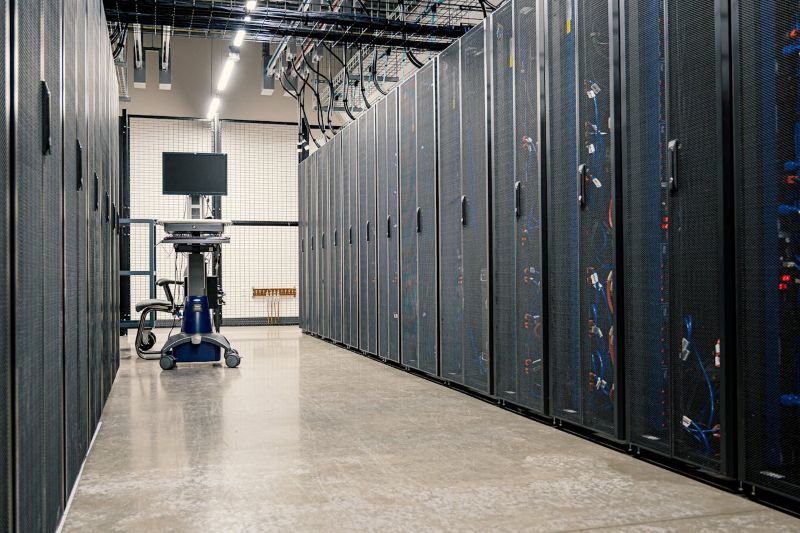
The market for IT infrastructure itself is a testament to its growing importance. We anticipate this market will continue its robust expansion, expected to grow at a compound annual growth rate (CAGR) of 10.5%, escalating from USD 120 billion to USD 241 billion over the next seven years, reaching USD 241 billion by April 2033. This growth underscores the continuous investment businesses are making in their digital foundations.
Integrating IT into Modern Business Infrastructure
Modern business infrastructure is inherently intertwined with IT. Hardware, such as servers, routers, and data storage devices, forms the physical layer. Software, including operating systems, enterprise resource planning (ERP) systems, customer relationship management (CRM) platforms, and content management systems (CMS), provides the operational intelligence. Networking components, like firewalls and switches, ensure seamless connectivity and data flow.
Crucially, strong cybersecurity measures are no longer optional; they are a fundamental pillar of IT infrastructure. With new cyber threats emerging daily, businesses must implement robust defenses, including intrusion detection systems, advanced firewalls, and quantum-safe encryption, to protect sensitive data and maintain operational integrity. Data storage solutions, from on-premises servers to cloud-based platforms, must be secure, scalable, and readily accessible.
System integration is another critical aspect. Disconnected systems lead to data silos, inefficiencies, and delayed decision-making. Effective IT infrastructure ensures that various applications and platforms communicate seamlessly through API connectivity, creating an integrated ecosystem. For businesses leveraging platforms like WordPress, specialized WordPress business infrastructure management ensures that their digital storefronts and content platforms are robust, secure, and performant, supporting their broader operational needs. Network services and reliable DNS lookup services are also vital, ensuring smooth internet operations and accessibility.
The Shift Toward Hybrid Cloud Environments
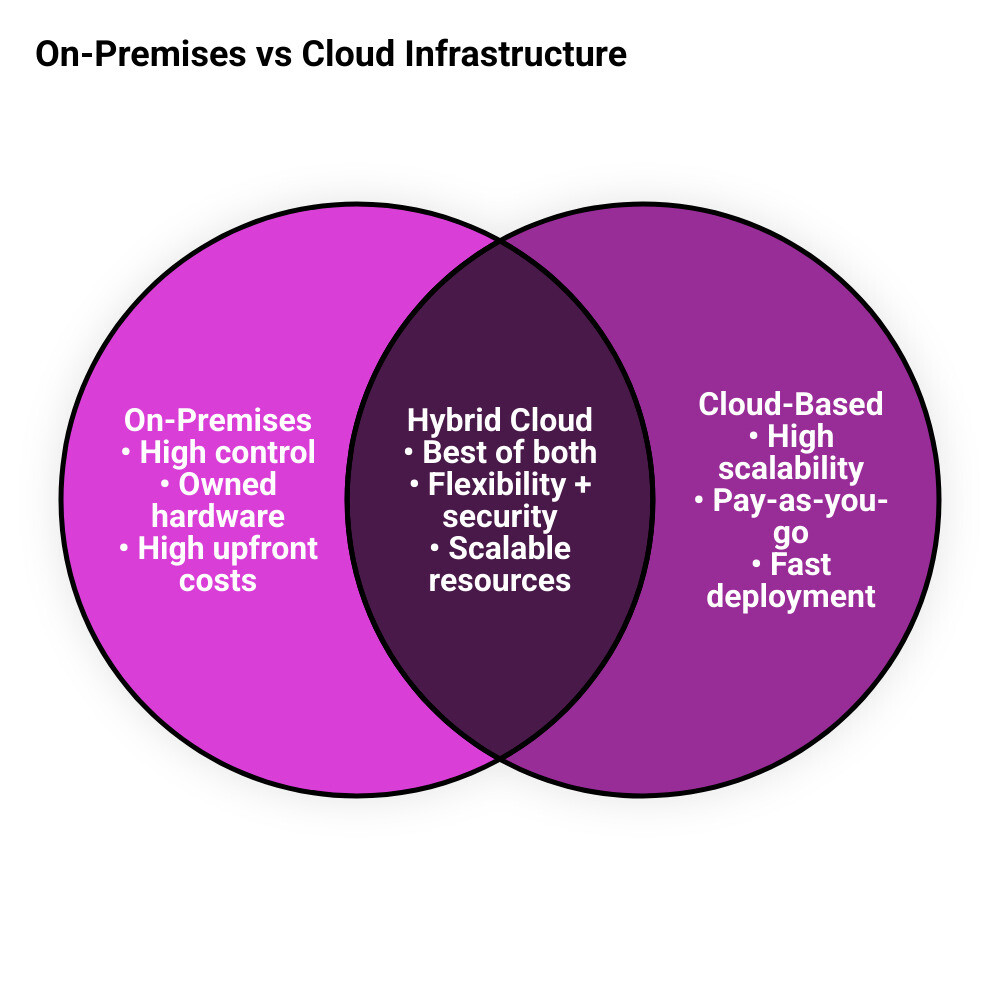
One of the most significant shifts in IT infrastructure has been the move from traditional on-premises setups to cloud-based and, increasingly, hybrid cloud environments. Traditional infrastructure involves owning and maintaining all hardware and software on-site, offering maximum control but often at a higher cost and with less flexibility. Cloud infrastructure, on the other hand, leverages virtualized resources provided by third-party vendors, offering scalability, flexibility, and reduced capital expenditure.
Feature Traditional On-Premises Infrastructure Cloud-Based Infrastructure Ownership Company owns hardware/software Third-party provider owns/manages hardware Control High Moderate (via provider’s services) Scalability Limited, requires hardware upgrades Highly elastic, scales on demand Cost Model High upfront capital expenditure Operational expenditure (pay-as-you-go) Maintenance Company’s IT team Provider’s responsibility Deployment Time Weeks/Months Minutes/Hours Flexibility Low High Disaster Recovery Complex, requires dedicated resources Often built-in, simplified
The hybrid cloud model combines the best of both worlds, integrating on-premises infrastructure with private and public cloud services. This approach allows businesses to maintain sensitive data or critical applications on-premises while leveraging the public cloud for scalable, less sensitive workloads. The global hybrid cloud market reached USD 125 billion in 2023 and is projected for substantial expansion, reaching an estimated USD 558.6 billion by 2032. This growth is driven by the demand for agility, cost-optimization, and the ability to unify diverse infrastructure resources. Hybrid cloud environments facilitate resource sharing, enhance disaster recovery capabilities, and provide the flexibility needed to respond instantly to changing business conditions, making them a cornerstone of modern digital transformation.
Strategic Benefits of Investing in Infrastructure
Investing in a robust business infrastructure yields a multitude of strategic benefits that directly contribute to an organization’s long-term success and resilience. These benefits extend beyond mere operational efficiency, touching upon every aspect of a business’s health and growth trajectory.
One of the most significant advantages is enhanced scalability. A well-designed infrastructure allows a business to expand its operations, products, or customer base without encountering crippling bottlenecks. This means that during periods of rapid growth, the underlying systems can seamlessly accommodate increased demand, preventing system strain and employee burnout. Coupled with scalability is replicability, enabling businesses to duplicate successful models or expand into new markets with consistent quality and predictable outcomes. This is particularly crucial for franchises or multi-location enterprises.
Cost-effectiveness is another major benefit. While initial investments can be substantial, a strong infrastructure reduces long-term operational costs by minimizing downtime, automating processes, and optimizing resource utilization. It allows for more efficient cash flow management and more accurate financial reporting, providing clear visibility into the organization’s economic health.
A solid infrastructure also significantly mitigates risks. By implementing robust cybersecurity, disaster recovery plans, and standardized processes, businesses can protect against data loss, operational disruptions, and security breaches. This not only safeguards assets but also preserves brand reputation and builds customer trust.
Furthermore, a strong infrastructure provides a distinct competitive advantage. Businesses with agile, efficient, and secure operations can respond faster to market changes, innovate more rapidly, and deliver superior customer experiences. This foundational strength supports effective marketing and sales efforts, ensuring that leads are captured, nurtured, and converted efficiently. For example, ensuring your digital presence is backed by a robust infrastructure directly supports the effectiveness of your business SEO services, leading to better visibility and higher organic rankings. This holistic approach ensures that every aspect of the business, from internal operations to external market presence, is fortified for success.
Overcoming Challenges and Future Trends
Developing and maintaining effective business infrastructure is not without its challenges. Many businesses grow reactively, adding tools and processes piecemeal, which can lead to a “disconnected tech stack.” This often results in system strain, employee burnout from manual workarounds, and pervasive data silos where critical information is isolated and difficult to access. Lack of technical expertise, user resistance to new systems, vendor lock-in, and the significant costs associated with integration and maintenance are common hurdles. The key to overcoming these is to approach infrastructure development with intention, rather than allowing it to evolve accidentally.

Looking ahead to April 2026 and beyond, several trends are shaping the future of business infrastructure. Hybrid cloud environments will continue to dominate, offering the flexibility and scalability businesses need to adapt quickly. The integration of Artificial Intelligence (AI) and Machine Learning (ML) is rapidly transforming how infrastructure is managed and optimized. AIOps, for instance, uses AI to automate IT operations, predicting and resolving issues before they impact users, reducing downtime and improving efficiency.
Agentic commerce, where AI acts on behalf of consumers or businesses to automate purchasing and service interactions, will demand even more resilient and intelligent underlying infrastructure. This requires real-time decision-making capabilities, advanced data analytics, and seamless integration across all systems. Businesses must invest in infrastructure that can support continuous data ingestion, processing, and analysis to leverage these AI-driven opportunities fully.
Proactive maintenance and continuous optimization will become even more critical. Regular assessments of infrastructure components, coupled with a commitment to ongoing evaluation and adaptation, will ensure that systems remain aligned with business objectives. The focus will shift from merely “having” infrastructure to building an “intelligent” infrastructure that can learn, adapt, and evolve with the business, making it a strategic asset rather than just an operational necessity.
Frequently Asked Questions about Business Infrastructure
Why is business infrastructure essential for organizational success?
Business infrastructure is essential because it provides the foundational stability upon which all other business activities rest. It acts as the critical link between human resources, operational processes, and technological tools, ensuring they are coordinated and optimized. Without a robust infrastructure, businesses struggle with inefficiencies, inconsistent quality, and an inability to achieve profitable growth. It enables operational excellence and provides the framework for consistent performance and strategic execution.
How does infrastructure support scalability during rapid growth?
Infrastructure supports scalability by providing replicable models and flexible systems that can expand to meet increased demand without breaking down. This includes digital systems that can handle higher transaction volumes, automated workflows that reduce manual effort, and well-defined processes that can be easily duplicated across new teams or locations. A scalable infrastructure leverages economies of scale, allowing businesses to grow without a proportional increase in costs, ultimately ensuring that rapid growth remains manageable and profitable.
What are the common challenges in developing business infrastructure?
Common challenges include integration strife, where disparate systems fail to communicate effectively, leading to data silos and operational friction. A lack of in-house technical expertise can hinder implementation and maintenance. Security risks are ever-present, requiring continuous vigilance and investment. User resistance to new tools and processes can impede adoption, while vendor lock-in can limit flexibility and increase costs. Finally, many businesses struggle with an “accidental” infrastructure, built reactively rather than through intentional design, which often leads to inefficiencies and bottlenecks during growth.
Conclusion
In the dynamic business landscape of April 2026, a robust and intelligently designed business infrastructure is no longer a luxury but a fundamental requirement for sustainable success. We’ve explored how this comprehensive framework, encompassing people, processes, facilities, and technology, forms the bedrock of organizational stability and growth. From the critical role of human capital and standardized procedures to the transformative power of IT and hybrid cloud environments, every component contributes to a business’s ability to thrive.
The strategic benefits—including enhanced scalability, replicability, cost-effectiveness, and risk mitigation—underscore the importance of proactive investment. While challenges such as integration complexities and the need for specialized expertise exist, the future trends of AI integration and intelligent automation offer exciting opportunities for optimization. By embracing holistic integration, committing to proactive optimization, and continually adapting to technological advancements, businesses can build an infrastructure that ensures long-term resilience and sustainable scaling, positioning them for success in the evolving global market.
You may also like: Cloud Outages Prove Centralisation is a Risk: Hammer Distribution Urges Immediate Hybrid Infrastructure Strategy Review