Click here to get this post in PDF
Executive Summary: Navigating the Modern Material Flow Challenge
In the dynamic world of logistics, warehouses are at a critical juncture. The rapid growth of e-commerce, coupled with persistent labor challenges and rising customer expectations for speed, demands a fundamental shift in how goods are handled. Modern warehouses must become agile, efficient, and highly accurate to remain competitive.
As global retail eCommerce sales are expected to reach $7.4 trillion by 2025, and consumers increasingly demand deliveries within days or even hours, traditional manual operations are struggling to keep pace. This has propelled warehouse automation from a luxury to a strategic imperative.
Warehouse automation systems involve integrating various technologies—from robotics to advanced software—to streamline processes, boost productivity, and optimize space. This comprehensive guide, focusing on a complete implementation approach for LD Systems warehouse automation systems, aims to demystify this critical transformation.
Throughout this article, we will explore the core types of automation technology, the processes they can revolutionize, key benefits, implementation challenges, and emerging trends for 2025–2026. Whether you’re considering your first automated solution or looking to enhance an existing setup, this guide provides the insights needed to navigate your automation journey successfully.
The modern warehouse, as of July 2026, faces unprecedented pressure. Labor constraints are a persistent issue, with more than 90% of warehouse operators reporting that cost-cutting measures are critical to balancing the need for more space and services with the difficulty of hiring and retaining a qualified workforce. This challenge is compounded by ever-increasing throughput demands and capacity limits within existing facilities. The shift from traditional retail to omnichannel and e-commerce fulfillment has fundamentally altered material flow, requiring greater agility and precision than ever before.
The Operational Reality in 2026
The operational landscape of 2026 is largely defined by the continued explosion of e-commerce. Online retail sales of physical goods are expected to approach $1.4 trillion, driving a massive increase in order volumes and complexity. This growth brings with it evolving order profiles, characterized by smaller, more frequent orders with a wider variety of SKUs. SKU proliferation means warehouses must manage a larger inventory footprint, often with unpredictable demand patterns. Customer expectations for delivery speed have become a dominant factor; a recent survey found that more than 40% of consumers in the United States expect their online packages to be delivered within two to three days of ordering, while 27% hope for same-day delivery. This intense pressure on delivery speed and accuracy makes traditional, manual warehousing increasingly unsustainable.
Defining True Systems Integration
True systems integration in warehouse automation transcends merely linking disparate pieces of equipment. It involves a cohesive orchestration of material flow, software coordination, and equipment connectivity to achieve unified automation. This means that physical assets like robots and conveyors communicate seamlessly with intelligent software layers, creating a single, intelligent operational ecosystem. The goal is to move beyond isolated automation islands to a holistic system where data flows freely, decisions are made in real-time, and operational outcomes are optimized across the entire facility. This level of integration is crucial for maximizing efficiency, minimizing errors, and achieving the agility required in today’s demanding supply chains.
Evaluating the Core Technologies of Warehouse Automation Systems
Warehouse automation encompasses a diverse array of technologies designed to address specific operational challenges. Understanding the capabilities and limitations of each is crucial for effective implementation. The choice of technology impacts storage density, scalability, implementation risk, and even ergonomics for human workers.
Technology Type Primary Function Throughput Potential Footprint Efficiency Typical ROI Factors AS/RS High-density storage & retrieval High Very High Space savings, labor reduction, inventory accuracy AMRs/AGVs Flexible material transport Medium to High Medium Labor reduction, increased flexibility, safety Conveyors/Sortation Continuous material movement & sorting Very High Medium Speed, sorting accuracy, reduced manual handling Pick-to-Light/Voice Picking Guided manual picking Medium Low to Medium Picking accuracy, speed, reduced training time Robotic Picking Automated item handling (piece/case) High Medium Labor reduction, 24/7 operation, error reduction Automated Storage and Retrieval Systems (AS/RS)
Automated Storage and Retrieval Systems (AS/RS) are foundational to high-density warehouse automation, designed to store and retrieve products with precision and speed. These systems leverage vertical space to a significant degree, allowing warehouses to free up to 90% of their floor space. Types include:
- Cube Storage (e.g., AutoStore-like systems): These systems use robots to store and retrieve bins stacked in a grid, offering extreme density and throughput. A 500 sq ft system, for instance, can provide up to 10 times more inventory in the same footprint.
- Vertical Lift Modules (VLMs): Enclosed systems with trays that are automatically presented to an operator at an ergonomic height, ideal for small parts and maximizing vertical space.
- Horizontal Carousels: A series of bins that rotate horizontally to bring items to a picker, often used for high-volume, small-item picking.
- Shuttle Systems: Robots that move horizontally and vertically within racking structures, offering high throughput for cartons and totes.
AS/RS systems excel at space optimization and can significantly reduce the travel time associated with manual picking, which can consume as much as 50% of working hours. For a deeper dive into the complete implementation guide for various automated storage and retrieval systems, including vertical lift modules and horizontal carousels, LD Systems warehouse automation systems offer comprehensive resources.
Autonomous Mobile Robots (AMRs) and AGVs
Autonomous Mobile Robots (AMRs) and Automated Guided Vehicles (AGVs) handle flexible material transport within the warehouse. While AGVs follow fixed paths (magnetic strips, wires, or sensors), AMRs use advanced navigation (GPS, laser guidance, AI) to operate in dynamic environments, adapting to obstacles and optimizing their routes in real-time. The market for mobile robots is expected to more than triple in value, from $4.5 billion in 2023 to more than $14 billion by 2027, highlighting their growing importance. AMRs offer unparalleled flexibility, enhancing safety by avoiding collisions and reducing the need for human intervention in repetitive transport tasks. They are crucial for goods-to-person workflows, bringing items directly to workstations and significantly boosting picking efficiency.
High-Speed Conveyor and Sortation Systems
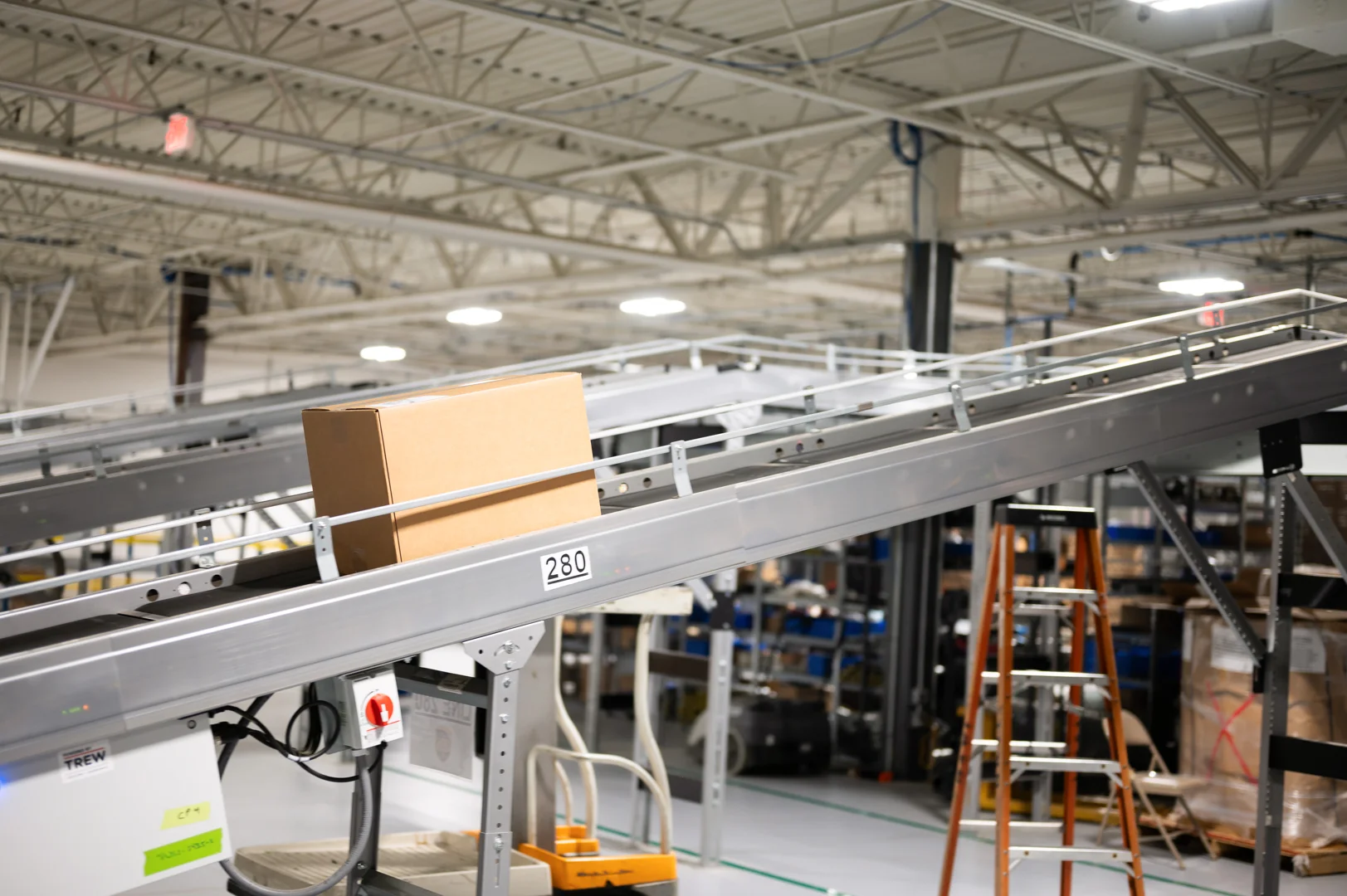
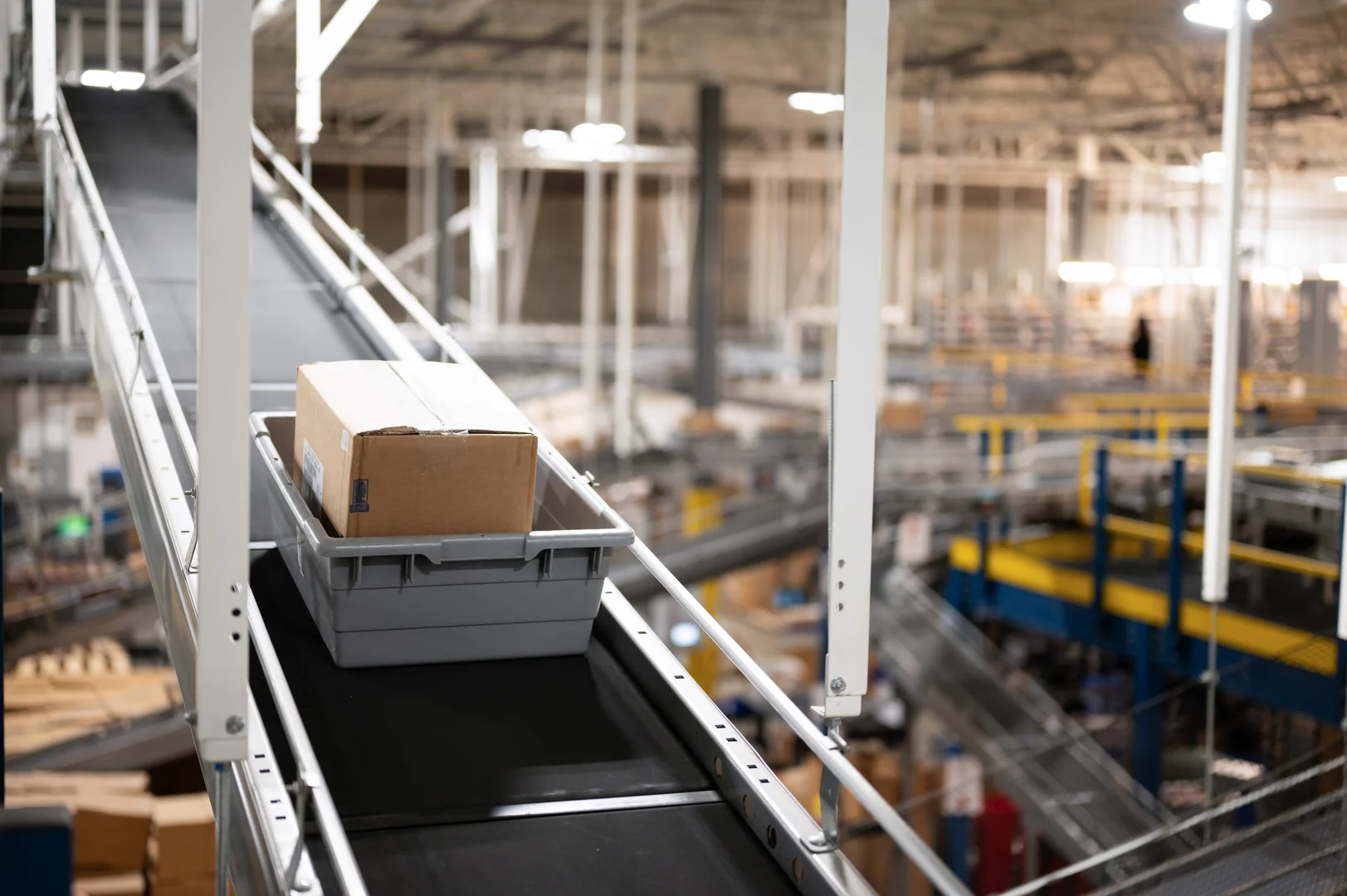
Conveyor and sortation systems are the backbone of continuous flow operations, moving products efficiently through various stages of the warehouse. High-speed conveyors transport items over long distances or between different levels, while sortation systems use technologies like barcode scanning and RFID to divert items to specific destinations (e.g., packing stations, shipping lanes). These systems are essential for managing high throughput volumes, especially in parcel sortation and e-commerce fulfillment, ensuring items reach their correct destinations quickly and accurately. Automated sortation systems can use barcode scanners and RFID for receiving, picking, and packing processes.
Advanced Picking and Goods-to-Person Technologies
Advanced picking technologies aim to improve the speed and accuracy of the picking process, often by bringing the goods to the person (Goods-to-Person, or GTP) rather than requiring the person to travel to the goods.
- Voice Picking: Uses speech recognition software and mobile headsets to guide pickers through tasks, allowing for hands-free operation and improved accuracy.
- Pick-to-Light Systems: Digital light displays guide pickers to the correct location and indicate the quantity to pick, dramatically reducing errors and improving speed.
- Collaborative Robotics (Cobots): Robots designed to work alongside human operators, assisting with tasks like lifting, packing, or presenting items, reducing worker fatigue and improving safety.
- Robotic Picking: Fully automated systems that use robotic arms with advanced grippers and vision systems to pick individual items or cases, offering 24/7 operation and high accuracy, often reaching 99.9% picking accuracy.
These technologies significantly enhance accuracy (picking accuracy can reach up to 99%) and increase picking rates (up to 550 lines per hour per worker for some systems), directly addressing the industry report finding that 25% of customers return items because they received the wrong one.
Designing the Integrated Architecture: WMS, WES, and WCS Coordination
Effective warehouse automation relies heavily on a sophisticated software architecture that orchestrates all physical and digital processes. This architecture typically comprises three interconnected layers: the Warehouse Management System (WMS), the Warehouse Execution System (WES), and the Warehouse Control System (WCS). Their seamless coordination is paramount for data quality, controls engineering, and integrating with legacy systems.
The Role of the Warehouse Management System (WMS)
The Warehouse Management System (WMS) is the strategic brain of the warehouse, managing inventory and optimizing storage and fulfillment processes. It handles core functions such as:
- Inventory Tracking: Providing real-time visibility into stock levels, locations, and movements.
- Order Release: Managing the flow of orders from an Enterprise Resource Planning (ERP) system to the warehouse floor.
- Cycle Counting: Automating inventory audits to maintain accuracy without full physical counts.
- Enterprise Resource Planning (ERP) Integration: Synchronizing data with broader business systems for a unified view of operations.
- Data Synchronization: Ensuring consistent and accurate data across all integrated platforms.
The WMS typically focuses on “what” needs to be done and “where” it should be done, providing the overarching plan for warehouse operations.
Bridging the Gap with Warehouse Execution Systems (WES)
The Warehouse Execution System (WES) acts as the tactical layer, bridging the gap between the WMS and the physical automation equipment. It takes the strategic directives from the WMS and translates them into executable tasks for the automation. Key functions include:
- Dynamic Decision-Making: Optimizing workflows in real-time based on current conditions and priorities.
- Labor Allocation: Directing human and robotic resources efficiently.
- Real-time Routing: Guiding AMRs, AGVs, and other equipment along the most efficient paths.
- Bottleneck Resolution: Identifying and mitigating congestion points to maintain flow.
- Order Prioritization: Adjusting task sequences to meet urgent order requirements.
The WES is crucial for maximizing the efficiency of automated systems, ensuring that equipment is utilized optimally and that orders are processed as quickly as possible.
Executing Physical Movement via Warehouse Control Systems (WCS)
The Warehouse Control System (WCS) is the operational layer, directly interfacing with and controlling the physical automation equipment on the warehouse floor. It executes the commands from the WES and manages the moment-to-moment operations of individual machines. Its responsibilities include:
- Machine Control: Sending precise instructions to conveyors, sortation systems, AS/RS, and robots.
- PLC Integration: Interfacing with Programmable Logic Controllers (PLCs) that govern individual machine movements.
- Sensor Networks: Interpreting data from sensors to monitor equipment status and material flow.
- Equipment Diagnostics: Providing real-time feedback on machine performance and potential issues.
- Sub-second Response Times: Ensuring immediate and coordinated actions across all automated components.
The WCS is critical for the smooth and reliable operation of the physical automation, ensuring that equipment performs as intended and that material handling is executed flawlessly.
Step-by-Step Engineering and Implementation Framework
Implementing warehouse automation is a complex undertaking that requires a structured, multi-phase approach. A well-defined framework ensures that the project progresses efficiently, minimizes risks, and ultimately delivers the desired operational improvements. This process involves thorough feasibility studies, detailed data analysis, robust risk mitigation strategies, and effective change management.
Phase 1: Comprehensive Facility Assessment and Data Modeling
The initial phase is critical for understanding the current state and defining future requirements. This involves a deep dive into existing operations:
- SKU Profiles: Analyzing product dimensions, weights, velocity, and storage requirements.
- Order History: Examining order volumes, patterns, peaks, and customer delivery expectations.
- Physical Constraints: Assessing the existing warehouse layout, ceiling height, column locations, and floor conditions.
- Growth Projections: Forecasting future demand, inventory levels, and operational needs for the next 5-10 years.
- Operational Bottlenecks: Identifying current pain points, inefficiencies, and areas where automation can provide the most significant impact, such as excessive travel time (which can be up to 50% of manual picking).
This data-driven approach forms the foundation for all subsequent design and implementation decisions.
Phase 2: System Design, Simulation, and Digital Twins
With a clear understanding of current and future needs, the next step is to design the automated solution. This phase leverages advanced tools and methodologies:
- Virtual Commissioning: Creating virtual models of the proposed system to test and validate designs before physical installation.
- Layout Optimization: Designing the optimal physical layout of automation equipment, considering material flow, accessibility, and space utilization.
- Workflow Modeling: Simulating how products will move through the automated system, identifying potential bottlenecks and optimizing processes.
- Equipment Selection: Choosing the most appropriate automation technologies (AS/RS, AMRs, conveyors, etc.) based on performance requirements, budget, and scalability.
- Capacity Testing: Running simulations to ensure the designed system can handle current and projected peak volumes.
The use of digital twins allows for iterative design and testing, reducing risks and ensuring that the final system meets performance expectations.
Phase 3: Physical Integration, Testing, and Go-Live Support
The final phase brings the design to life, followed by rigorous testing and support for a smooth transition:
- Controls Wiring: Installing and connecting all electrical and network infrastructure for the automation equipment.
- Software Testing: Thoroughly testing the WMS, WES, and WCS integrations to ensure seamless communication and functionality.
- Employee Training: Providing comprehensive training to staff on how to operate, monitor, and maintain the new automated systems, as well as how to collaborate with robots.
- Phased Deployment: Implementing the automation in stages, allowing for gradual integration and minimizing disruption to ongoing operations.
- Acceptance Testing: Verifying that the installed system meets all specified performance criteria and operational requirements before full handover.
Ongoing support and monitoring are crucial post-go-live to ensure stability and continuous optimization.
Measuring Business Value: ROI, Safety, and Operational Improvements
The decision to invest in warehouse automation is ultimately driven by the expectation of significant business value. This value extends beyond simple cost savings to encompass improved safety, enhanced operational capabilities, and the ability to scale with market demands.
Calculating the True Cost of Ownership
While the initial capital expenditure for automation can be substantial, it’s crucial to consider the true cost of ownership over the system’s lifecycle. This includes:
- Unplanned Downtime: The median cost of unplanned equipment downtime exceeds $100,000 per hour, making predictive maintenance and system reliability critical.
- Maintenance Costs: Regular servicing, parts replacement, and technician support.
- Energy Consumption: The power required to operate automated equipment. A non-refrigerated warehouse in the United States consumes around 6.1 kilowatt-hours (kWh) per square foot each year, and automation can impact this significantly, sometimes reducing it through optimized workflows.
- Labor Reallocation: The shift of human workers from repetitive tasks to higher-value activities.
- System Lifecycle: The expected lifespan of the equipment and the cost of future upgrades or replacements.
A comprehensive ROI calculation considers these factors against the operational savings generated by automation, such as reduced labor costs, improved accuracy, and increased throughput.
Ergonomics and Workplace Safety Outcomes
Warehouse automation significantly enhances workplace safety and ergonomics. Manual material handling is a leading cause of injuries, with overexertion, falls, and getting struck by an object being among the top disabling workplace accidents in 2022. Automation can mitigate these risks by:
- Reducing Repetitive Motion Injuries: Robots handle heavy lifting and repetitive tasks, protecting human workers.
- Minimizing Forklift Accidents: AMRs and AGVs can operate in designated zones, reducing human-driven forklift traffic.
- Improving Working Conditions: Automation can create a cleaner, more organized, and less physically demanding environment.
- Boosting Employee Retention: A safer and more engaging work environment contributes to higher job satisfaction and lower turnover.
By creating a safer and more ergonomic workplace, automation not only protects employees but also contributes to a more productive and stable workforce.
Selecting the Right Engineering Partner for LD Systems Warehouse automation systems
Choosing the right engineering partner is as critical as selecting the right technology. A skilled partner provides expertise in systems integration, vendor neutrality, engineering prowess, lifecycle support, and robust project management.
The Value of a Neutral Systems Integrator
A neutral systems integrator plays a pivotal role in ensuring a successful automation project. Unlike technology vendors who may promote their own products, an integrator offers an unbiased perspective, focusing solely on the client’s best interests. Their value lies in:
- Equipment Evaluation: Objectively assessing and recommending the best-fit technologies from various vendors.
- Custom Engineering: Designing bespoke solutions that perfectly match the unique operational requirements of a warehouse.
- Software Connectivity: Ensuring seamless integration between different hardware components and software layers (WMS, WES, WCS).
- Single Point of Contact: Streamlining communication and accountability throughout the project lifecycle.
- Implementation Risk Mitigation: Leveraging extensive experience to anticipate and address potential challenges, keeping projects on track and within budget.
How LD Systems Warehouse Automation Systems Deliver Operational Excellence
LD Systems warehouse automation systems are designed to deliver operational excellence by focusing on customized, integrated solutions. Their approach typically involves:
- Facility Evaluation: A thorough assessment of current operations and future needs to identify optimal automation opportunities.
- Custom Controls Engineering: Developing tailored control systems that ensure all equipment communicates and operates harmoniously.
- Material Flow Optimization: Designing workflows that maximize efficiency, throughput, and space utilization.
- Long-Term Scalability: Engineering solutions that can adapt and expand as business needs evolve, ensuring future-proofing of investments.
- Execution Reliability: Implementing robust systems with high uptime and providing ongoing support to maintain peak performance.
By partnering with an experienced provider like LD Systems, businesses can navigate the complexities of automation with confidence, ensuring their investment yields significant and sustainable operational improvements.
Frequently Asked Questions about Warehouse Automation Systems
What is the typical ROI timeline for a comprehensive warehouse automation project?
The ROI timeline for a comprehensive warehouse automation project can vary significantly based on factors such as the scale of the capital investment, the specific technologies implemented, and the operational savings achieved. While some highly efficient systems, like certain AS/RS installations, can demonstrate a payback period in as little as 17 months, a typical comprehensive project might see ROI achieved within 2 to 5 years. Key drivers for faster ROI include substantial labor reallocation, significant space optimization (e.g., freeing up to 90% of warehouse space), and dramatic improvements in picking accuracy and throughput.
How do automated systems integrate with existing legacy ERP or WMS software?
Integrating automated systems with existing legacy ERP or WMS software is a critical step that often involves several strategies. The most common approaches include:
- Middleware Solutions: Specialized software platforms that act as an intermediary, translating data between disparate systems.
- API Connectivity: Utilizing Application Programming Interfaces (APIs) to allow direct communication and data exchange between the automation software (WES/WCS) and the legacy ERP/WMS.
- Custom Interfaces: Developing bespoke connectors for unique or highly customized legacy systems.
- Data Mapping: Carefully defining how data fields in one system correspond to those in another to ensure accurate and consistent information flow. A well-planned integration strategy is essential to avoid data silos and ensure that the automation operates as a seamless extension of existing business processes.
What are the primary risks during a warehouse automation transition and how are they mitigated?
Several primary risks can arise during a warehouse automation transition, including business disruption, unexpected costs, and employee resistance. These risks can be mitigated through careful planning and execution:
- Business Disruption: This is minimized through phased implementation, where automation is introduced in stages rather than a complete overhaul. Rigorous testing in a simulated environment before go-live also helps identify and resolve issues without impacting live operations.
- Unexpected Costs: Comprehensive feasibility studies and detailed budgeting, including contingency funds, help manage this. A thorough understanding of the true cost of ownership, including maintenance and potential downtime, is crucial.
- Employee Resistance: This is addressed through proactive change management strategies. Early and continuous employee training, clear communication about the benefits of automation (e.g., improved safety, reallocation to higher-value tasks), and involving staff in the planning process can foster acceptance and collaboration.