Click here to get this post in PDF
What Are Commercial Surety Bonds and How Do They Protect Businesses?
For many businesses, navigating the regulatory landscape is a constant challenge, particularly when operations involve vehicles or services related to motor vehicle departments. Ensuring legal compliance and financial protection is not just good practice—it’s often a mandatory requirement. This is where commercial surety bonds play a vital role.
Among these, Department of Motor Vehicles (DMV) bonds are particularly crucial for a wide range of enterprises, from auto dealerships and registration services to motor carriers. These specialized bonds provide a financial guarantee that businesses will adhere to state regulations, protecting consumers and government entities from potential misconduct or financial loss.
In this extensive guide, we will explore DMV bonds, clarifying their purpose, identifying who needs them, and detailing the various types available. We’ll cover everything from bonded titles for individuals with missing vehicle ownership documents to the specific requirements for commercial entities like registration service providers. Our aim is to demystify this essential aspect of business and vehicle ownership, helping you understand the process, costs, and eligibility requirements to secure the right DMV bond for your operations.
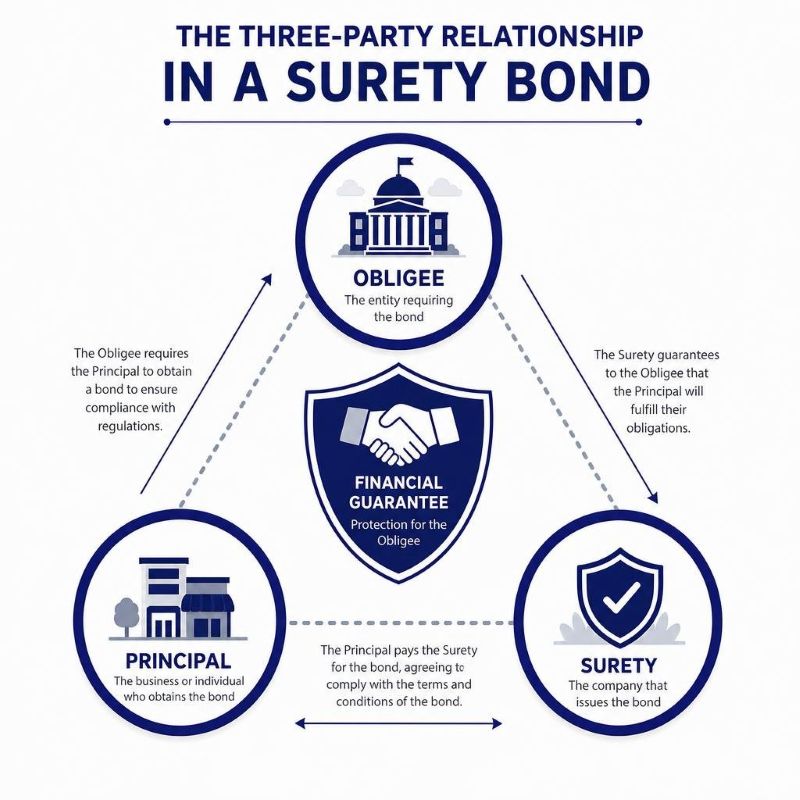
At its core, a commercial surety bond is a three-party contract designed to provide a financial guarantee. It involves an obligee (the entity requiring the bond, often a government agency like the DMV), a principal (the business or individual required to obtain the bond), and a surety company (the financial institution that issues the bond). The surety company essentially backs the principal’s promise to the obligee.
The primary purpose of these bonds is to ensure that the principal adheres to specific laws, regulations, and contractual obligations. Should the principal fail to meet these commitments, resulting in financial loss or damages to the obligee or the public, the surety company will pay out legitimate claims up to the bond’s face value. This provides a crucial layer of consumer protection and financial security.
For businesses, obtaining a surety bond demonstrates a commitment to ethical practices and regulatory compliance. It acts as a form of risk mitigation, assuring the public and governing bodies that the business is financially sound and trustworthy. Without these bonds, many commercial operations involving motor vehicles would be unable to obtain the necessary licenses or permits to operate legally. Understanding these foundational principles is key to navigating the various types of DMV bonds. For a deeper dive into the nuances of these financial guarantees, particularly in a business context, exploring resources on commercial surety bonds can be highly beneficial.
Key Types of DMV Bonds in the Commercial Sector
DMV bonds aren’t exclusively for individuals dealing with lost titles; they are a cornerstone of regulatory compliance for many businesses operating within the motor vehicle industry. These bonds ensure that businesses, from registration services to motor carriers, uphold their legal and financial responsibilities.
A comprehensive overview of DMV bond types reveals varied requirements across states and business functions. While a detailed table would illustrate these differences precisely, we can summarize that bond amounts, terms, and specific regulations vary significantly. For instance, some bonds are fixed amounts, while others are based on vehicle value or business volume.
Registration Service Bonds as Commercial Surety Bonds
Businesses that offer vehicle registration services to the public play a vital role in streamlining DMV processes, but they also handle sensitive information and significant funds. To protect consumers from potential fraud or mismanagement, many states require these businesses to obtain registration service bonds.
In California, for example, Vehicle Code Section 11401 mandates a $25,000 Vehicle Registration Service Bond for businesses assisting with vehicle registration. This bond acts as a financial safeguard, ensuring the service provider adheres to DMV regulations regarding document and fee handling. The premium for such a bond can be quite accessible, with a typical $25,000 registration service bond costing around $250 per year.
Similarly, in Connecticut, specific bonds are required for businesses involved in plate issuance and registration. A $5,000 Plate Issuance and Registration Bond (for Registration and Title Fees) often comes with a flat rate premium of $100. Additionally, a $20,000 Plate Issuance and Registration Bond (for Marker Plate Issuance or Customer Indemnity) might be required, with premiums starting at $200 annually, typically based on the applicant’s creditworthiness. These examples highlight how commercial surety bonds are tailored to the specific risks and financial exposures of different business activities.
Business Partner Automation Bonds as Commercial Surety Bonds
For businesses that integrate directly with the DMV’s automated systems to process transactions, a specialized type of bond known as a Business Partner Automation (BPA) bond is often required. These bonds are critical for maintaining the integrity and security of state records and financial transactions.
In California, for instance, participants in the BPA program are required to secure a substantial $1,000,000 bond. This bond ensures that these business partners handle state data and fees accurately and ethically, protecting against potential losses due to errors, fraud, or system misuse. The premium for such a high-value bond is typically a set annual fee, such as $10,000, reflecting the significant financial guarantee it provides. This bond covers the risks associated with direct database access, efficient transaction processing, and the paramount importance of record security.
Understanding the Bonded Title Process, Costs, and Eligibility
While commercial entities have their own bond requirements, individuals often encounter DMV bonds when dealing with a “bonded title.” This process is a legal pathway to establish vehicle ownership when traditional proof, such as a lost or improperly assigned title, is missing.
The core of a bonded title involves a surety bond that protects previous owners and the state from potential claims against the vehicle’s ownership. A key step in this process is determining the vehicle valuation, as this directly impacts the required bond amount.
Many states, including Texas, Alaska, Nebraska, and Wisconsin, typically require the bond amount to be 1.5 times (150%) the vehicle’s appraised value. This value is often determined by the vehicle’s Manufacturer’s Suggested Retail Price (MSRP) or a fair market appraisal. For example, in Nevada, a standard vehicle’s bond amount is 1.5 times its MSRP, while a salvage vehicle might only require a bond for 25% of its MSRP.
State-specific nuances are common:
- Texas: The bond amount is 1.5 times the vehicle’s value. Notably, for appraisals under $4,000 on vehicles 25 years old or older, the value is set at a minimum of $4,000.
- Wisconsin: The minimum bond value requested by the DMV is $2,500, and the bond is 1.5 times the vehicle’s value.
- Alaska: The bond or cash deposit must be 1.5 times the appraised value, and appraisals must not be more than 90 days old.
- Nebraska: The bond amount is 1.5 times the current value of the vehicle.
- North Carolina: The bond must be for 1.5 times the vehicle’s value, with a minimum of $100. The process often involves specific forms like the MVR-92D.
Beyond valuation, eligibility for a bonded title often includes requirements such as a physical inspection of the vehicle to verify its Vehicle Identification Number (VIN) and ensure it’s not stolen. Lienholder notification is also crucial; if there’s an outstanding lien, the applicant may need to provide proof that the lienholder has been contacted and given an opportunity to respond. The actual cost to purchase the bond is typically a small percentage (often 1-10%) of the total bond amount, influenced by the applicant’s credit history and other factors.
Frequently Asked Questions About DMV Bonds
Navigating DMV bonds can lead to several common questions, particularly regarding their duration, what happens in case of a claim, and the implications for vehicle transferability.
How long does a bonded title bond need to remain in effect?
The duration for which a bonded title bond must remain active varies by state, but a typical period is three years. This timeframe allows sufficient opportunity for any potential ownership claims to surface.
- In Nevada, the bond must remain in effect for three years before a clean title can be applied for.
- Nebraska also requires the bond to be maintained for three years.
- Similarly, North Carolina mandates the bond to remain on file with the NCDMV for three years.
- However, in Wisconsin, a surety bond is required to be held for a longer period of five years from the date the title is issued.
Once this specified period concludes without any successful claims against the bond, the “Bonded” brand can often be removed from the title, allowing the owner to apply for a clean title.
What happens if a claim is made against a DMV bond?
If a legitimate claim is made against a DMV bond, it typically initiates a multi-step process. First, the surety company will conduct an investigation to verify the validity of the claim. This involves reviewing documentation and evidence from all parties involved. If the claim is found to be valid and the principal (the bondholder) is determined to be at fault for a breach of their obligations or regulations, the surety company will pay the claimant up to the bond’s penal sum.
A surety bond is not insurance for the principal. While the surety pays the claimant, the principal is legally obligated to reimburse the surety company for any amounts paid out, including legal fees and expenses. This ensures financial restitution to the wronged party and reinforces the principal’s legal liability for their actions. Failing to reimburse the surety can lead to severe financial consequences for the principal.
Can a vehicle with a bonded title be sold or registered in another state?
Yes, a vehicle with a bonded title can generally be sold or registered in another state, but it’s important to be aware of potential challenges. The “Bonded” designation on a title serves as a notice that the vehicle’s ownership was established through an alternative process. When transferring a bonded title to another state, the new state’s DMV will typically recognize the title, but the “Bonded” status will often carry forward to the new owner’s title.
Buyers of vehicles with bonded titles should be fully informed of this status, as it can sometimes raise questions or concerns. While the bond is in effect, it provides a layer of protection against undisclosed ownership issues. However, state reciprocity can vary, and some states might have specific requirements or additional steps for registering a vehicle with a bonded title from another jurisdiction. It’s always advisable for both sellers and buyers to check with the respective state DMVs to understand any specific regulations regarding title branding and transferability to ensure a smooth transaction.
Conclusion
DMV bonds are an indispensable component of both individual vehicle ownership and commercial operations within the motor vehicle industry. From providing a legal pathway for individuals to secure titles for vehicles with missing documentation, to ensuring that businesses adhere to stringent regulatory standards, these bonds uphold financial integrity and consumer trust.
Understanding the various types of DMV bonds, their specific requirements, and the processes involved in obtaining and maintaining them is crucial for compliance and operational continuity. Whether you are a business navigating licensing requirements or an individual seeking to legitimize vehicle ownership, partnering with a knowledgeable surety provider is key. They can guide you through the complexities, ensuring you secure the appropriate bond, meet all legal obligations, and protect your interests and those of the public. By embracing these essential financial guarantees, we contribute to a more secure and trustworthy motor vehicle ecosystem for everyone.
Also read: What Affects the Cost of Surety Bonds