Click here to get this post in PDF
The Drivers of Laboratory Relocation and Waste Generation

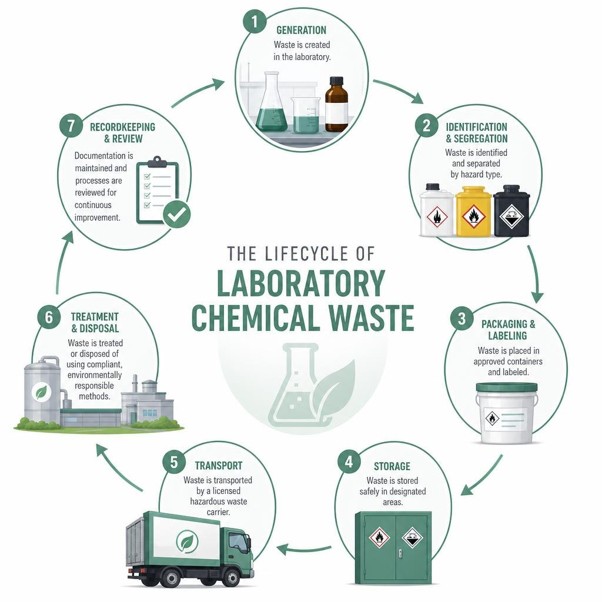
Relocating a laboratory is a significant undertaking. It demands meticulous planning and precise execution. This is especially true when the move involves chemical and hazardous waste.
Improper management of these materials can lead to severe consequences. These include jeopardizing valuable research, endangering personnel, and incurring significant regulatory fines. It can also cause considerable environmental damage.
This guide provides a comprehensive roadmap for laboratory managers. It focuses on achieving sustainable solutions for chemical and hazardous waste management during a lab move. From initial planning to post-relocation validation, every step is critical.
Readers will explore strategies for navigating the complexities of lab relocations. This includes strategic planning, comprehensive inventory assessments, and specialized logistics. A critical component of this process is a thorough inventory assessment, particularly for chemical and hazardous materials. Understanding how to manage these substances effectively is key to a successful chemical waste lab relocation. The guide also covers crucial aspects like risk mitigation and ensuring full regulatory compliance.
The goal is to ensure a smooth, safe transition. This protects personnel, research integrity, and the environment throughout the relocation process.
Laboratory relocations are often complex projects, driven by a variety of strategic and operational factors. These moves are rarely simple logistical exercises; instead, they represent significant investments and opportunities for organizations to optimize their operations, enhance research capabilities, or adapt to changing market demands. Understanding the underlying reasons for a move helps in tailoring the relocation strategy, particularly concerning the management of chemical and hazardous waste.
The Link Between Facility Sizing and Chemical Waste Management
The rapidly evolving life science, biotech, and pharmaceutical markets frequently necessitate adjustments to facility sizing. Organizations must constantly evaluate whether their current laboratory spaces are appropriately scaled to their needs. Leasing spaces that are too large can lead to burdensome costs, while facilities that are too small can stunt growth and operational efficiency. Strategic leases aligned with growth goals can catalyze innovation if managed properly, but they also bring the challenge of managing existing assets and waste.
When a laboratory relocates, it presents a unique opportunity to reassess its entire inventory, including chemicals, reagents, and samples. This is a critical moment for an inventory purge, where redundant or expired materials can be identified and properly disposed of, rather than simply moved to the new location. This proactive approach not only reduces the volume of items to be transported but also significantly impacts chemical waste management. By purging unnecessary items, labs can minimize their environmental liability, streamline operations in the new facility, and potentially reduce future waste disposal costs. Considering employee health, safety, and environmental liability during the facility search and lease negotiation phase can prevent future issues related to waste accumulation and disposal.
Why Organizations Relocate Their Laboratories
Organizations relocate their laboratories for a multitude of strategic reasons, each presenting its own set of challenges and opportunities for waste management and operational improvements:
- Expansion: A primary driver for relocation is growth. As research programs expand, new technologies are adopted, or staff numbers increase, existing facilities may become inadequate. Moving to a larger space allows for increased capacity, new instrumentation, and improved workflow.
- Consolidation: Conversely, some organizations may consolidate multiple smaller, disjointed lab structures into one centralized campus. This can improve collaboration, reduce overheads, and streamline resource allocation. This scenario often involves merging diverse chemical inventories and standardizing waste management protocols.
- Building Renovations or Upgrades: Existing facilities may require significant renovations, modernization, or upgrades to meet current safety standards, technological demands, or energy efficiency goals. A temporary or permanent relocation becomes necessary to facilitate these improvements.
- Funding Changes or Strategic Shifts: Changes in funding, mergers, acquisitions, or shifts in research focus can necessitate a move to a more cost-effective location, a facility with specialized infrastructure, or a site closer to strategic partners.
- Research Alignment: Labs may move to be closer to academic institutions, clinical sites, or industry collaborators, fostering synergistic research environments.
In every scenario, the relocation process forces a comprehensive review of operations, including asset management and, crucially, the generation and disposal of chemical and hazardous waste. This makes lab relocations a pivotal moment for implementing sustainable practices.
Strategic Planning and Timelines for Safe Lab Transitions
Effective strategic planning is the bedrock of a successful laboratory relocation. Without meticulous foresight and coordination, a lab move can quickly become a source of significant disruption, financial strain, and even safety hazards. The planning phase is where potential risks are identified and mitigated, stakeholders are aligned, and a clear roadmap for the entire transition is established. This phase is particularly critical for managing chemical and hazardous waste, as it dictates the protocols, resources, and timelines required for compliant and safe handling.
Establishing a 6 to 12 Month Relocation Timeline
A typical laboratory relocation is far from a spontaneous event. Industry experts consistently recommend initiating planning between six to twelve months in advance of the desired ‘go live’ date at the new facility. For local moves within a city, a minimum of four to six weeks might suffice for the physical transport, but complex relocations, especially those involving sensitive equipment, hazardous materials, or extensive regulatory hurdles, demand a much longer lead time.
This extended planning horizon allows for crucial activities such as:
- On-site Surveys: Thorough assessments of both the current and new facilities to understand infrastructure, space, and utility requirements.
- Milestone Tracking: Developing a detailed project plan with defined milestones, task assignments, and deadlines. Project management tools are invaluable for organizing, tracking, and reporting on each step of the move.
- Contingency Buffers: Building in buffer time to account for unforeseen delays, such as construction setbacks, equipment malfunctions, or regulatory approval processes.
- Phased Packing: Strategically planning the packing sequence, often starting with low-use items and leaving core instruments for later stages to minimize operational downtime.
Here is a list of critical timeline milestones for a typical lab relocation:
- Months 10-12 (Pre-Planning & Assessment): Define relocation objectives, form core team, conduct site assessments (old and new), preliminary inventory, budget estimation, vendor research.
- Months 7-9 (Detailed Planning & Procurement): Develop detailed project plan, finalize inventory, identify surplus assets, engage specialized movers/vendors, secure permits, plan hazardous waste disposal, communication strategy.
- Months 4-6 (Preparation & Pre-Move Logistics): Begin purging unnecessary items, order packing supplies, schedule equipment decommissioning with OEMs, finalize new facility layouts, conduct risk assessments.
- Months 1-3 (Execution & Phased Transition): Begin phased packing, coordinate IT and utility disconnections, conduct final hazardous waste pickups, transport non-critical items, communicate final schedules to staff.
- Weeks 1-2 (Physical Move & Setup): Transport critical equipment and samples, oversee unpacking and placement, reconnect utilities, initial IT setup.
- Days/Weeks Post-Move (Validation & Return to Operations): Equipment requalification and calibration, system testing, inventory validation, staff training, final safety walk-throughs, ongoing support.
Routine project meetings at all stages are essential to prepare the team, prevent surprises, and address any change orders promptly.
Assembling the Cross-Functional Relocation Team
A successful lab relocation hinges on a reliable team of internal and external stakeholders with excellent communication. This cross-functional team ensures that all aspects of the move—from scientific integrity to regulatory compliance—are meticulously managed. Key members typically include:
- Lab Leadership/Management: Provides strategic direction, approves budgets, and makes critical decisions.
- Project Manager: Oversees the entire relocation process, manages timelines, coordinates teams, and ensures communication flow.
- Facilities Managers: Responsible for assessing infrastructure at both sites, coordinating utility disconnections/reconnections, and managing building access.
- IT Specialists: Crucial for planning data migration, network setup, and ensuring seamless IT infrastructure at the new location. Early IT reconnection is vital for minimizing downtime.
- Environmental Health and Safety (EHS) Officers: Essential for ensuring regulatory compliance, managing hazardous materials, developing spill response plans, and overseeing decontamination procedures.
- Subject Matter Experts (SMEs): Lab scientists and technicians who understand the specific needs of their equipment, samples, and workflows.
- Original Equipment Manufacturer (OEM) Engineers: For specialized or sensitive equipment, OEMs may be required for professional decommissioning, transport, and recommissioning to maintain warranties and calibration.
- Specialized Movers and Relocation Partners: Companies with expertise in handling sensitive lab equipment, temperature-controlled samples, and hazardous materials. Their experience is invaluable for complex logistics.
- Procurement/Finance: Manages vendor contracts, budgets, and asset disposal/acquisition.
Building this team early and fostering open communication channels ensures that all perspectives are considered, risks are thoroughly assessed, and the relocation proceeds efficiently and safely.
Comprehensive Inventory Assessment and Asset Management
A thorough inventory assessment is arguably one of the most critical phases of any lab relocation. It goes beyond simply counting items; it involves a meticulous cataloging of every piece of equipment, every sample, and every chemical, providing the foundation for strategic decision-making regarding what to move, what to purge, and how to manage assets effectively. This process directly impacts safety, compliance, and cost control.
Conducting a Thorough Chemical and Sample Inventory
Before any physical movement begins, a detailed inventory of all laboratory contents is indispensable. This includes:
- Equipment: Cataloging all instruments, from large analytical machines to small benchtop devices. This should include make, model, serial number, current condition, and any specific handling requirements.
- Samples and Materials: Meticulously tracking all biological samples, chemical reagents, and consumables. For samples, this involves recording unique identifiers, storage conditions (e.g., temperature, light sensitivity), and any chain-of-custody requirements.
- Chemicals: For every chemical, documentation should include its name, quantity, hazard class, Safety Data Sheet (SDS) availability, storage requirements, and expiration date. This information is crucial for proper packing, transportation, and regulatory compliance.
Effective inventory management often utilizes specialized software or comprehensive spreadsheets for asset cataloging. Barcoding systems can significantly streamline this process, allowing for quick and accurate tracking. This is also the ideal time to identify any expired, degraded, or redundant chemicals that require proper disposal rather than relocation. This proactive approach to chemical waste management not only reduces the volume to be moved but also mitigates risks associated with transporting unnecessary hazardous materials. For detailed guidance on managing chemical waste during a lab move, exploring resources dedicated to chemical waste lab relocation can provide invaluable insights.
Managing Surplus Assets and Equipment Lifecycle
A lab relocation offers a unique opportunity to optimize asset management and consider the entire lifecycle of laboratory equipment. This phase involves deciding whether to retain, resell, or retire existing assets.
- Equipment Appraisal: Conducting a professional appraisal of equipment can help determine its fair market value, informing decisions about resale or liquidation.
- Surplus Liquidation: Unnecessary or outdated equipment can be liquidated through auctions or resale. This not only recovers capital that can be reinvested in the new facility but also reduces the environmental footprint by extending the life of functional equipment.
- Eco-friendly Disposal: For equipment that cannot be resold or repurposed, responsible and eco-friendly disposal methods should be employed, adhering to electronic waste (e-waste) regulations.
- Refurbished Systems: Relocation can also be an opportune time to upgrade equipment. Integrating refurbished systems can offer cost-effective solutions for rapid deployment in the new lab, providing modern capabilities without the expense of brand-new purchases.
By strategically managing surplus assets, laboratories can control costs, generate revenue, and contribute to a more sustainable circular economy, aligning with broader environmental goals.
Specialized Logistics for Sensitive Assets and Hazardous Materials
The movement of sensitive equipment, temperature-controlled samples, and hazardous materials distinguishes a laboratory relocation from a standard office move. These items demand specialized logistics, expert handling, and strict adherence to regulatory protocols to ensure their integrity, safety, and compliance throughout the journey.
Regulatory Compliance and Chemical Waste Management Protocols
Ensuring regulatory compliance is paramount when relocating a laboratory, especially concerning chemical and hazardous waste. Local, national, and international regulations—such as those from the Department of Transportation (DOT), Environmental Protection Agency (EPA), and Transport Canada’s Transportation of Dangerous Goods (TDG) regulations—govern the packing, labeling, transportation, and disposal of these materials.
Key steps for compliance include:
- Permit Acquisition: Obtaining all necessary permits for transporting hazardous materials well in advance of the move date. This can vary significantly based on the type and quantity of materials and the jurisdictions involved.
- Hazardous Waste Manifests: Preparing accurate and complete hazardous waste manifests, which serve as a chain-of-custody document from the point of generation to final disposal.
- Proper Labeling and Packaging: All chemical containers must be correctly labeled with hazard information and packaged in DOT- or TDG-approved containers suitable for their hazard class. This includes using appropriate absorbents and segregation techniques to prevent incompatible chemicals from mixing.
- Decontamination: All equipment and areas that have come into contact with hazardous substances must be thoroughly decontaminated before being moved.
- Expert Partners: Engaging specialized partners who are experts in hazardous waste management and transportation is crucial. These partners can provide proprietary waste management software for on-site paperwork completion, ensuring full compliance and efficient processing. They can handle a wide range of wastes, from common RCRA and non-RCRA wastes to highly specialized materials like pyrophoric, shock-sensitive, DEA-controlled substances, and radioactive waste.
Failure to comply with these regulations can result in significant fines, legal liabilities, and environmental damage. Therefore, a robust understanding and meticulous execution of chemical waste management protocols are non-negotiable.
Transporting Temperature-Controlled Samples and Live Animals
The relocation of temperature-sensitive samples (e.g., biological specimens, reagents, cell lines) and live animals requires extreme precision and contingency planning. Any deviation from required conditions can compromise years of research or endanger animal welfare.
- Temperature-Controlled Transport: For samples requiring specific temperature ranges (e.g., +4°C, -20°C, -80°C, or cryogenic -196°C), specialized cold chain logistics are essential. This involves:
- Ultra-Low Temperature (ULT) Freezers: Transporting ULT freezers with backup power or using dry ice shippers and liquid nitrogen cryotanks. Contingency plans, such as having backup freezers readily available, are critical.
- Real-time Monitoring: Utilizing Wi-Fi-enabled temperature monitoring devices to track conditions in real-time during transit, allowing for immediate intervention if temperatures deviate.
- Redundancy Planning: Implementing redundancy in transport methods and storage solutions to safeguard against equipment failure or unexpected delays.
- Live Animals: Moving live animals involves stringent ethical and regulatory considerations. This requires:
- Specialized Carriers: Engaging carriers experienced in animal transport, adhering to specific welfare guidelines and environmental controls.
- Veterinary Oversight: Ensuring veterinary oversight throughout the process to monitor animal health and minimize stress.
- Permits: Obtaining all necessary permits for animal transport, which can vary by species and destination.
Maintaining chain-of-custody documentation for all sensitive samples and live animals is vital for research integrity and regulatory accountability. These specialized logistics underscore the need for experienced relocation partners who possess deep scientific expertise.
Risk Mitigation, Decontamination, and Post-Move Validation
Even with the most meticulous planning, laboratory relocations carry inherent risks. Proactive strategies for risk mitigation, thorough decontamination of the old facility, and rigorous post-move validation at the new site are essential to ensure safety, compliance, and a swift return to full operational capacity.
Decommissioning and Environmental Cleanup Best Practices
Decommissioning the old laboratory space is as critical as setting up the new one. This phase focuses on ensuring that the vacated facility is safe, compliant, and environmentally sound.
- Equipment Decontamination: All equipment, including fume hoods, biosafety cabinets, and workbenches, must be decontaminated according to established protocols before removal. This prevents the spread of chemical or biological residues.
- Hazardous Waste Removal: All remaining chemical and hazardous waste must be properly identified, packaged, and removed by licensed hazardous waste disposal contractors. This includes problematic items like peroxidized ethers or corroded cylinders that cannot be safely shipped.
- Facility Cleanup: The entire space should undergo a thorough cleanup, including surfaces, drains, and ventilation systems, to remove any potential contaminants.
- Final Inspections: Conduct final inspections with EHS officers and facility management to ensure all decommissioning requirements have been met and the space is ready for handover or new occupants.
- Environmental Footprint Minimization: By carefully planning waste disposal, recycling materials where possible, and ensuring comprehensive cleanup, laboratories can minimize their environmental footprint associated with the relocation.
This systematic approach to decommissioning not only fulfills regulatory obligations but also prevents future liabilities and supports sustainable practices.
Recommissioning and Equipment Requalification
Once equipment arrives at the new facility, the work is far from over. Recommissioning and requalification are crucial steps to ensure that all instruments and systems are functioning correctly, accurately, and in compliance with regulatory standards.
- Installation and Setup: Specialized movers and OEM engineers will unpack, place, and install sensitive equipment, ensuring proper connections to utilities and infrastructure.
- Instrument Calibration: All analytical instruments must be recalibrated to ensure accuracy after transport. This often requires certified technicians.
- System Testing: Comprehensive testing of all laboratory systems, including HVAC, ventilation, safety showers, and eye washes, is necessary to confirm functionality.
- IQ/OQ/PQ Validation: For regulated laboratories (e.g., those adhering to GLP/GMP, CLIA, CAP standards), Installation Qualification (IQ), Operational Qualification (OQ), and Performance Qualification (PQ) processes are critical. These validations confirm that equipment is installed correctly, operates as intended, and performs consistently within specified parameters.
- Cleanroom Certification: If the new facility includes cleanrooms, they must be recertified to meet ISO standards.
- Regulatory Compliance Checks: A final review of all regulatory documentation, permits, and safety protocols for the new site is essential to ensure ongoing compliance.
- CMMS Updates: Update Computerized Maintenance Management Systems (CMMS) and asset management systems with the new locations and status of all equipment.
This rigorous post-move validation and requalification process is vital for maintaining research integrity, ensuring data reliability, and achieving a swift and confident return to productivity.
Frequently Asked Questions About Laboratory Relocations
Laboratory relocations are complex, and many common questions arise during the planning and execution phases. Addressing these proactively can help laboratory managers anticipate challenges and streamline the process.
How Far in Advance Should a Lab Relocation Be Planned?
For most laboratory relocations, planning should ideally begin six to twelve months in advance of the target move-in date. This extensive planning horizon is crucial for several reasons:
- Complexity: Lab moves involve sensitive equipment, hazardous materials, and strict regulatory compliance, which demand significant lead time.
- Vendor Coordination: Securing specialized movers, hazardous waste disposal services, and OEM technicians often requires booking well in advance.
- Permit Acquisition: Obtaining necessary permits for hazardous material transport and facility modifications can be a lengthy process.
- Site Preparation: Both the old and new sites require extensive preparation, including decommissioning, decontamination, and infrastructure setup.
While a local move of a small lab might be managed with 4-6 weeks of intense planning, anything more complex, such as moving an entire research building or involving cross-country logistics, will certainly require the longer 6-12 month timeframe.
What Are the Biggest Risks During a Laboratory Move?
Several significant risks can jeopardize a laboratory relocation:
- Specimen Loss or Degradation: Failure in temperature control during transport of biological samples can lead to irreparable loss of years of research.
- Equipment Damage or Calibration Drift: Sensitive instruments are vulnerable to shock, vibration, or improper handling, leading to damage, loss of calibration, or even complete malfunction.
- Regulatory Non-Compliance: Improper handling, labeling, or transportation of hazardous materials can result in severe fines, legal action, and operational shutdowns.
- Hazardous Spills or Contamination: Accidents involving chemicals or biological agents during transit or setup pose risks to personnel, the environment, and the integrity of the new facility.
- Extended Operational Downtime: Poor planning can lead to prolonged periods where the lab cannot conduct research, incurring significant financial losses and delaying critical projects.
- Data Loss: Inadequate planning for IT infrastructure migration and data safeguarding can result in irretrievable data loss.
Mitigating these risks requires comprehensive planning, robust risk assessments, emergency preparedness protocols, and the engagement of experienced, specialized partners.
How Can a Lab Minimize Operational Downtime During a Move?
Minimizing operational downtime is a key objective for any lab relocation, as prolonged shutdowns can be costly and detrimental to research progress. Strategies include:
- Phased Transitions: Instead of a single, abrupt move, laboratories can implement a phased approach. This involves moving departments or sections sequentially, allowing some operations to continue while others transition.
- Staggered Workstation Relocations: Moving staff workstations in stages ensures that personnel can remain productive for as long as possible, either at the old or new site.
- Early IT Setup: Prioritizing the setup and testing of IT infrastructure at the new location ensures that data access and communication systems are operational before staff arrive.
- Pre-Scheduled Validation and Calibration: Scheduling equipment requalification and calibration services immediately upon arrival at the new site accelerates the process of bringing instruments back online.
- Temporary Access and Resources: Providing temporary access to essential equipment or facilities during the transition period can bridge gaps in operational capability.
- Clear Communication: Keeping all staff informed about the move schedule, their roles, and expected disruptions helps manage expectations and reduces stress.
- Strategic Inventory Purge: Reducing the volume of items to be moved through a thorough inventory assessment minimizes packing, transport, and unpacking time.
By implementing these strategies, laboratories can significantly reduce the impact of relocation on their daily operations and ensure a quicker return to full productivity.
Conclusion
Laboratory relocations are transformative events that, when managed strategically, can propel an organization forward. However, the inherent complexities, particularly concerning chemical and hazardous waste management, demand an unwavering commitment to meticulous planning, strict regulatory compliance, and robust risk mitigation. From the initial decision to relocate, driven by facility sizing or growth, through the intricate process of inventory assessment, specialized logistics, and post-move validation, every step offers an opportunity to implement sustainable practices.
By embracing sustainable transitions, laboratories not only protect their invaluable research, personnel, and the environment but also optimize their operational efficiency and financial health. Building a reliable, cross-functional team, engaging expert relocation partners, and adhering to a comprehensive timeline are not just best practices; they are essential for navigating the challenges of a lab move successfully. A well-executed relocation ensures operational continuity, fosters a culture of safety, and positions the laboratory for future innovation and growth in the dynamic scientific landscape of July 2026 and beyond.
Also read: What Laboratory Specimen Labels Are, And How To Properly Use Them