Click here to get this post in PDF
The Strategic Role of Estate Planning and Life Insurance


We all work hard to protect our loved ones and the wealth we create. Estate planning is essential for ensuring your legacy enduring. It is much more than just writing a will. It involves careful decisions about your assets, your debts, and your family’s future well-being.
Life insurance is a powerful tool in this process. It provides vital financial security and immediate cash liquidity. This can shield your family from unexpected costs and potential taxes. It also helps guarantee that your final wishes are carried out, even in complex situations.
In this extensive guide, we will explore the strong connection between estate planning and life insurance. We will explain different policy types, smart ownership strategies, and important tax considerations. We’ll also look at advanced uses, from business planning to making inheritances fair. Our goal is to help you build a robust and inclusive estate planning strategy that fits your unique needs.
Estate planning is a comprehensive process designed to manage and distribute your assets after your passing, while minimizing taxes and administrative burdens. Life insurance plays a pivotal role in this process, offering unique benefits that traditional assets often cannot. While many believe estate planning is solely for the ultra-wealthy, it’s a critical component for anyone looking to ensure their wishes are met and their loved ones are protected.
A key concern in estate planning is the potential impact of federal and state estate taxes. As of August 2026, the federal estate tax exemption stands at a generous $15 million per individual, meaning estates valued below this amount are not subject to federal estate tax. However, this exemption could be significantly reduced by one-half in 2030 if the Tax Cuts and Jobs Act sunsets, making proactive planning essential. Furthermore, 17 states currently impose either an estate tax or an inheritance tax, often with much lower exemption thresholds than the federal level. For instance, most state estate tax exemptions are considerably lower than $15 million, with Connecticut being an exception. Life insurance, when structured correctly, can ensure that the death benefit is excluded from the gross estate, thus avoiding these taxes and providing a powerful wealth transfer mechanism outside of probate.
Providing Immediate Estate Liquidity and Tax Settlement
One of the most critical functions of life insurance in estate planning is its ability to provide immediate tax liquidity. Estate taxes, whether federal or state, must be paid within nine months of death. This tight IRS deadline can create immense pressure on heirs, particularly if the estate is rich in illiquid assets like real estate, a family business, or valuable collections. Without sufficient cash on hand, executors may be forced into fire sales, selling assets below their true market value to meet the nine-month obligation. This forced liquidation can erode the value of the inheritance and cause significant financial distress for beneficiaries.
Life insurance addresses this challenge directly. The death benefit, typically paid out quickly and income tax-free to beneficiaries, provides the necessary cash to cover estate taxes, settlement costs, outstanding estate debt, and administrative expenses without touching the core assets. This ensures that the deceased’s legacy can be preserved and distributed as intended, free from the burden of immediate financial obligations.
Inheritance Equalization for Illiquid Assets and Blended Families
Life insurance is an invaluable tool for achieving asset equalization among heirs, especially in situations involving illiquid assets or blended families. Consider a family business or agricultural land, such as a farm, that a parent wishes to pass down to one child who is actively involved in its operation. Without careful planning, this could leave other non-operating heirs feeling unfairly treated, as they receive no direct share of the primary family asset.
Life insurance offers a solution: the parent can purchase a policy with a death benefit equal to the value of the business or farm, naming the non-operating children as beneficiaries. This way, the operating child receives the illiquid asset, while the other children receive an equivalent cash inheritance, ensuring fairness and harmony within the family. This strategy is particularly effective in farm succession planning.
Similarly, in blended families or second marriages, life insurance can be used to ensure that children from a previous marriage receive their intended inheritance, while a current spouse is also provided for. For example, a policy can be set up to benefit children from a first marriage, while other assets or a trust can provide for the current spouse. This careful planning prevents potential conflicts and ensures that the wishes of the deceased are honored across all family relationships.
Evaluating Policy Types: Term vs. Permanent Coverage
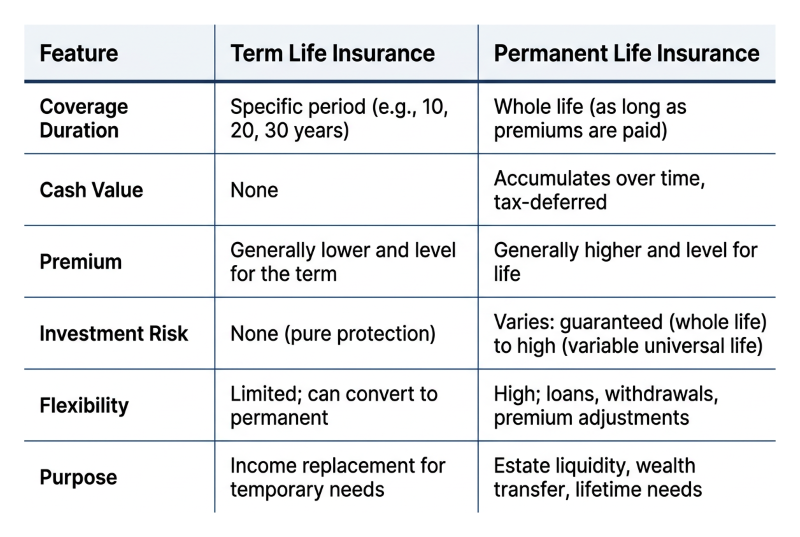
When incorporating life insurance into an estate plan, understanding the fundamental differences between policy types is crucial. The two primary categories are term life insurance and permanent life insurance, each offering distinct advantages and disadvantages in terms of cost disparities, duration limits, and the nature of protection.
Term life insurance provides pure protection for a specified period—a “term”—such as 10, 20, or 30 years. It’s akin to renting insurance; if the insured dies within the term, the death benefit is paid. If the term expires and the insured is still alive, the coverage ends, and there’s no cash value or residual benefit. This makes term insurance generally more affordable, offering maximum death benefit for the lowest premium, which is often ideal for younger individuals with significant temporary financial obligations, like raising children or paying off a mortgage.
Permanent life insurance, on the other hand, offers lifelong guarantees as long as premiums are paid. It’s a more comprehensive product, combining a death benefit with a cash value component that grows over time on a tax-deferred basis. While its premium affordability is significantly higher than term insurance for the same death benefit, it provides certainty of payout and potential for wealth accumulation.
Here’s a comparison of their key features:
Choosing the Best Estate Planning and Life Insurance Policy Types
The choice between term and permanent life insurance hinges on your specific estate planning goals and financial situation.
- Term Life Insurance: Best suited for temporary needs, such as providing for dependents until they are financially independent, covering a mortgage, or funding a child’s education. Many term policies offer convertibility riders, allowing you to convert to a permanent policy without new medical underwriting if your health declines, which can be a critical safety net.
- Permanent Life Insurance: This category includes several types:
- Whole Life: Offers guaranteed premiums, death benefit, and cash value growth. It’s the most conservative permanent option, providing predictability.
- Universal Life (UL): Provides more flexibility, allowing adjustments to premiums and death benefits. Cash value growth is tied to interest rates.
- Indexed Universal Life (IUL): Cash value growth is linked to a market index (like the S&P 500) but typically with downside protection, offering potential for higher returns than traditional UL.
- Variable Universal Life (VUL): Allows policyholders to invest the cash value in sub-accounts similar to mutual funds, offering the highest growth potential but also the highest investment risk.
For estate planning, permanent policies are generally preferred because they guarantee a payout regardless of when death occurs, making them ideal for long-term needs like estate tax liquidity, funding buy-sell agreements, or lifetime spousal support. Survivorship policies, also known as second-to-die policies, are particularly cost-effective for married couples. They cover two lives and pay out only upon the death of the second spouse, which often aligns with when federal estate taxes become due.
Cash Value Accumulation, Investment Risks, and Living Benefits
A significant feature of permanent life insurance is its cash value component. This cash value grows tax-deferred and can be accessed during the insured’s lifetime through policy loans or withdrawals. These funds can be used for various purposes, often on a tax-free basis, such as supplementing retirement income, funding a child’s education, or covering unexpected expenses.
However, the investment risks associated with cash value vary widely:
- Whole Life: Offers guaranteed cash value growth, with virtually no investment risk to the policyholder.
- Universal Life: Shares interest rate risk with the insurer; cash value growth is tied to prevailing interest rates.
- Indexed Universal Life: Offers growth potential linked to market indices, typically with a floor to protect against losses, but also a cap on gains. The policyholder bears some market risk but is protected from extreme downturns.
- Variable Universal Life: Policyholders choose investment sub-accounts, bearing all the equity risk and potential for significant gains or losses.
Beyond cash value, many permanent policies include living benefits or riders, such as accelerated death benefits. These allow access to a portion of the death benefit while the insured is still alive if they suffer from a terminal, chronic, or critical illness. Some policies also offer long-term care riders, providing funds to cover nursing home or in-home care expenses, which can be a valuable addition to a comprehensive estate plan.
Policy Ownership, Tax Traps, and ILIT Administration
The ownership of a life insurance policy is a critical determinant of whether its death benefit will be included in the insured’s taxable estate. This distinction is paramount for effective estate planning, particularly for estates that may approach or exceed federal and state exemption thresholds.

If an individual owns a life insurance policy on their own life, the death benefit will be included in their gross estate for estate tax purposes. This is because the insured retains “incidents of ownership,” which are rights such as the ability to change beneficiaries, borrow against the policy, or cancel it. To avoid this, careful consideration must be given to who should own the policy. Options include an individual (other than the insured), a trust, or a business entity. For high-net-worth individuals, using an Irrevocable Life Insurance Trust (ILIT) is a common strategy to remove the death benefit from the taxable estate. This involves relinquishing incidents of ownership to the trust. The trust then becomes the owner and beneficiary, managed by a trustee.
Integrating Estate Planning and Life Insurance for Wealth Transfer
An Irrevocable Life Insurance Trust (ILIT) is a specialized trust designed to own life insurance policies. When an ILIT owns the policy, the death benefit proceeds are paid directly to the trust upon the insured’s death, bypassing the insured’s taxable estate. This means the funds are not subject to federal estate taxes, which can be as high as 40% on amounts exceeding the exemption. As of August 2026, the federal estate tax exemption is $15 million, but even with this high threshold, an ILIT remains a powerful tool for significant wealth transfer.
The ILIT structuring allows the grantor (the person establishing the trust) to dictate how and when the death benefit is distributed to beneficiaries, providing control over the legacy. This strategy is often referred to as a “wealth multiplier” because relatively small annual gifts (within the annual gift tax exclusion, which will be $19,000 as of 2025) made to the ILIT to cover premiums can leverage a much larger, tax-free death benefit for heirs. For those looking to optimize their wealth transfer strategies and ensure their assets are distributed efficiently, exploring advanced life insurance strategies with a qualified advisor is highly recommended.
Navigating Policy Ownership Traps, Crummey Powers, and the Three-Year Rule
Despite the benefits of ILITs, several critical ownership traps and administrative requirements must be carefully navigated to ensure the trust functions as intended and avoids unintended tax consequences.
One common pitfall is the “Goodman Triangle” or “Goodman Rule,” which refers to a gift tax trap. This occurs when the insured, the policy owner, and the beneficiary are three different entities or individuals. For example, if a husband is the insured, his wife owns the policy, and their children are the beneficiaries, the IRS could deem the death benefit payout to the children as a taxable gift from the wife, potentially triggering gift taxes. Proper structuring, where the ILIT is both owner and beneficiary, avoids this.
Another crucial aspect is the three-year rule under IRC Section 2035. If an existing life insurance policy is transferred to an ILIT, and the insured dies within three years of that transfer, the death benefit will be pulled back into the insured’s taxable estate. To avoid this, it is generally preferable for the ILIT to purchase a new policy directly. If an existing policy must be transferred, the grantor must survive for at least three years after the transfer for the death benefit to be excluded from the estate.
To qualify premium contributions to an ILIT for the annual gift tax exclusion, Crummey powers are essential. Gifts to an irrevocable trust are typically considered “future interests” and do not qualify for the annual exclusion unless beneficiaries are given a temporary right to withdraw the gifted funds. Crummey notices inform beneficiaries of their right to withdraw the premium contribution for a short period (typically 30-60 days). While beneficiaries rarely exercise this right (as it would diminish their future inheritance), the existence of this withdrawal window converts the gift into a “present interest,” allowing it to qualify for the annual gift tax exclusion and avoid using up the grantor’s lifetime gift tax exemption. Maintaining meticulous records and consistently issuing these notices are administrative requirements crucial for the ILIT’s effectiveness.
Advanced Applications: Business Succession, Repurposing, and Split-Dollar Funding
Life insurance extends far beyond basic estate tax planning, offering sophisticated solutions for business owners, charitable giving, and adapting to evolving tax landscapes.

Business Continuity, Buy-Sell Funding, and Charitable Giving
For business owners, life insurance is an indispensable tool for ensuring corporate continuation and stability. It is commonly used to fund buy-sell agreements, which are contracts dictating how a deceased or departing owner’s share of a business will be transferred to the remaining owners or the company itself.
- Cross-Purchase Agreements: Each owner purchases a policy on the lives of the other owners. Upon an owner’s death, the surviving owners use the death benefit to buy the deceased’s shares from their estate.
- Entity Redemption Agreements: The business itself owns policies on each owner. Upon an owner’s death, the company uses the death benefit to redeem the deceased’s shares.
These arrangements provide essential buyout liquidity, preventing the forced sale of the business or disputes among heirs. They also help establish a fair business valuation. Recent court cases, such as Connelly v. United States, highlight the importance of careful structuring to avoid unintended estate tax consequences related to life insurance funding of buy-sell agreements.
Life insurance also serves a vital role in key person coverage. If a critical employee or owner passes away, the death benefit can compensate the business for lost revenue, recruitment costs, and operational disruptions, ensuring its survival.
Beyond business, life insurance is a powerful vehicle for charitable giving. Individuals can name a charity as a beneficiary of a policy or donate an existing policy to a qualified 501(c)(3) nonprofit organization. Donating a policy can provide immediate income tax deductions for the cash value and future deductions for premium payments, while creating a substantial future legacy for the chosen cause. Life insurance can also fund charitable remainder trusts, providing income to beneficiaries for a period, with the remainder going to charity.
Split-Dollar Financing and Repurposing Policies for Changing Tax Thresholds
Advanced strategies like split-dollar arrangements can be used to finance life insurance premiums, particularly within an irrevocable trust. In a split-dollar plan, two parties (e.g., an employer and an employee, or an individual and an ILIT) share the costs and benefits of a permanent life insurance policy. One party typically pays the premiums, while the other holds rights to the cash value or a portion of the death benefit. This can be an effective way to fund substantial policies without a single party bearing the entire premium burden.
The dynamic nature of tax legislation, including the potential sunset of the Tax Cuts and Jobs Act in 2030, means that estate tax exemptions could change significantly. This uncertainty necessitates flexible estate planning. Life insurance policies, especially those held in ILITs, can be repurposed if estate tax exposure is reduced or eliminated.
- Trust Decanting: An existing ILIT can sometimes be “decanted” (transferred) into a new trust with updated provisions, allowing the policy to serve new purposes, such as funding a Section 678 trust (where a beneficiary is treated as the owner for income tax purposes), creating a family bank, or funding college expenses.
- Policy Purchase by Grantor: If an ILIT is no longer needed for estate tax purposes, the grantor might purchase the policy from the trust, using the cash value for their own needs, such as retirement income or long-term care, often facilitated by a Section 1035 exchange to defer taxes.
This flexibility allows policies to adapt to changing financial circumstances and tax laws, ensuring that the asset continues to serve a valuable purpose in the overall estate plan, acting as a sunset hedge against future exemption changes.
Frequently Asked Questions About Life Insurance in Estate Plans
We understand that estate planning with life insurance can be complex, and many common inquiries arise. Here, we address some key questions to provide clarity and help ensure proper execution rules are followed.
Does life insurance go through probate if named to a beneficiary?
Generally, life insurance proceeds bypass the probate process entirely, provided there is a designated living beneficiary named on the policy. Life insurance is a contract between the policyholder and the insurance company, and the death benefit is paid directly to the named beneficiary by operation of this contract, outside of your will. This means the funds are typically distributed much faster than assets that must go through probate court, avoiding delays and court fees.
However, there are default pitfalls: if no beneficiary is named, or if all named beneficiaries predecease the insured and no contingent beneficiaries are listed, the death benefit will typically revert to the insured’s estate. In such cases, the proceeds would indeed go through probate, becoming subject to court oversight, potential creditor claims, and the terms of the will. Therefore, regularly reviewing and updating beneficiary designations is crucial.
How does an ILIT keep life insurance proceeds out of a taxable estate?
An Irrevocable Life Insurance Trust (ILIT) is specifically designed to remove life insurance proceeds from a taxable estate. It achieves this through third-party ownership and the relinquishment of incidents of ownership.
When an ILIT is established, it becomes the legal owner of the life insurance policy. The grantor (the insured) transfers ownership of an existing policy to the ILIT or, more commonly and preferably, the ILIT purchases a new policy directly. By doing so, the grantor relinquishes all “incidents of ownership”—meaning they can no longer change beneficiaries, borrow against the policy, or cancel it.
Upon the insured’s death, the death benefit is paid directly to the ILIT, not to the insured’s estate. Because the insured did not own the policy at the time of death, the proceeds are not included in their gross taxable estate and are thus exempt from federal estate taxes. The trustee of the ILIT then manages and distributes these funds according to the trust’s terms, which can include using the cash to purchase illiquid assets from the estate or provide liquidity loans to the estate to pay taxes and expenses.
What happens if an existing policy is transferred to a trust within three years of death?
This scenario triggers the “three-year lookback rule” under IRC Section 2035. If the grantor transfers an existing life insurance policy to an ILIT (or any other individual or entity) and dies within three years of that transfer, the full death benefit of the policy will be pulled back into the grantor’s gross taxable estate for estate tax purposes.
This rule is designed to prevent individuals from making “deathbed” transfers of life insurance policies solely to avoid estate taxes. The value included in the estate is the full death benefit, not just the cash value or the interpolated terminal reserve value at the time of transfer.
To avoid this clawback, the grantor must survive for at least three years after the transfer. This is why estate planners often recommend that an ILIT purchase a new policy directly, rather than having an existing policy transferred, as this avoids the three-year rule altogether. If transferring an existing policy is the only option, be aware of this rule and plan accordingly.
Conclusion
Navigating the complexities of estate planning requires foresight, precision, and a deep understanding of financial and legal instruments. Life insurance stands out as an exceptionally versatile and powerful tool within this landscape. From providing essential liquidity for estate taxes and settlement costs to ensuring equitable inheritances among diverse family structures, its strategic application can safeguard your legacy and provide peace of mind for your loved ones.
As we’ve explored, the choice of policy type, careful consideration of ownership, and meticulous administration of trusts like ILITs are critical for maximizing benefits and avoiding unintended tax pitfalls. The current tax environment in August 2026, with its high federal estate tax exemptions, still underscores the non-tax benefits of life insurance for liquidity, family harmony, and business continuity. Moreover, the potential for future tax law changes means that flexible planning and periodic reviews are more important than ever.
We encourage you to engage with qualified professionals—estate planning attorneys, financial advisors, and insurance specialists—to ensure holistic coordination and legal alignment of your estate plan. By doing so, you can build a robust framework that reflects your wishes, protects your assets, and preserves your legacy for generations to come.
You may also like:
Navigating Personal Financial and Estate Planning
Modern Approaches to Wealth Management: Integrating Alternatives, Technology, and Holistic Planning