Click here to get this post in PDF
Defining the Discipline vs. Traditional Engineering
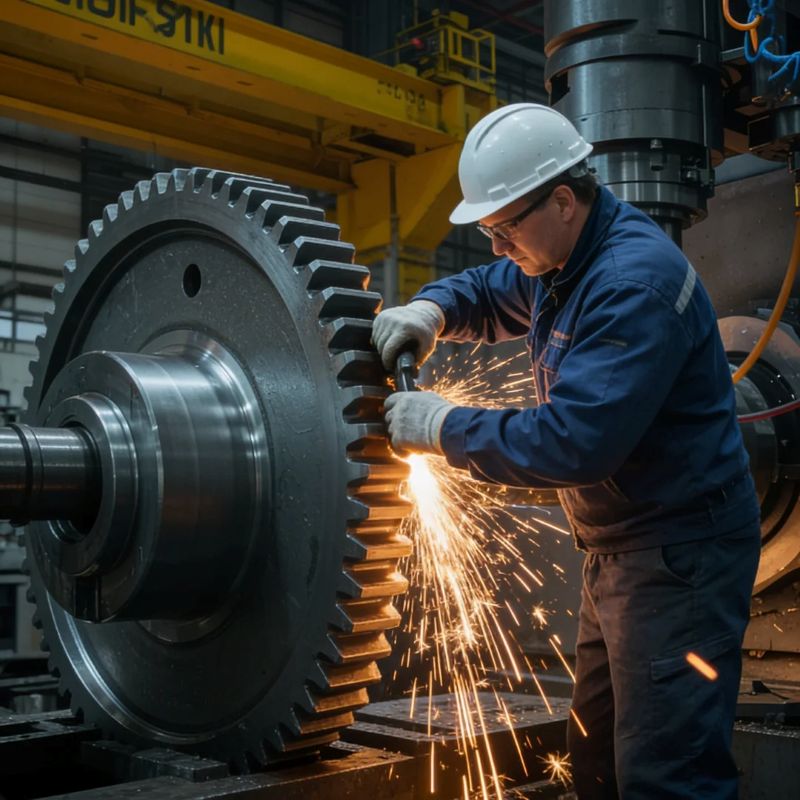
In the world of manufacturing and technology, precision is paramount. We often hear the term, but what does it truly mean in an industrial context? Precision engineering is more than just making parts accurately; it’s a specialized discipline dedicated to achieving exceptionally low tolerances and repeatable results, pushing the boundaries of what is mechanically possible.
This field is crucial for the reliability and performance of everything from advanced medical implants to critical aerospace components. It ensures that complex systems function flawlessly, often under extreme conditions. For instance, maintaining perfect alignment in large-scale industrial equipment frequently relies on techniques like Industrial Precision Line Boring, a prime example of precision engineering in action.
In this comprehensive guide, we will explore the intricate world of precision engineering. We will define its core concepts, differentiate it from traditional manufacturing, and uncover the fundamental principles that govern its practice. We’ll also examine the advanced technologies and rigorous standards that enable such remarkable accuracy, as well as its vital role across diverse industrial applications and the exciting trends shaping its future in July 2026 and beyond.
At its heart, precision engineering is the discipline of designing and manufacturing components and systems to achieve functional performance with exceptionally high accuracy, repeatability, and long-term stability. While it shares foundational knowledge with traditional mechanical and manufacturing engineering, its objectives and methodologies diverge significantly.
Traditional mechanical engineering, for example, often prioritizes a component’s ability to withstand stress and avoid failure – the fundamental question being “will it break?” In contrast, precision engineering focuses on deflection and stiffness, asking instead “will its position or form be maintained within specified, extremely tight limits?” This shift in focus is critical when dealing with tolerances measured in micrometers or even nanometers.
Experts like Hiromu Nakazawa and Pat McKeown have extensively defined the core goals of precision engineering. These include:
- Minimizing Dispersion of Function: Ensuring that every manufactured part performs identically within extremely narrow parameters, reducing variability.
- Enabling Automatic Assembly: Designing components with such consistent accuracy that they can be assembled robotically without manual intervention or adjustment.
- Achieving Greater Miniaturization: Facilitating the creation of smaller, yet more powerful and functional devices, from micro-electromechanical systems (MEMS) to advanced optical components.
- Ensuring Long-Term Stability: Designing systems that maintain their precise performance over extended periods, even under varying environmental conditions like temperature fluctuations or mechanical stresses.
- Optimizing Performance-to-Cost Ratio: Delivering the required level of precision economically, often through innovative design and manufacturing processes.
These goals underscore a fundamental difference: traditional engineering might aim for a functional product, while precision engineering strives for a product where function is consistently perfect and predictable, often pushing the limits of measurement and material science.
Here’s a comparison that highlights these distinctions:
Feature Traditional Mechanical Engineering Precision Engineering Primary Focus Stress, strength, load-bearing capacity, preventing failure Deflection, stiffness, accuracy, repeatability, stability Key Question Will it break under load? Will its position or form deviate beyond acceptable limits? Tolerance Range Typically millimeters to hundreds of micrometers Typically micrometers to nanometers Design Approach Sufficient strength, general functionality Deterministic design, error budgeting, kinematic constraint Material Consideration Strength, ductility, cost Thermal expansion, creep, vibration damping, stability Goal Functional product, mass production Ultra-high performance, consistent quality, miniaturization.
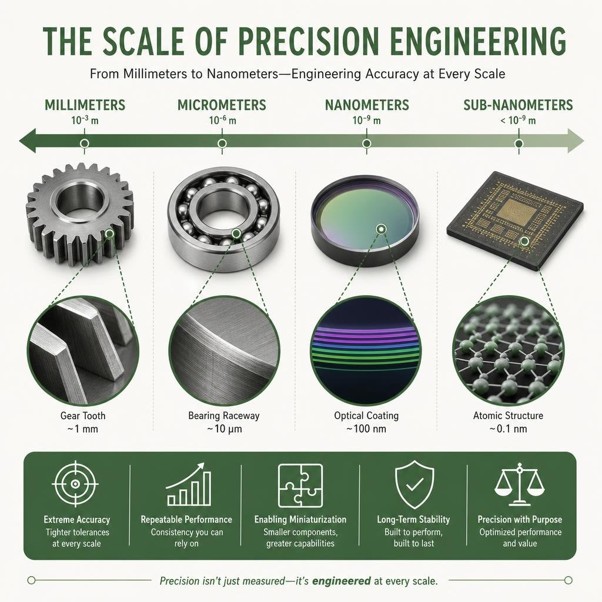
This table illustrates that precision engineering is not merely an extension of traditional methods but a distinct discipline with its own set of principles, challenges, and objectives, all geared towards achieving unparalleled accuracy and reliability.
Core Technical Principles of Precision Engineering
To achieve its ambitious goals, precision engineering relies on a set of fundamental technical principles that guide design, manufacturing, and measurement processes. These principles are often counter-intuitive to traditional engineering approaches and demand a deep understanding of physics and material science.
One cornerstone is deterministic design. This principle asserts that machines and systems obey cause-and-effect relationships. Every deviation, every error, has a root cause. Instead of hoping for accuracy, deterministic design aims to understand, predict, and compensate for every potential source of error. This involves meticulous analysis of loads, deflections, thermal effects, and vibrations. When enough information is available, engineers can calculate these effects and compensate for them, often through sophisticated error models, comprehensive error budgeting, and precise error mapping. This contrasts sharply with statistical quality control, which accepts a certain level of randomness; precision engineering seeks to eliminate it.
Error budgeting is a critical tool derived from deterministic design. It involves allocating a portion of the total allowable error to each component or subsystem. By meticulously tracking and summing these individual error contributions, engineers can predict the overall system accuracy and identify which elements require the most stringent control. This proactive approach ensures that resources are focused where they will have the greatest impact on precision.
Another vital principle is kinematic constraint. This refers to the precise and repeatable location of a body in space using the minimum number of constraints required to prevent unwanted motion, typically six points of contact. Unlike over-constrained designs that can introduce stresses and deformations due to manufacturing imperfections or thermal expansion, kinematic mounts provide stable and repeatable positioning without distorting the component. For example, a sphere resting in a V-groove and a flat plane provides three points of contact, precisely locating it in two dimensions. Extending this to three dimensions ensures perfect, stress-free positioning. This principle is crucial for the stability and repeatability of optical systems, measurement devices, and critical machine tool components.
Sometimes, perfect rigidity is impractical or undesirable. In such cases, controlled compliance might be introduced. This involves designing specific elements to flex or deform in a predictable manner to relieve stresses that would otherwise be induced by over-constraint or thermal expansion. This allows for precise positioning while accommodating minor misalignments or environmental changes without introducing unwanted forces.
Thermal expansion is a pervasive challenge in precision engineering. Even small temperature fluctuations can cause significant dimensional changes in materials, leading to misalignments or loss of precision. Engineers address this through careful material selection, designing for thermal symmetry, active temperature control, or athermalization – using combinations of materials with different coefficients of thermal expansion to create a system that remains dimensionally stable over a range of temperatures. For instance, in complex industrial machinery or large-scale precision alignment tasks, such as those performed by Industrial Precision Line Boring services, understanding and mitigating thermal effects is paramount to achieving and maintaining the required accuracy.
These principles, when applied rigorously, enable the creation of machines and instruments that operate at the cutting edge of physical possibility, ensuring that every movement, every measurement, and every manufactured feature is precisely as intended.
Advanced Manufacturing and Metrology Technologies
Achieving the micron and sub-micron tolerances demanded by precision engineering necessitates the use of highly advanced manufacturing processes and sophisticated metrology techniques. These technologies are the tools that translate theoretical principles into tangible, high-performance components.
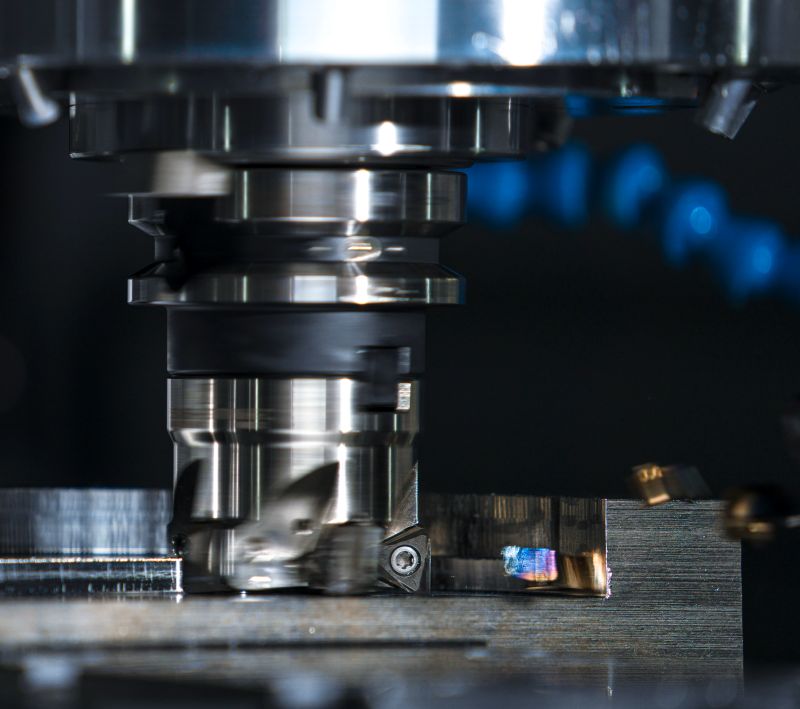
Multi-axis CNC machining, including 4- and 5-axis milling and turning, is fundamental. These machines offer unparalleled control over tool paths, allowing for the creation of complex geometries and intricate features with exceptional accuracy and surface finish. They can machine parts from a single setup, reducing cumulative errors and improving consistency. This capability is vital for components found in aerospace propulsion systems, medical devices, and semiconductor equipment, where both complexity and precision are non-negotiable.
For materials that are difficult to machine conventionally or for extremely fine features, Electrical Discharge Machining (EDM) and wire erosion are indispensable. EDM works by using electrical discharges (sparks) to erode material, making it ideal for hard metals, intricate shapes, and deep, narrow features without mechanical force, thus avoiding material distortion. Wire erosion is a specific type of EDM that uses a thin wire electrode to cut complex two- or three-dimensional shapes, perfect for creating dies, molds, and precision components with sharp internal corners.
Surface grinding is another critical process for achieving extremely flat surfaces and tight dimensional tolerances. It involves abrasive wheels to remove small amounts of material, resulting in superior surface finishes and extremely precise dimensions, often used for critical mating surfaces or bearing seats.
Once components are manufactured, their precision must be rigorously verified. This is where advanced metrology comes into play. Coordinate Measuring Machines (CMMs) are the workhorses of dimensional validation. Equipped with highly accurate probes, CMMs can measure complex geometries in three dimensions with micron-level precision, comparing actual dimensions against CAD models. They provide comprehensive data on form, position, and orientation, ensuring 100% adherence to specifications.
Complementing CMMs are non-contact optical inspection systems. These include laser scanners, white light interferometers, and vision systems that use light to measure surfaces without physical contact. This is particularly useful for delicate parts, soft materials, or when ultra-fine surface finish measurements are required. These systems can quickly capture vast amounts of data, enabling rapid and thorough dimensional validation. For applications requiring extreme measurement fidelity, such as the ultra-fine sectioning in scientific research, specialized equipment like that used in Microtome Precision Engineering demonstrates the pinnacle of precise measurement and material manipulation.
Together, these advanced manufacturing and metrology technologies form the backbone of precision engineering, enabling the creation and verification of components that meet the most demanding specifications across a multitude of high-tech industries.
Industrial Applications and Economic Trade-Offs
The reach of precision engineering extends across virtually every advanced industrial sector, driving innovation and enabling breakthrough technologies. However, applying precision engineering principles always involves careful economic considerations and trade-offs, especially when balancing cost, volume, and the required level of accuracy.
The decision to implement precision engineering is often driven by the critical nature of the application. While it inherently incurs higher costs due to specialized equipment, skilled labor, and stringent quality control, these costs are justified by the enhanced performance, reliability, and extended lifespan of the final product. For instance, in industrial settings where equipment downtime is extremely expensive, investing in high-precision components that ensure continuous operation becomes a clear economic advantage.
Contract manufacturers specializing in precision engineering play a crucial role in this ecosystem. They offer services ranging from rapid prototyping for new product introduction (NPI) to low-volume, high-mix production, and even high-volume runs for established products. Companies often leverage these specialized firms to access advanced capabilities without the prohibitive capital investment. This allows for flexibility and scalability, adapting to diverse client needs from initial concept to full-scale manufacturing. In regions like the Southeast, where industries such as pulp and paper, petrochemicals, and phosphate processing operate in challenging environments with high humidity and salt air, the demand for industrial reliability from precision-engineered components is particularly acute.

High-Value Sectors Relying on Precision Engineering
Several industries are fundamentally reliant on precision engineering for their very existence:
- Aerospace and Defense: Mission-critical components for aircraft engines, guidance systems, and satellite technology demand extreme precision for safety, performance, and fuel efficiency. Turbine blades, landing gear components, and sensor housings must withstand extreme conditions with zero-defect reliability.
- Semiconductor Manufacturing: The production of microchips relies on equipment with astonishing levels of precision. Components like wafer chucks, lithography stages, and vacuum chamber parts must maintain nanometer-scale accuracy to enable the fabrication of ever-smaller and more powerful processors.
- Medical Devices: From implantable medical devices (e.g., spinal fixation components, custom joint replacements) to surgical instrumentation and diagnostic equipment, biocompatibility, exact dimensions, and flawless surface finishes are vital for patient safety and device efficacy.
- Optics and Photonics: High-performance lenses, mirrors, and optical alignment systems for telescopes, lasers, and fiber optics require ultra-precise surfaces and geometries to minimize light distortion and maximize performance.
- Heavy Industrial Drive Systems: Gearboxes, bearings, and shafts in large-scale industrial machinery for mining, power generation, and marine applications require precision manufacturing to ensure smooth operation, minimize vibration, and extend operational life under heavy loads and continuous use. The reliability of these systems in harsh industrial environments directly impacts productivity and safety.
Quality Standards and Certifications in Precision Engineering
To ensure the integrity and reliability of precision-engineered components, a robust framework of quality standards and certifications is essential. These standards provide a common language for quality management and assure clients of a firm’s capabilities and commitment to excellence.
- ISO 9001: The foundational international standard for quality management systems, ensuring consistent processes and continuous improvement.
- AS9100: A specialized quality management system for the aerospace industry, building upon ISO 9001 with additional requirements critical for aviation, space, and defense organizations.
- ITAR Compliance: The International Traffic in Arms Regulations (ITAR) govern the export and import of defense-related articles and services. Compliance is crucial for firms working in the defense sector, ensuring strict control over sensitive technologies.
- ISO 14001: An international standard for environmental management systems, demonstrating a commitment to minimizing environmental impact and promoting sustainable practices.
- BS EN 1090: A European standard for the execution of steel and aluminum structures, ensuring that fabricated structural components meet specific safety and quality requirements.
- JOSCAR: A accreditation system used by the UK defense industry to identify qualified suppliers, streamlining procurement processes for defense and aerospace clients.
- Cyber Security Plus: A UK government-backed certification demonstrating a firm’s commitment to protecting client data and digital assets from cyber threats, increasingly vital in a connected manufacturing landscape.
Beyond these certifications, material traceability is paramount, especially in aerospace and medical applications. This involves meticulously tracking every batch of raw material from its origin through every stage of manufacturing to the final product, ensuring that all components meet specified material properties and can be recalled if necessary. Adherence to these standards and certifications not only ensures compliance but also builds trust and confidence in the precision engineering firm’s ability to deliver critical, high-quality components.
Frequently Asked Questions
Precision engineering, by its nature, often raises specific questions due to its specialized terminology and demanding requirements. Here, we address some common inquiries.
What is the difference between accuracy and repeatability?
While often used interchangeably, accuracy and repeatability are distinct and crucial concepts in precision engineering:
- Accuracy refers to how close a measurement or manufactured feature is to its true or target value. It’s about hitting the bullseye. If a machine is supposed to produce a part that is exactly 100.000 mm long, and it consistently produces parts that are 100.010 mm long, it is accurate to within 0.010 mm. Accuracy can be affected by systematic errors, which are predictable and consistent deviations that can often be corrected through calibration.
- Repeatability (or precision, in a statistical sense) refers to the consistency of measurements or manufactured features when performed multiple times under the same conditions. It’s about hitting the same spot repeatedly, even if that spot isn’t the bullseye. If the machine produces parts that vary between 100.005 mm and 100.015 mm, its repeatability is ±0.005 mm. A machine can be highly repeatable but inaccurate (consistently hitting the same spot off-target), or accurate but not repeatable (hitting the bullseye sometimes, but wildly varying other times).
In precision engineering, both are critical. An ideal system is both accurate and repeatable, ensuring that every part is not only close to the target but also consistently so.
How does thermal expansion affect precision machinery?
Thermal expansion is one of the most significant challenges in achieving and maintaining high precision, particularly in dynamic industrial environments. Materials expand when heated and contract when cooled, and this change in dimension is governed by their coefficient of thermal expansion. Even small temperature fluctuations, often just a few degrees Celsius, can cause micron-level dimensional changes in components.
Consider a machine tool designed for sub-micron accuracy. If its structural elements or workpieces heat up by just a few degrees, differential expansion can lead to:
- Structural Deflection: Uneven heating can cause machine frames to warp, altering the alignment of critical axes.
- Part Distortion: The workpiece itself can expand or contract, leading to errors during machining or measurement.
- Loss of Alignment: Components like optical systems or critical bearings can lose their precise alignment, impacting performance.
In environments like the Southeast, where ambient temperatures can be high and humidity is prevalent, managing Southeast heat loads becomes even more critical. Precision engineering addresses this through several strategies: using materials with low coefficients of thermal expansion (e.g., Invar, ceramics), designing for thermal symmetry, implementing active temperature control systems (e.g., coolant circulation, environmental chambers), and employing athermalization techniques.
What role do professional societies like ASPE and euspen play?
Professional societies are vital to the advancement and standardization of precision engineering. They serve as hubs for knowledge sharing, research dissemination, and community building among engineers, scientists, and industry professionals.
- American Society for Precision Engineering (ASPE): ASPE is a leading organization in North America, fostering the exchange of information and promoting education in precision engineering. They organize annual meetings, topical meetings, and workshops, and publish research, helping to define best practices and advance the state of the art.
- European Society for Precision Engineering and Nanotechnology (euspen): As its European counterpart, euspen plays a similar role, focusing on precision engineering and nanotechnology. They host conferences, special interest groups, and provide a platform for collaboration across European industries and academia.
- Japan Society for Precision Engineering (JSPE): JSPE is another prominent society, particularly influential in Asia, with a rich history of contributions to the field, especially in machine tool design and advanced manufacturing.
These societies, along with others like the German Society for Precision Engineering (DSPE) and the Singapore Precision Engineering & Technology Association (SPETA), contribute significantly by:
- Standards Development: Collaborating on the creation of industry standards for measurement, design, and manufacturing processes.
- Knowledge Sharing: Publishing journals (like Precision Engineering), conference proceedings, and technical papers, ensuring that the latest research and innovations are accessible.
- Education and Training: Promoting educational programs and offering professional development opportunities to cultivate the next generation of precision engineers.
- Networking: Providing platforms for professionals to connect, collaborate, and address common challenges in the field.
Through their collective efforts, these organizations ensure that precision engineering continues to evolve, pushing the boundaries of what is possible in manufacturing and technology.
Conclusion
Precision engineering stands as a testament to humanity’s relentless pursuit of perfection in manufacturing and design. It is a discipline that transcends traditional boundaries, demanding an interdisciplinary approach that integrates mechanical, electrical, optical, and software engineering. From the foundational principles of deterministic design and kinematic constraint to the cutting-edge capabilities of multi-axis CNC machining and advanced metrology, every aspect is geared towards achieving unparalleled accuracy and reliability.
As we look towards July 2026 and beyond, the field of precision engineering is poised for transformative growth, driven by several key trends. Industry 4.0 initiatives are integrating smart manufacturing, enabling real-time data analysis, predictive maintenance, and highly optimized production processes. The rise of automation and robotic cells is enhancing both precision and throughput, allowing for the consistent production of complex parts with minimal human intervention. Technologies like RFID tracking are revolutionizing traceability, ensuring that every component can be monitored throughout its lifecycle, leading to truly zero-defect manufacturing.
The demands for miniaturization, higher performance, and greater energy efficiency across sectors like aerospace, medical, and semiconductor manufacturing will only intensify, further solidifying precision engineering’s critical role. In challenging environments, such as the high-humidity, salt-air conditions prevalent in the Southeast’s industrial landscape, the principles of precision engineering are not just advantageous but essential for ensuring long-term operational reliability and safeguarding critical infrastructure.
Precision engineering is not just about making things small or accurate; it’s about building trust and ensuring the flawless operation of the technologies that power our modern world. As we continue to innovate, the discipline will remain at the forefront, transforming ideas into precise realities and shaping the future of industrial excellence.
You may also like:
Advancements in Tube Mill Equipment Manufacturing
How To Select And Install Isolation Transformers For Sensitive Equipment