Click here to get this post in PDF
Key Takeaways
- AI improves food manufacturing by increasing operational efficiency and fostering innovation in product development.
- Precision fermentation is a sustainable technology that is broadening possibilities for novel, high-quality food ingredients.
- Heightened consumer demand for transparency and eco-friendly practices is driving operational and sourcing changes across the industry.
As the food manufacturing industry evolves rapidly, several pivotal trends are emerging that will redefine production processes and transform how businesses respond to consumer demands. Companies are increasingly partnering with food and beverage facility builders to implement new processes and technologies that address these shifts. The intersection of digitalization, sustainability, and regulatory agility is becoming the new standard for industry leaders.
Manufacturers must adopt forward-thinking approaches to boost efficiency and competitiveness. Artificial Intelligence, precision fermentation, and transparent supply chains are just a few examples of innovations that are already reshaping food production. These advancements are not only optimally positioning manufacturers for future growth but also aligning operations with evolving consumer expectations.
AI Integration in Food Manufacturing
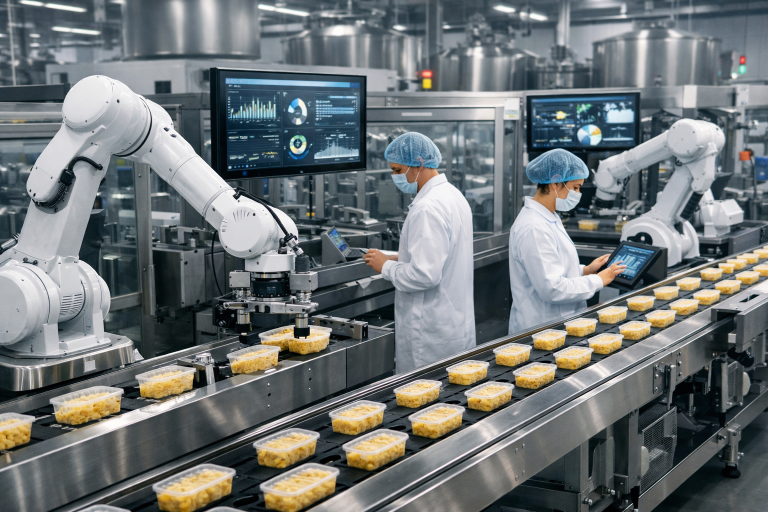
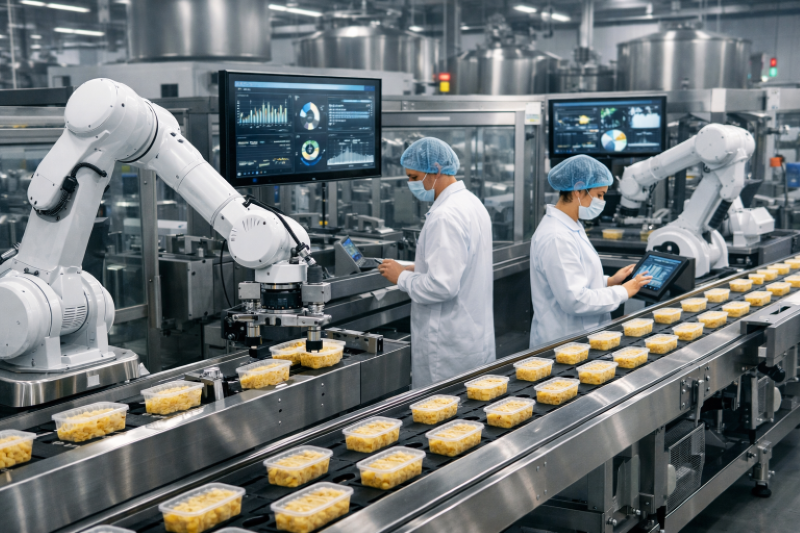
Artificial Intelligence (AI) is ushering in a new era for food manufacturing, one defined by improved accuracy, efficiency, and agility. With AI-powered sensors and advanced algorithms, plants can now monitor production variables in real time, predict maintenance needs for machinery, and make automated decisions to reduce downtime. These systems streamline everything from inventory management to distribution, maximizing productivity across the board. AI is also playing a substantial role in product development, enabling companies to analyze consumer preference data and market trends to create more appealing and successful products.
AI is transforming food manufacturing by enhancing traceability, safety, and quality assurance. Machine learning helps promptly detect product defects, while automated quality checks provide real-time monitoring. Predictive analytics optimize resource use, and as AI becomes more accessible, smaller businesses are also adopting these innovations. Additionally, AI-driven demand forecasting improves inventory management and reduces waste. Robotics in production lines automates tasks, allowing workers to focus on specialized roles, leading to significant productivity and quality improvements.
Precision Fermentation and Its Applications
Precision fermentation represents a leap forward in sustainable food production. This process utilizes engineered microorganisms to produce target proteins, flavor compounds, and other key ingredients in a controlled setting. Unlike traditional agriculture, precision fermentation heavily reduces water, land, and energy consumption, offering a significant environmental benefit. As demand for alternative proteins and specialty foods rises, manufacturers are increasingly adopting this technology to diversify their product offerings and minimize ecological impact. This trend is expected to accelerate as more companies seek to meet global sustainability goals. Additional information on this trend can be found at Food Business News.
Key players in the alternative protein sector are using precision fermentation to create dairy- and meat-alternative products that closely replicate the flavors, textures, and nutritional profiles of traditional products. This method enhances scalability and resource efficiency, enabling rapid development of new formulations to meet market demands, including the elimination of allergens and the enhancement of micronutrients through genetic customization. Precision fermentation supports local production and stable supply chains, contributing to regional economic growth by fostering opportunities for biotech startups and food tech innovators. Continued research and development promise to reduce production costs, expanding potential applications for sustainable food solutions.
Consumer-Driven Demand for Transparency and Sustainability
Modern consumers want to know where their food comes from and how it is produced. This demand is pushing manufacturers to prioritize transparency and communication. Building trust is now closely linked to providing clear information on ingredient sourcing and using transparent production methods. Digital traceability systems, clear product labeling, and detailed supply chain disclosures are becoming essential industry practices. At the same time, brands are moving toward sustainable packaging solutions and practices that reduce food waste, seeking to make their operations as environmentally friendly as possible.
Transparency in food companies now covers ethical labor practices and carbon footprints, requiring detailed information at every touchpoint to reassure consumers. Technologies like blockchain and IoT enhance traceability, enabling real-time verification of claims, boosting consumer confidence, and aiding risk management. Sustainability is prioritized in packaging and logistics, with a focus on recyclability and reduced plastic use. As ESG factors increasingly influence consumer choices, brands that effectively communicate their sustainability commitments gain market share and set new industry standards through innovative practices.
Regulatory Influences on Food Production
Regulatory bodies are making significant updates to food safety, environmental, and labeling standards. Manufacturers are required to remain agile and responsive, reformulating products and adjusting labeling to comply with evolving guidelines. Food producers are also under pressure to implement sustainable practices not simply as an ethical stance, but as a compliance matter. Early adoption of these practices helps manufacturers retain market access and consumer confidence. For insights into how food regulations are shaping the industry, see this Wall Street Journal overview.
Regulatory frameworks are tightening, with stricter mandates on allergen disclosures and nutrition labeling, driven by trends in plant-based alternatives and cultured proteins. Compliance requires ongoing education, collaboration with legal counsel, and internal audits, with manufacturers using regulatory monitoring software for timely adjustments. Environmental regulations on resource use and waste management are also advancing alongside concerns about climate change. Innovative companies are viewing compliance not just as a cost but as an opportunity for competitive differentiation through progressive practices that exceed requirements.
Supply Chain Resilience and Flexibility
Recent disruptions, from global health crises to climate change incidents, have made it clear that resilient and agile supply chains are vital for the food industry. To mitigate risk, manufacturers are diversifying their supply chains, using digital platforms for real-time logistics monitoring, and establishing contingency protocols to minimize disruption. Investments in technology and strong supplier partnerships protect supply continuity and enable manufacturers to quickly adapt to demand changes and external challenges, making robust supply chain practices essential for competitive advantage. Advanced analytics and scenario modeling enhance supply chain resilience by leveraging digital twins for simulations and bottleneck identification. Collaboration across the value chain, through supplier development programs, strengthens partnerships. Additionally, integrating sustainability into supply chain decisions, such as renewable energy transportation and supporting regenerative agriculture, ensures long-term viability and enhances reputations, appealing to conscientious consumers and investors.
Conclusion
Technological innovation, consumer preferences, evolving regulations, and supply chain strategy are all combining to shape the next generation of food manufacturing. Companies that adopt AI, pursue sustainable ingredient sourcing, enhance supply chain robustness, and embrace regulatory compliance will be best equipped to lead the industry, foster customer trust, and promote environmental responsibility. Staying agile and informed is essential as the food sector navigates both unprecedented challenges and exciting growth opportunities.
Ultimately, those in the food manufacturing industry that strategically embrace these interconnected trends position themselves not only for business resilience but also for positive societal impact. As the landscape continues to advance, learning from global best practices and investing in organizational capability will be vital. Leaders who cultivate a spirit of innovation, actively engage with emerging technologies, collaborate with supply partners, and listen closely to consumer desires will set themselves apart in the market. With proactive leadership and a commitment to ongoing transformation, there is immense potential to shape a more sustainable, traceable, and dynamic food ecosystem for years to come.