Click here to get this post in PDF
You just spent three hours agonizing over the perfect cold email pitch. You researched your prospects, nailed the value proposition, and crafted a subject line you’re genuinely proud of. You hit send on a batch of 500.
Exactly zero people reply.
The immediate instinct is to blame the copy. You tweak the call to action, swap out a few words, and try again. But here is the brutal reality of modern outbound sales: the most brilliant copywriting in the world is entirely useless if you aren’t using the right cold email software to keep your pitch out of a prospect’s Promotions tab or worse, rotting in a spam folder.
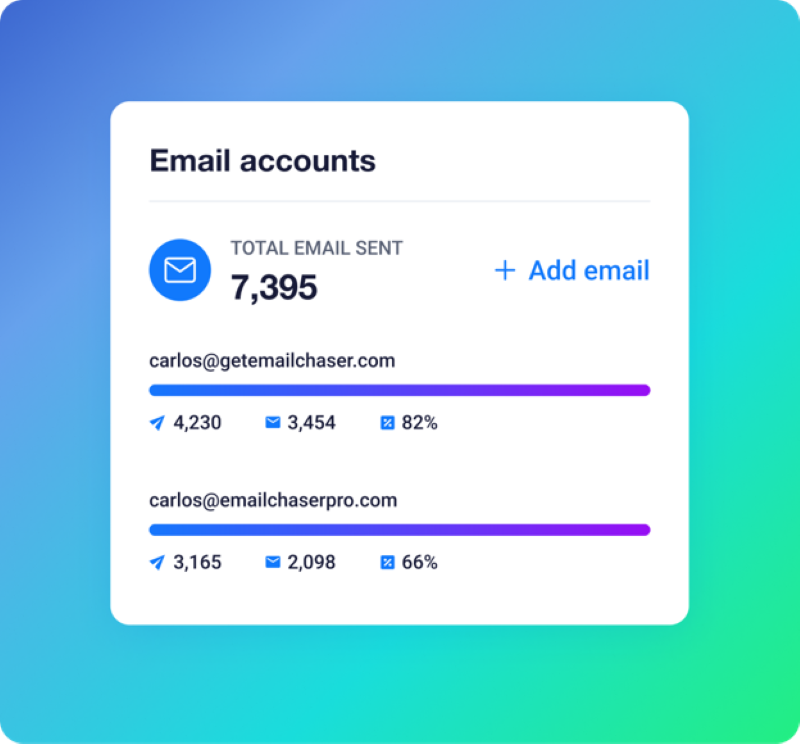
Most businesses are so obsessed with what they are sending that they completely ignore the mechanical reality of how they are sending it. They treat their cold email strategy like a digital megaphone, blasting thousands of messages from a single domain until their sender reputation is permanently scorched.
The False Confidence of High Volume
A list of 10,000 scraped prospects feels like a goldmine. Management looks at the sheer volume of contacts and assumes revenue is just a matter of hitting send enough times.
But out in the inbox, the reality is entirely different. When your sender infrastructure isn’t actively protected, reps aren’t actually selling. They are burning through expensive domains and perfectly good leads just to figure out why no one is replying.
The Hidden Cost of the “Numbers Game”
Do the math on bad deliverability sometime. It’s worse than you think.
A single hard bounce damages your domain’s reputation. Your team spends hours writing personalized messages only for them to get routed straight to the junk folder.
You buy new domains. You wait weeks to warm up new workspaces. Multiply that cycle across a list of 1,000 prospects, and you’ve burned an entire week’s worth of leads hitting dead ends.
Now put a dollar figure on it. If you’re paying a rep $25 an hour and half their day disappears into crafting emails that physically cannot be read by the prospect, you’re not paying for sales. You’re paying to shout into the void.
There’s an energy cost too. Sending hundreds of emails to zero replies does something to a person’s motivation. The follow-ups get lazy, the confidence drops, and the next prospect who actually replies gets the worst version of your rep, not the best one.
The Mechanical Fix
Here’s the catch: you can’t manually warm up dozens of inboxes, naturally rotate domains, and double-verify every single email address before hitting send. You don’t have the hours for that, and it defeats the entire purpose of automated outreach in the first place.
This is where dedicated infrastructure becomes necessary. A platform like Emailchaser lets you connect unlimited sending accounts, running your campaigns through automated inbox rotation and double-verifying every address before your team ever hits send.
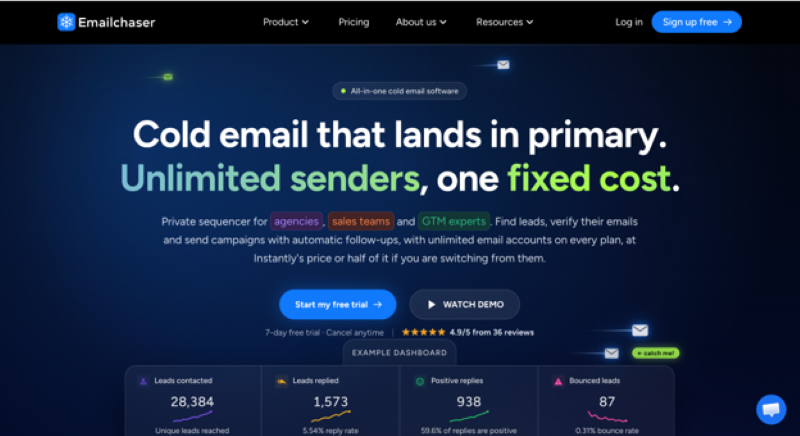
Your domains stay clean. Deliverability just stops being your problem.
Three Ways to Stop Wasting Time on Dead Inboxes
- Scaling with inbox rotation: That strategy of sending 500 emails a day from a single domain isn’t an asset; it’s a liability. Distributing your volume across unlimited sending accounts keeps your daily sending limits safe, so reps only focus on active conversations instead of triggering spam filters.
- Double-verifying lead lists: You scrape a list of 1,000 contacts, but B2B data decays fast. Instead of making your team ruin their domain reputation with hard bounces, automated double-verification checks every single address twice before an email is ever sent.
- Automating the follow-up: Nothing kills sales momentum faster than manually tracking who replied and who needs a bump. Running multi-step sequences that instantly stop the moment a prospect replies keeps the energy high and the follow-ups consistent.
Stop Burning Your Domains
Here’s the part people get wrong most often: they refuse to slow down or spread out their volume because sending fewer emails per address feels like a step backward.
Stop burning through expensive domains. Stop guessing if your emails are actually landing in the primary inbox.
Protect your sender reputation, and give your team actual humans to talk to. The goal was never to send the highest volume of emails. It’s to have a high-deliverability system, because that’s the only version that actually generates revenue.
Also read:
Why a Massive CRM Database is Actually a Trap for Small Businesses
How Small Businesses Can Boost Sales with Ringless Voicemail (Without Being Annoying)
Image source: emailchaser.com