Click here to get this post in PDF
The Medicines and Healthcare Products Regulatory Agency (MHRA) oversees compliance in the pharmaceutical industry and ensures companies adhere to best practices, as non-compliance can jeopardise the lives of millions of people.
The first step towards ensuring the highest standards and adhering to regulatory compliance begins at the production level. From procuring raw materials to their storage, manufacturing, and distribution, everything must be done to the highest standards, including compliance with Good Manufacturing Practice (GMP) and ISO regulations. This ensures that contamination risks are minimised and regulatory expectations are met.
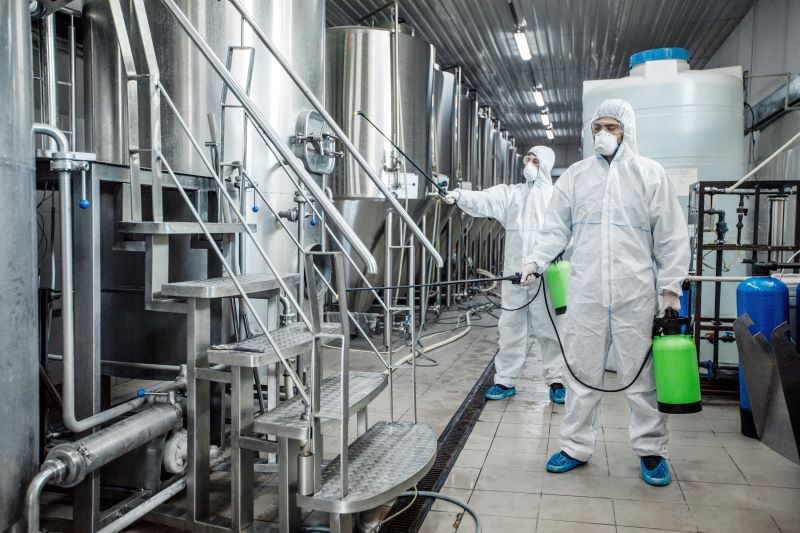
Pharmaceutical companies must follow stringent cleaning and disinfection protocols in their manufacturing facilities to prevent product recalls, batch failures and non-compliance with regulatory requirements. Any contamination can cause risks to patient safety and reputational damage.
This blog explores the necessary cleaning and disinfection protocols to follow. Let’s get started.
1. Prevent Mould
Medicine manufacturing is often done at cold temperatures and requires water, two ideal conditions for mould to thrive. Factory ventilation systems are also potential breeding grounds for mould spores. If left untreated, it can be air-borne and contaminate the drugs being manufactured.
Companies must work with professional mould treatment solutions to follow proper cleaning and disinfection protocols. These cleaning solutions do not compromise the sterile environments of laboratories and factory floors.
2. Waste Disposal
Waste disposal is an important part of the cleaning and disinfection protocols to be followed in pharmaceutical factories. A bio kill system, also known as the Effluent Decontamination System (EDS), helps neutralise various hazardous biological waste streams, including viruses, bacteria, and GMOs.
Once treated, the waste can then safely and efficiently be disposed of into the public sewage system. This will reduce contamination and the threat to public health.
3. Cleanroom Protocols
Cleanroom protocols must be followed for maintaining the highest hygiene standards in laboratories. Any contamination here can have far-reaching effects, including the safety of staff, scientists, and the public, as well as the results of the experiment.
You will need to ensure proper airflow and pressure, control the proper exit and entry guidelines, wear personal protective equipment (PPE), and monitor the environmental conditions. A regular cleaning schedule must also be followed, using medical-grade disinfectants and equipment to maintain the integrity of the experiments.
4. Staff Training and Proper Documentation
While pharmaceutical cleaning must be performed by trained professionals, the factory staff must also be trained to follow cleaning and disinfection procedures in their everyday activities. Regularly train them on proper handwashing techniques, chemical and specimen handling procedures, cross-contamination prevention, and proper documentation and record-keeping.
The cleaning and disinfection SOPs must be dynamic and updated on a case-by-case basis. This will help pharmaceutical companies keep their cleaning protocols up to date and comply with changing regulations.
Detailed record-keeping is important for companies to provide proof during audits and governmental inspections.
5. Using Multiple Cleaning Approaches
In the pharmaceutical industry, multiple cleaning approaches should be used. This includes,
- CIP (Cleaning-in-Place)- Automated cleaning of interior surfaces of stationary equipment, such as vessels, filters and pipes. CIP is used for equipment that cannot be disassembled. It is important to use distilled water for these purposes.
- COP (Cleaning-out-of-Place) – This cleaning method is used for equipment that can be easily disassembled or moved from its position, such as test tubes and pipettes. It is best to perform in-situ sanitation before moving it out of the sterile zone.
- Manual Cleaning – This cleaning method is used for equipment that cannot be disinfected and sanitised using CIP or COP. However, only trained personnel with approved cleaning equipment and solutions must carry out this procedure.
6. Using the Right Cleaning Agents and Solvents, and Equipment
To ensure complete compliance with GMP and ISO standards, pharma companies can only use the approved cleaning equipment and solutions. Some common cleaning solutions include distilled water, acetone, ethanol, hydrochloric acid, sodium bicarbonate, and hydrogen peroxide, among others.
Your choice of cleaning solution will depend on the chemicals you work with, the area you are sanitising and what you will clean. This will help you avoid mixed reactions that could affect the outcome of your research. For instance, when sanitising cleanroom surfaces, it is often recommended to use a Quaternary Ammonium Compound (Quat) cleaning solution.
Common cleaning equipment in the pharma manufacturing industry includes ultrasonic cleaners, pressure washers, handheld tools such as brushes and scrubbers, and automated systems.
However, it is suggested that only authorised and trained personnel use these tools and handle the cleaning chemicals. Any change in calibration, concentration or contamination can be fatal.
Final Words…
Cleaning and disinfection protocols followed in the pharmaceutical sector pose different challenges, including contamination, cross-contamination, and residue detection. Unlike other sectors, the drug industry works with microscopic particles, highly dangerous viruses, bacteria, and other pathogens.
It is important that authorised personnel validate all cleaning procedures, develop clear SOPs (standard operating procedures), conduct risk assessments, and only work with qualified and trained personnel.
A professional cleaning procedure ensures the drug production process is resilient and future-ready. It will also help maintain product integrity and safeguard the patient’s health.
Companies must conduct internal audits, regular inspections and checks. This will enable the pharma company to avoid any regulatory issues while validating every procedure.
Strict protocols prevent contamination, ensuring GMP compliance, product safety and proper quality assurance.
Also read: Job Duties For Pharmaceutical Production Workers
Image source: elements.envato.com