Click here to get this post in PDF

The Core Principles of Authentic Brand Marketing
In April 2026, your website remains your brand’s most important digital asset. It is often the first impression potential customers have. With over 8 billion mobile devices worldwide, and 86% of online traffic in the US originating from mobile, a flexible website is no longer optional. It is a critical necessity for modern businesses.
Building a strong online presence means connecting with your audience everywhere they are. This requires a powerful blend of compelling brand storytelling and a website that adapts perfectly to any screen. We focus on how to achieve this through authentic brand marketing responsive web design. This strategic approach ensures your brand message is consistent and accessible across all devices, from desktops to smartphones.
This guide will explore how strategic marketing combines with responsive web design. We will show you how to create an online experience that truly connects. We will dive into the core principles of authentic branding. We will also cover the technical aspects for a high-performing and engaging site that drives business growth.
At the heart of any successful enterprise lies an authentic brand. This isn’t merely about a logo or a catchy slogan; it’s about the very essence of what your business stands for. Authentic brand marketing involves defining clear brand pillars that articulate your mission, values, and vision. It champions transparency in operations, adheres to ethical processes, and fosters genuine human connection with its audience. In April 2026, consumers are more discerning than ever, seeking brands that resonate with their personal values. This necessitates a stakeholder-driven design approach, where every decision reflects a commitment to all parties involved, from employees to customers and the wider community.
When we talk about authentic brand marketing, we’re discussing the strategic deployment of these core principles across all touchpoints. This includes your digital presence, where responsive web design becomes the essential vehicle for conveying these principles effectively. A truly authentic brand doesn’t just tell its story; it lives it, and its website must be a dynamic, accessible reflection of that truth.

Why Storytelling is Central to Authentic Brand Marketing
Storytelling is the oldest and most powerful form of human connection. In brand marketing, a compelling narrative creates emotional resonance, making your brand memorable and relatable. It’s about crafting a brand voice that is consistent, genuine, and speaks directly to your audience’s needs and aspirations. This authentic storytelling goes beyond product features; it delves into the “why” behind your brand, sharing its journey, challenges, and triumphs.
Consistency in narrative across all platforms—from social media to your website—reinforces your brand identity. It builds a cohesive picture that helps customers understand and trust your brand. When your story is authentic and well-told, it cultivates a loyal community that champions your brand not just for what it sells, but for what it represents.
Aligning Business Objectives with Authentic Brand Marketing
Authentic brand marketing is not just a feel-good exercise; it’s a strategic imperative. It requires a clear strategic roadmap that aligns your brand identity with overarching business objectives. This means understanding your market positioning and how your authentic message can differentiate you from competitors. The goal is to achieve long-term growth and mission-driven results, where success is measured not only in profits but also in positive impact and customer loyalty.
By integrating authentic marketing into your core business strategy, you ensure that every marketing effort contributes to a unified vision. This holistic approach empowers your brand to make meaningful connections, drive engagement, and ultimately, achieve sustainable success in a crowded marketplace.
The Role of Responsive Web Design in Brand Credibility
In today’s digital landscape, a website’s credibility is intrinsically linked to its performance and adaptability across devices. This is where responsive web design (RWD) proves its essential value. Responsive web design is an approach to web development that allows a website to adapt its layout and content seamlessly to various screen sizes and orientations, from large desktop monitors to tablets and smartphones. It uses fluid grids, flexible images, and CSS3 media queries to ensure an optimal viewing experience for every user.
Why is this essential for modern websites? Because the majority of internet users access the web via mobile devices. As of April 2026, over 86% of online traffic in the US originates from mobile. If your website isn’t responsive, you’re alienating a massive segment of your potential audience. This directly impacts your brand’s credibility. A clunky, difficult-to-navigate mobile site signals a lack of professionalism and attention to user needs.
Agencies ensure mobile-first design and cross-device compatibility by adopting a mobile-first approach during development. This means designing for the smallest screen first, then progressively enhancing the experience for larger screens. This strategy ensures that core content and functionality are prioritized, leading to a leaner, faster, and more user-centric experience across all devices. Agencies also leverage fluid layouts, flexible images, and techniques like the “7-Second Rule” (a concept emphasizing quick user engagement) to ensure content is accessible and engaging regardless of the device. Implementing viewport meta tags is a foundational technical step, instructing browsers on how to control page dimensions and scaling.
Building Trust with Authentic Brand Marketing and UX
Responsive web design significantly improves user experience (UX), which is paramount for building trust and fostering customer loyalty. A website that adapts effortlessly to any device provides an intuitive navigation experience, reducing friction and frustration. When users can easily find what they’re looking for, complete tasks, and interact with your content without hindrance, their satisfaction increases. This positive experience translates into higher engagement, longer time spent on site, and a greater likelihood of conversion.
Beyond mere functionality, responsive design contributes to accessibility, making your website usable by individuals with diverse needs and abilities. This inclusive design approach demonstrates a brand’s commitment to serving all potential customers, further strengthening trust and reputation. By prioritizing UX, responsive design reduces bounce rates and encourages repeat visits, turning casual browsers into loyal customers.
How Responsive Systems Support Authentic Brand Marketing
Maintaining brand integrity across a multitude of devices is a complex challenge, but responsive systems are built to address it. Agencies ensure mobile-first design and cross-device compatibility by implementing robust design systems. These systems utilize elements like design tokens, which are reusable values (e.g., colors, fonts, spacing) that are consistently applied across all components. Scalable components, such as buttons, navigation menus, and form fields, are designed to adapt their appearance and behavior to different screen sizes while retaining their brand identity.
This systematic approach ensures a consistent visual hierarchy and seamless transitions between different devices. For instance, a call-to-action button will look and function identically, whether viewed on a desktop or a smartphone, reinforcing brand recognition and reliability. By leveraging these technical foundations, responsive web design agencies help brands maintain a unified and authentic presence, regardless of how or where their audience accesses their content. This consistency is crucial for building a strong, recognizable brand that resonates with users on every platform.
Technical Implementation and Performance Metrics
The technical backbone of a responsive website is crucial for its success, directly impacting SEO, user experience, and conversion rates. Responsive design leverages modern web technologies like HTML5 and CSS3, particularly CSS media queries, which allow developers to apply different styles based on device characteristics like screen width. This ensures that the website not only looks good but also performs optimally.
Performance metrics such as page speed and Core Web Vitals (Google’s initiative for quality signals essential to a great user experience) are heavily influenced by responsive implementation. A slow-loading site, especially on mobile, can deter users and harm search rankings. Responsive sites, when built correctly, can be optimized for speed, ensuring a fast and fluid experience across all devices.
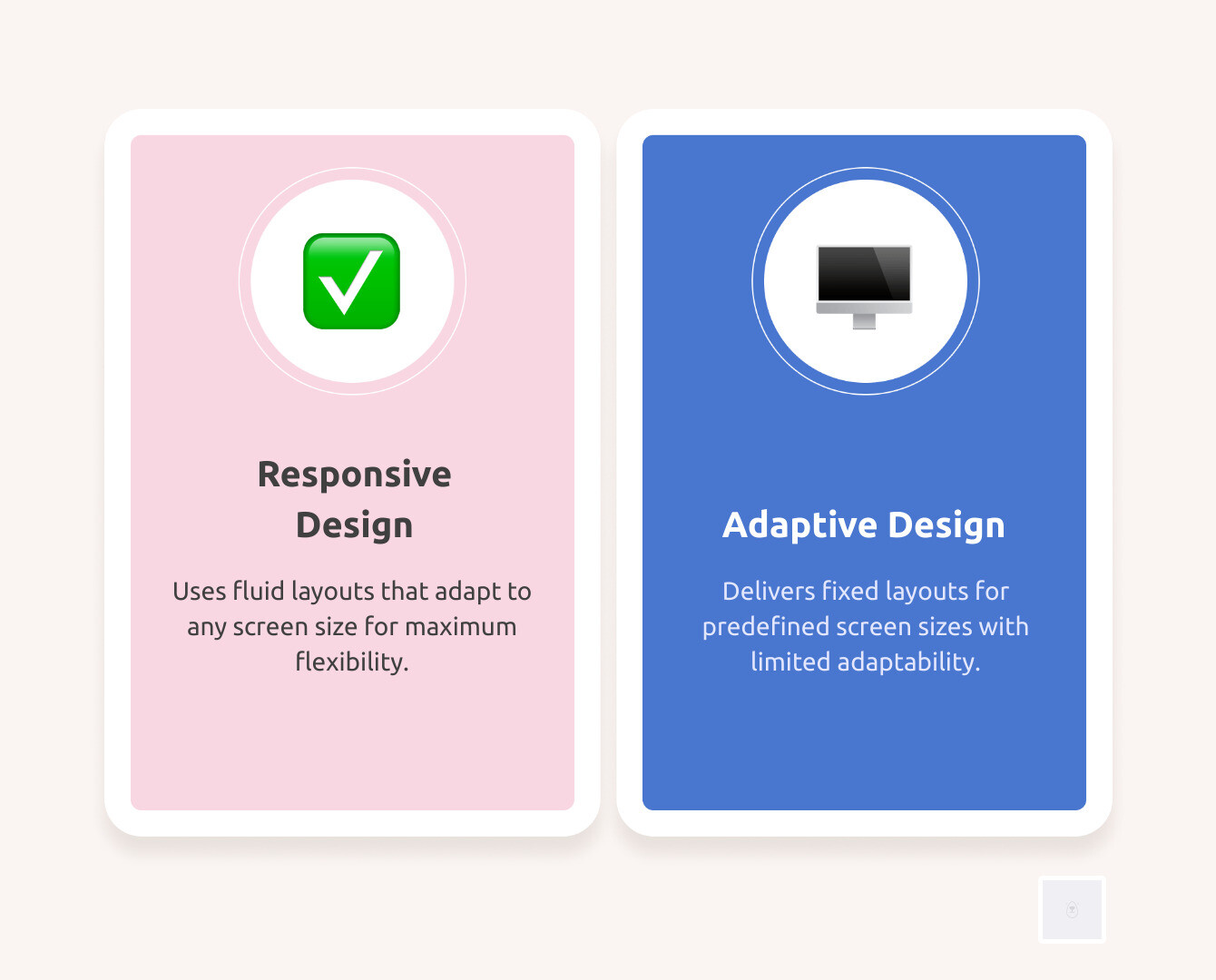
Let’s look at the differences between responsive and adaptive design:
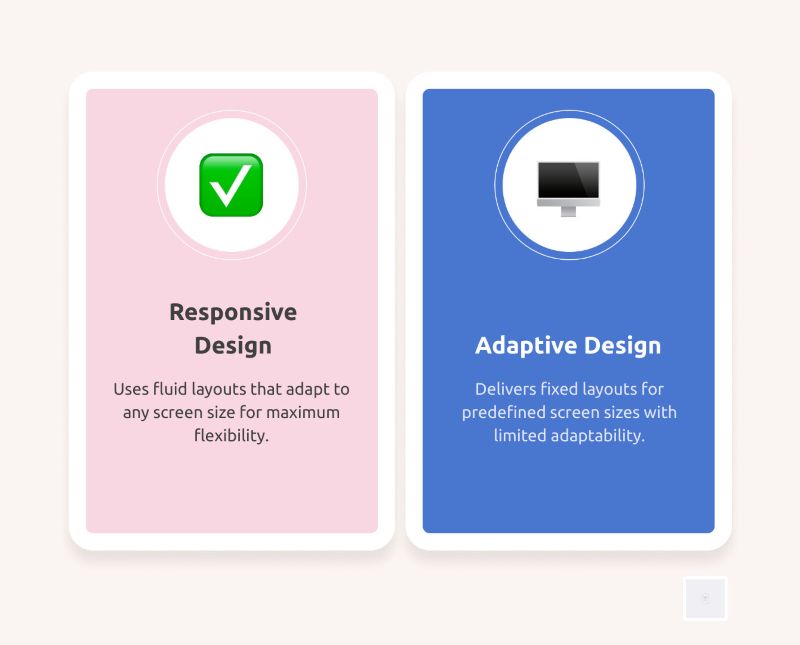
Feature Responsive Design Adaptive Design Layout Approach Fluid, single layout that adjusts to screen size. Multiple fixed layouts for specific screen sizes. Flexibility Highly flexible, adapts to any screen size. Less flexible, adapts to pre-defined screen sizes. Complexity Can be more complex to develop initially. Simpler to develop for specific breakpoints. Performance Can be optimized for performance across devices. May serve unnecessary assets for smaller screens. Maintenance Easier to maintain one codebase. More complex to maintain multiple codebases. User Experience Seamless, consistent experience. Potentially less fluid between breakpoints. Optimizing for Search Engines and User Intent
Responsive web design significantly improves SEO. Google prioritizes mobile-friendly, responsive sites in its search rankings, especially with its mobile-first indexing approach. This means that a responsive website is more likely to appear higher in search results, leading to increased organic growth. For example, a new responsive website for Jones Metal Products saw a 31% increase in overall web traffic and 28% organic search growth within six months.
Effective SEO for a responsive site involves a robust keyword strategy, ensuring that your content is optimized for relevant search terms. Technical SEO considerations, such as proper site architecture, clean code, and fast loading times, are also crucial. By providing a consistent and high-quality experience across all devices, responsive design reduces bounce rates, increases time spent on site, and signals to search engines that your website is valuable and authoritative.
Enhancing Conversion Rates Through Strategic Design
One of the most compelling benefits of responsive web design is its positive impact on conversion rates (CRO). A seamless user journey across devices makes it easier for visitors to complete desired actions, whether it’s making a purchase, filling out a form, or signing up for a newsletter. Statistics show that 70% of mobile searches lead to conversions within an hour, highlighting the importance of an optimized mobile experience.
By reducing friction and providing clear calls-to-action that are easily accessible on any screen, responsive design directly contributes to lead generation. For instance, Support.com’s responsive redesign achieved a 15% increase in conversions. Furthermore, responsive sites are proven to reduce bounce rates and increase time spent on site, both of which are key engagement metrics that drive higher conversion rates. When users have a positive, consistent experience, they are more likely to trust your brand and convert.
Strategic Growth Through Data-Driven Design
Responsive web design agencies don’t just build websites; they craft digital experiences designed for strategic growth. This involves a deep understanding of how design impacts key performance indicators (KPIs) like conversion rates, return on investment (ROI), and user engagement. By implementing analytics and performance tracking tools, agencies can monitor how users interact with your responsive site across different devices. This data-driven approach allows for continuous refinement and optimization, ensuring that the website consistently meets business objectives.
Real-world examples underscore this impact. Puma Energy’s responsive redesign resulted in 27% more website visitors and 63% more user engagement within three weeks. AddUp’s responsive redesign brought 57.8% more overall users and 59.67% more total sessions. Cloudinary’s interactive demo saw over a 400% increase in engagement after a responsive redesign. These results are not accidental; they are the product of careful planning, expert execution, and ongoing analysis.
Integrating Marketing Services for Maximum Impact
Top responsive web design agencies typically offer a comprehensive suite of services that extend beyond mere development. They integrate responsive design with SEO, CRO, and other digital marketing services to create a holistic strategy for maximum impact. This includes services like Pay-Per-Click (PPC) advertising, content marketing, social media strategy, and email campaigns.
The benefit of this integrated approach is a unified messaging strategy across all channels. A responsive website acts as the central hub, ensuring that traffic driven by PPC ads lands on an optimized page, content marketing efforts are supported by a seamless user experience, and social media links lead to an engaging, mobile-friendly destination. This synergy enhances brand awareness, improves lead quality, and ultimately drives better ROI across all marketing initiatives.
Future-Proofing Your Brand in a Mobile-First World
The digital landscape is constantly evolving, and future-proofing your brand requires embracing emerging technologies and trends. In April 2026, responsive web design remains foundational, but agencies are also looking towards innovations like Progressive Web Apps (PWAs). PWAs combine the best of web and mobile apps, offering fast, reliable, and engaging experiences that can even work offline.
Additionally, we see increasing integration of AI in web design, from personalized content delivery to advanced analytics that predict user behavior. Sustainable web design is also gaining traction, focusing on creating high-performing, low-impact websites that consume less energy. Responsive web design agencies are at the forefront of these developments, ensuring that the websites they build are not only current but also adaptable to future shifts. This involves creating adaptive systems that can evolve with new devices and user expectations, securing your brand’s relevance for years to come.
Frequently Asked Questions about Authentic Brand Marketing
How does responsive design affect mobile conversion rates?
Responsive design significantly boosts mobile conversion rates by providing an optimized and seamless user experience on smartphones and tablets. When a website adapts fluidly to mobile screens, it reduces friction, makes navigation intuitive, and ensures calls-to-action are easily accessible. This leads to lower bounce rates, increased time spent on site, and ultimately, a higher likelihood of users completing desired actions, such as making a purchase or filling out a form. Studies show that a well-executed responsive design can increase conversions by double-digit percentages.
What are the primary benefits of a mobile-first design approach?
A mobile-first design approach prioritizes the mobile user experience from the outset of a project. The primary benefits include:
- Enhanced User Experience: Since the majority of web traffic is mobile, designing for mobile first ensures a superior experience for the largest segment of your audience.
- Improved Performance: It naturally leads to a leaner, faster website as developers focus on essential content and functionality for smaller screens, which then scales up.
- Better SEO: Google’s mobile-first indexing means that a mobile-optimized site is crucial for higher search engine rankings and visibility.
- Future-Proofing: It sets a strong foundation for adaptability to new devices and screen sizes as they emerge.
- Clearer Prioritization: It forces designers and developers to prioritize content and features, resulting in a more focused and effective website.
How do design systems maintain brand consistency across platforms?
Design systems are powerful tools that ensure brand consistency across all digital platforms. They achieve this by:
- Centralizing Design Assets: Providing a single source of truth for all brand elements, including logos, typography, color palettes, and imagery.
- Using Design Tokens: Implementing design tokens (abstract variables for design properties like color values, spacing units, and font sizes) that can be applied consistently across different components and platforms.
- Creating Scalable Components: Developing reusable UI components (e.g., buttons, navigation bars, forms) that are designed to adapt to various screen sizes and contexts while maintaining brand identity.
- Establishing Clear Guidelines: Documenting comprehensive guidelines for usage, accessibility, and interaction, ensuring that every team member adheres to the brand’s visual and functional standards. This systematic approach ensures that your brand’s visual hierarchy, voice, and overall experience remain cohesive, whether a user is interacting with your website on a desktop, tablet, or smartphone.
Conclusion
In the dynamic digital landscape of April 2026, building an authentic brand means embracing the full potential of strategic marketing and responsive web design. Your website is more than just an online brochure; it’s a living, breathing extension of your brand’s legacy, a critical component of your digital transformation journey. By prioritizing human connection through compelling storytelling and ensuring strategic excellence with a responsive, high-performing website, you make the most of every moment a customer interacts with your brand.
Partnering with a responsive web design agency that understands this synergy is not just an investment in technology; it’s an investment in your brand’s future. It’s about crafting an online presence that is credible, accessible, and deeply engaging, driving both immediate results and long-term loyalty. To learn more about how we can help you achieve authentic brand marketing responsive web design for your business, explore our comprehensive web design services.
Discover how to build a powerful online presence with our web design services.
You may also like:
Why Hampshire Businesses Are Choosing Local Web Designers Over Big Agencies
Why the Sound of Your Brand Matters More Than Most Businesses Realise — And What to Do About It