Click here to get this post in PDF
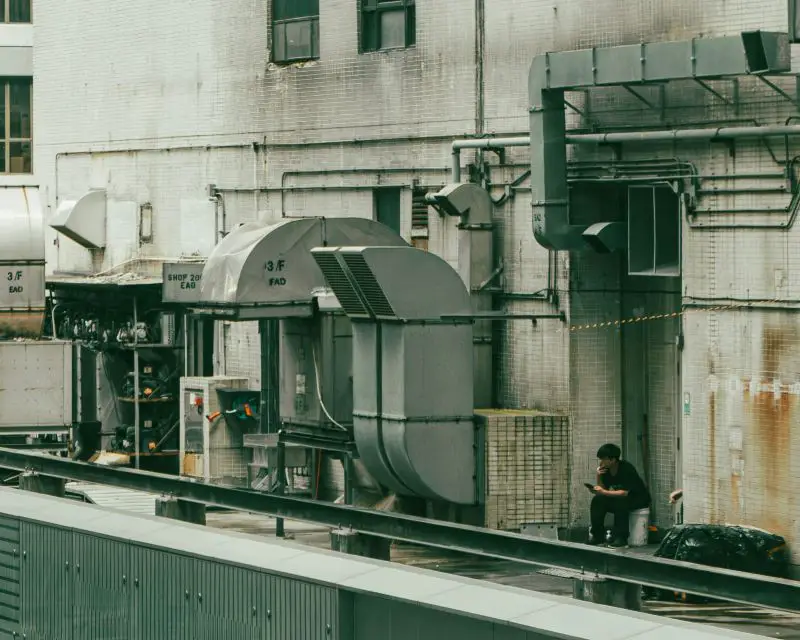
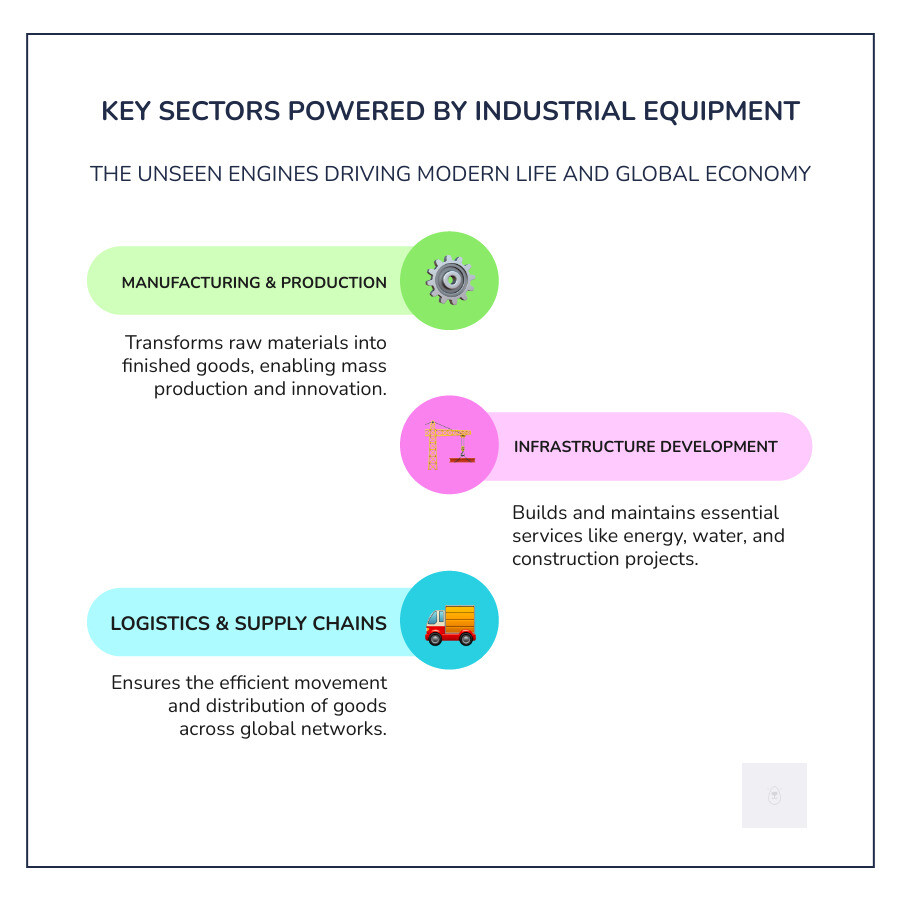
Behind every product we use, every structure we inhabit, and every essential service we rely on lies a complex network of industrial equipment. These are not just machines; they are the unseen engines that power our modern lives. They drive global progress and economic growth.
From massive construction vehicles shaping our cities to the intricate systems managing our critical water supplies, industrial equipment is the backbone of our economy. Indeed, the reliability of our infrastructure, including the specialized industrial equipment valves that control essential flows within large-scale water and wastewater systems, is paramount.
In this guide, we will explore what industrial equipment truly is. We will examine its main categories and vital functions across various sectors. We will also investigate how these powerful tools have changed over time. Finally, we will uncover what exciting innovations are shaping their future.
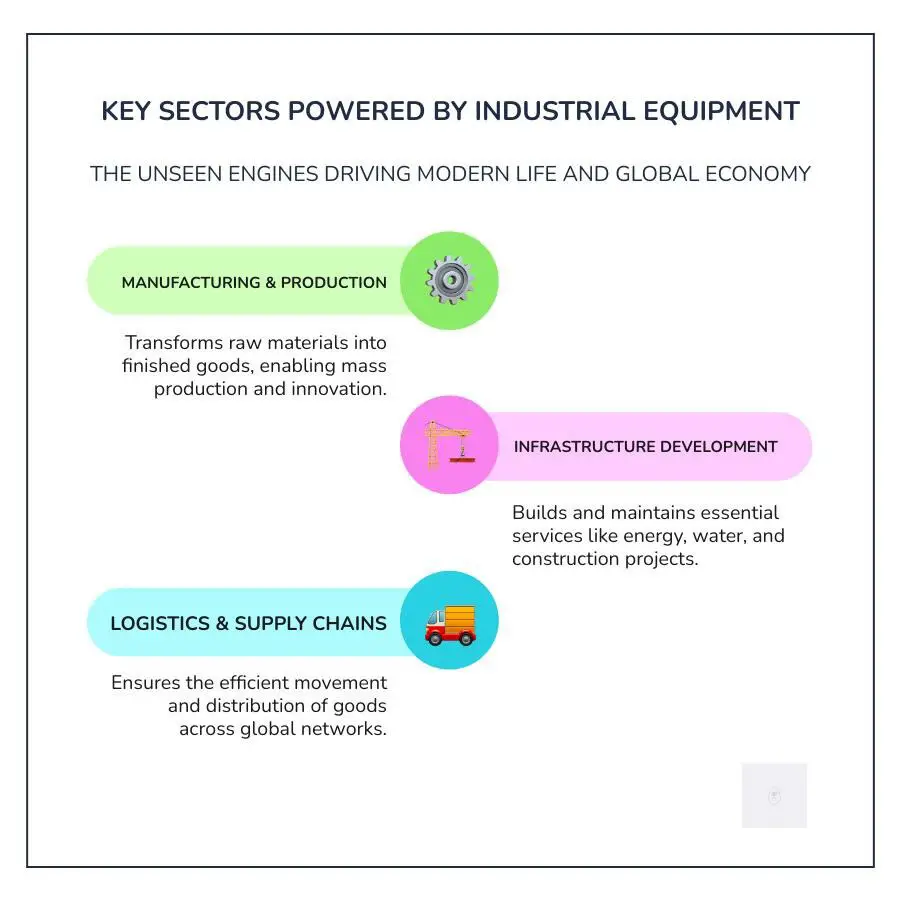
Industrial equipment encompasses a vast array of machinery, tools, and systems designed to facilitate manufacturing, production, construction, material handling, and other industrial processes. It is the physical capital that drives industries, enabling the change of raw materials into finished goods, the construction of vital infrastructure, and the efficient movement of products across global supply chains. Without this equipment, modern industry as we know it would grind to a halt. The global industrial equipment market was valued at a staggering USD 750.5 billion in 2022 and is projected to reach USD 1,050.8 billion by 2030, underscoring its indispensable role in the world economy.
Core Categories of Industrial Equipment
The sheer diversity of industrial equipment necessitates categorization to understand its scope and application better. We can broadly classify industrial equipment into several key categories:
- Manufacturing Machinery: This encompasses a wide range of equipment, including machine tools (such as lathes, mills, and grinders) that shape raw materials, as well as assembly line equipment, presses, and specialized fabrication machinery. These are the workhorses of factories, responsible for producing a wide range of products, from automotive parts to electronic components.
- Processing Tools: Equipment designed to alter the physical or chemical properties of materials. This category encompasses mixers, blenders, furnaces, boilers, heat exchangers, filters, and separators, which are used extensively in the chemical, food and beverage, pharmaceutical, and oil and gas industries.
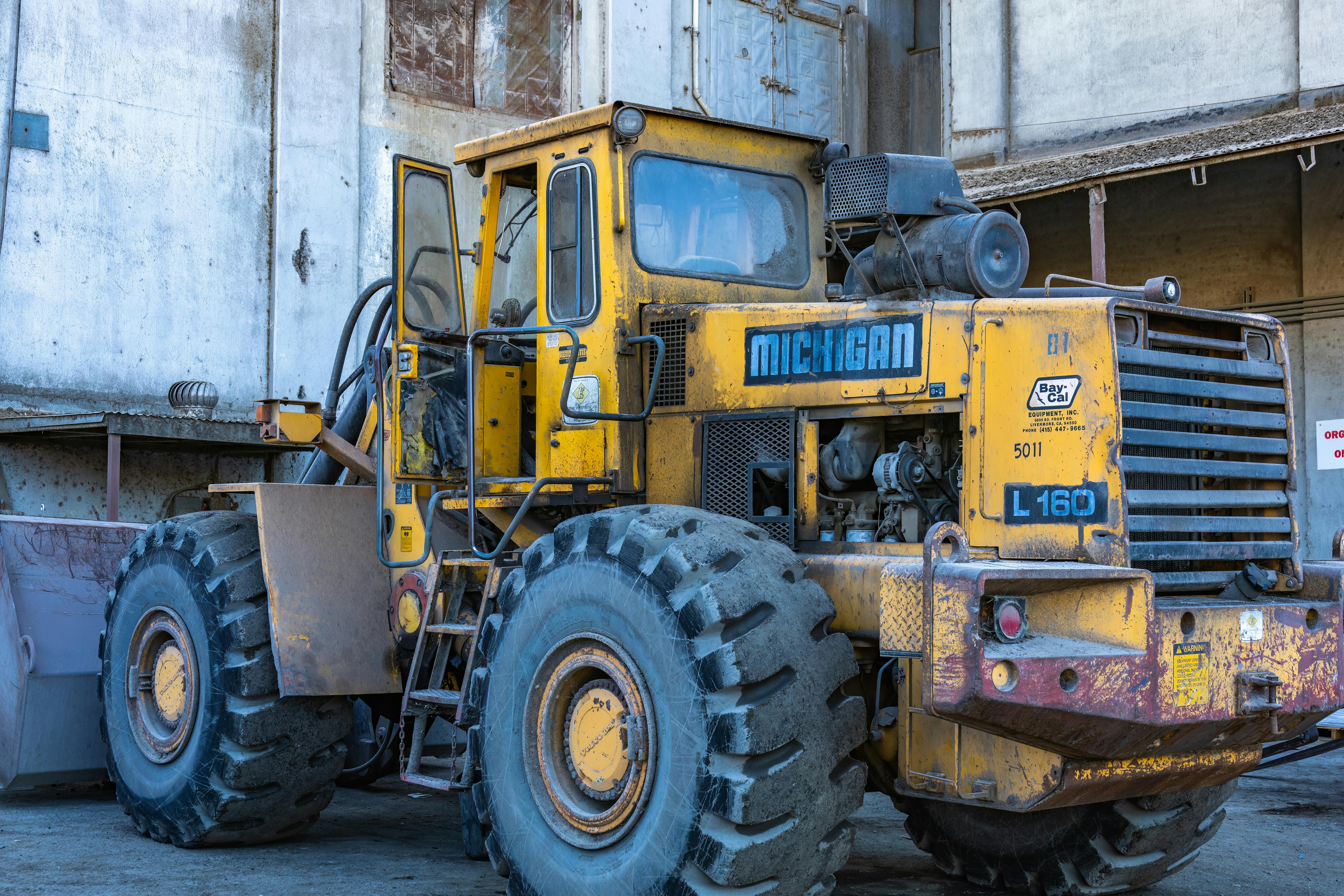
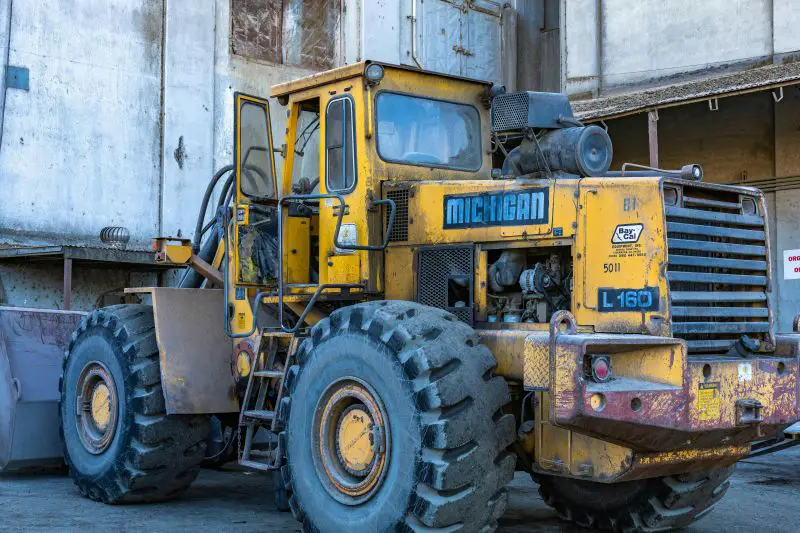
- Construction and Earthmoving Equipment: Large-scale machinery is vital for building infrastructure. This covers excavators, bulldozers, cranes, loaders, concrete mixers, and road paving equipment, shaping our physical world.
- Material Handling and Logistics Machinery: Essential for moving, storing, and controlling materials and products within factories, warehouses, and across transportation networks. This includes forklifts, conveyors, automated guided vehicles (AGVs), palletizers, and industrial truck trailer equipment. Global logistics are powered by industrial truck trailer equipment for moving goods efficiently from production facilities to distribution centers and ultimately to consumers.
- Infrastructure Components: While not always “machinery” in the traditional sense, these are critical engineered components that form the backbone of public utilities and industrial systems. This includes pumps, compressors, specialized valves, piping systems, and electrical distribution equipment. For instance, critical water systems depend on Industrial equipment valves to ensure reliability, manage flow, and prevent system failures in municipal and industrial water networks.
- Energy Production Equipment: Machinery used to generate, transmit, and distribute power. This includes turbines, generators, transformers, and specialized equipment for renewable energy sources. The energy sector relies on FDE Hydro hydropower equipment to generate clean power, highlighting the critical role of specialized machinery in sustainable energy solutions.
The Role Across Key Economic Sectors
Industrial equipment is not confined to a single sector; its applications span the entire economic landscape:
- Manufacturing: As the name suggests, this sector is heavily reliant on industrial equipment for mass production, precision engineering, and product assembly. From automotive to aerospace, consumer goods to heavy industry, specialized machinery is indispensable.
- Construction: Every building, road, bridge, and tunnel owes its existence to the powerful and precise capabilities of construction equipment.
- Mining: Extracting raw materials from the earth requires robust machinery capable of drilling, excavating, crushing, and transporting minerals under harsh conditions.
- Energy: From traditional power plants to solar farms and wind turbines, industrial equipment plays a central role in energy generation and distribution.
- Water and Wastewater Management: Complex networks of pumps, filters, and control systems, including advanced valves, ensure the delivery of clean water and the safe treatment of wastewater for communities and industries.
- Logistics and Transportation: Warehouses, ports, and transportation hubs rely on material handling equipment and vehicle fleets to manage the global flow of goods.
- Agriculture: Modern farming uses tractors, harvesters, irrigation systems, and processing equipment to maximize yield and efficiency.
The pervasive nature of industrial equipment underscores its fundamental contribution to global economic activity and our daily lives.
The Evolution and Future of Industrial Machinery
The journey of industrial equipment is a testament to human ingenuity, mirroring the broader arc of technological progress. From the rudimentary tools of early workshops to the interconnected, intelligent systems of today, its evolution has been relentless.
From Steam Power to Smart Factories
The first Industrial Revolution, powered by steam, introduced mechanical looms, steam engines, and early factory systems, laying the groundwork for mass production. The late 19th and early 20th centuries marked the era of electrification, which led to the development of assembly lines and specialized machinery that significantly increased production efficiency. This era witnessed the emergence of more sophisticated machine tools, advanced material handling systems, and the standardization of manufacturing processes.
The mid-20th century ushered in the age of automation, marked by the introduction of programmable logic controllers (PLCs) and early robotics, which enabled machines to perform tasks with minimal human intervention. Computer-aided design (CAD) and computer-aided manufacturing (CAM) further revolutionized precision and efficiency, allowing the creation of intricate components and complex systems with unprecedented accuracy. This continuous drive for efficiency, precision, and scale has shaped the industrial landscape for centuries.
The Rise of Industry 4.0 and Smart Industrial Equipment
Today, we are in the midst of Industry 4.0, a new industrial revolution characterized by the fusion of physical and digital technologies. This era is profoundly reshaping industrial equipment, making it smarter, more autonomous, and highly interconnected.
- Digitalization: The integration of digital technologies across all aspects of industrial operations allows for unprecedented data collection, analysis, and utilization. This data-driven approach optimizes performance, identifies bottlenecks, and enables informed decision-making.
- Automation and Robotics: Advanced robotics, including collaborative robots (cobots) that work alongside humans, is becoming more prevalent. These robots can perform complex tasks with high precision and adaptability, resulting in increased productivity and enhanced safety. The demand for advanced robotics in manufacturing is growing, with the global industrial robotics market projected to reach $79.5 billion by 2028.
- Industrial Internet of Things (IIoT): This involves embedding sensors, software, and other technologies into industrial equipment, enabling them to connect and exchange data over the internet. IIoT facilitates real-time monitoring, remote control, and predictive maintenance. The IIoT market is expected to reach $110.6 billion by 2028, driven by the need for data-driven decision-making and predictive maintenance.
- Artificial Intelligence (AI) and Machine Learning (ML): AI algorithms analyze vast amounts of data from industrial equipment to optimize processes, predict equipment failures, and even make autonomous adjustments. This leads to higher efficiency, reduced downtime, and proactive problem-solving.
- Digital Twins: Virtual replicas of physical industrial equipment or entire production lines. These digital models enable simulation, testing, and optimization in a virtual environment, allowing for changes to be implemented in the real world with reduced risks and accelerated innovation.
These trends are transforming factories into intelligent ecosystems where machines communicate, learn, and adapt, resulting in highly efficient, flexible, and resilient production environments. The global market for industrial automation and control systems is expected to reach $224.9 billion by 2027, growing at a CAGR of 7.4%, reflecting this profound shift.
Key Considerations: Safety, Sustainability, and Selection
The power and complexity of industrial equipment necessitate careful consideration of several critical factors. Beyond its operational capabilities, we must prioritize the safety of personnel, the environmental impact of operations, and the strategic selection of equipment to ensure long-term success.
Selecting the Right Equipment for the Job
Choosing industrial equipment is a significant investment that impacts productivity, operational costs, and overall business success. Several factors must be carefully evaluated:
- Total Cost of Ownership (TCO): This encompasses not only the initial purchase price but also includes installation, energy consumption, maintenance, spare parts, training, and eventual disposal costs. A lower initial cost might lead to higher operational expenses over the equipment’s lifespan.
- Efficiency and Productivity Metrics: We must assess how the equipment will integrate into existing workflows and improve output. This includes evaluating its throughput, speed, accuracy, and overall contribution to the production process.
- Energy Efficiency Ratings: With rising energy costs and environmental concerns, selecting equipment with high energy efficiency is crucial. This not only reduces operational expenses but also contributes to sustainability goals.
- Operator Safety Features: Modern industrial equipment comes with advanced safety mechanisms. We look for features like emergency stops, safety interlocks, protective guards, ergonomic designs, and clear warning systems to minimize the risk of accidents.
- Maintenance Schedules and Ease of Service: Equipment downtime is costly. We consider the manufacturer’s recommended maintenance intervals, the availability of spare parts, and the ease with which routine maintenance and repairs can be performed. Equipment designed for easy access to components and modular replacement can significantly reduce service time.
- Reliability and Durability Data: We evaluate the equipment’s track record for reliability and its expected lifespan under specific operating conditions. Investing in durable equipment from reputable manufacturers often translates to fewer breakdowns and a longer service life.
- Scalability and Flexibility: Can the equipment adapt to future production demands or changes in product lines? Flexible equipment can offer a better return on investment over time.
Prioritizing Safety and Sustainable Operations
Operating industrial equipment comes with inherent risks, making safety a paramount concern. Simultaneously, the environmental footprint of industrial activities demands a commitment to sustainable practices.
- Operator Training and Certification: Comprehensive training is non-negotiable. All personnel operating industrial equipment must receive thorough training on its proper use, safety features, and emergency procedures. Regular refresher courses and certifications ensure ongoing competency.
- Safety Protocols and Procedures: Implementing strict safety protocols, such as lockout-tagout procedures for maintenance, clear communication systems, and designated safe zones, is essential to prevent accidents. Regular safety audits and risk assessments help identify and mitigate potential hazards.
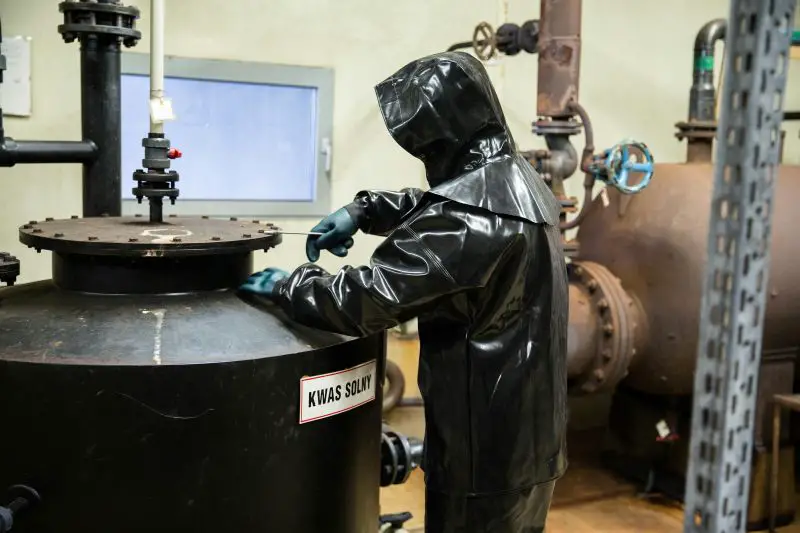
- Personal Protective Equipment (PPE): Mandating the use of appropriate PPE, including hard hats, safety glasses, hearing protection, gloves, and safety footwear, provides a critical layer of protection for workers.
- Energy Conservation: Beyond selecting energy-efficient equipment, we can implement practices like optimizing operational schedules, utilizing smart energy management systems, and ensuring proper insulation to reduce overall energy consumption.
- Waste Reduction and Management: Industrial operations often generate substantial amounts of waste. We focus on strategies to minimize waste generation, promote recycling, and safely dispose of hazardous materials. This includes optimizing material usage, implementing closed-loop systems, and exploring opportunities for material recovery.
- Eco-Friendly Materials and Processes: Where possible, we seek equipment manufactured with sustainable materials and processes. This also extends to the fluids and lubricants used in operations, opting for biodegradable or less toxic alternatives.
- Environmental Impact Assessments: Conducting regular environmental impact assessments helps us understand and mitigate the broader ecological effects of industrial operations, fostering a commitment to continuous improvement in sustainability.
By carefully considering these factors, we can ensure that industrial equipment not only drives productivity and profit but also operates safely and responsibly, contributing to a sustainable future.
Frequently Asked Questions about Industrial Equipment
We understand that industrial equipment can be complex. Here, we address some common questions to provide further clarity.
What is the difference between industrial equipment and heavy equipment?
Heavy equipment is a subcategory of industrial equipment, typically referring to large machinery used in construction and earthmoving, such as excavators, bulldozers, and cranes. Industrial equipment is a broader term that includes everything from heavy machinery to manufacturing tools, pumps, processing components, material handling systems, and even specialized valves. Essentially, all heavy equipment is industrial equipment, but not all industrial equipment is heavy equipment.
How is automation changing the industrial equipment landscape?
Automation is profoundly changing the industrial equipment landscape by increasing efficiency, improving safety, and enabling predictive maintenance. Robots and AI-powered systems can perform repetitive or hazardous tasks with greater precision and speed than humans, operate 24/7 without fatigue, and utilize data to predict failures before they occur, significantly reducing costly downtime. This shift allows human workers to focus on more complex, creative, and supervisory roles.
What are the most important safety practices when operating industrial machinery?
Key safety practices include comprehensive operator training and certification, regular equipment inspection and maintenance to ensure all components are in good working order, using appropriate personal protective equipment (PPE) such as safety glasses, gloves, and hearing protection, strictly following lockout-tagout procedures during maintenance or repair to prevent unexpected startup, and maintaining a clean and organized workspace to avoid slips, trips, and falls. Adherence to these practices is crucial for preventing accidents and ensuring a safe working environment.
Conclusion: Powering the Future of Global Industry
As we have explored, industrial equipment is far more than just machinery; it is the fundamental force behind our modern world. From the robust tools that build our cities and extract essential resources to the precision instruments that manufacture our goods and manage our vital utilities, its impact is pervasive and profound. We’ve seen how its evolution, from the dawn of the Industrial Revolution to the current era of Industry 4.0, has continuously pushed the boundaries of what’s possible, driving unparalleled economic growth and productivity.
The journey ahead promises even more transformative innovations. With the continued integration of automation, AI, and the Industrial Internet of Things, industrial equipment will become increasingly intelligent, autonomous, and interconnected. This will not only unlock new levels of efficiency and safety but also pave the way for more sustainable industrial practices, thereby reducing environmental impact and optimizing resource utilization. The global industrial equipment market’s projected growth reflects this ongoing momentum, highlighting its critical role in shaping our future.
The continued evolution of industrial machinery is crucial for addressing global challenges in infrastructure, logistics, and manufacturing. By embracing smart technologies, prioritizing safety, and committing to sustainability, we can ensure that industrial equipment remains the resilient backbone of an ever-advancing global industry, driving progress and prosperity for generations to come.
Also read:
How Industrial CT Scanning Uncovers Defects Invisible to Traditional Methods
How To Prolong Business Machinery Life?
Image source: