Click here to get this post in PDF
Understanding the Foundations of Tax Controversy Resolution
When facing the IRS, understanding the various stages of a tax controversy is paramount. It’s a journey that can begin with a simple inquiry and escalate to complex litigation. Our goal is to guide taxpayers through these processes, from initial IRS disputes and tax audits to administrative appeals and, if necessary, Tax Court petitions. Each step requires a strategic approach and a thorough understanding of tax law.
Audits and Examination Defense
An audit can be a daunting experience, but it’s a routine part of tax administration. The IRS conducts various types of audits, including field audits, where an agent visits your home or business, and desk audits, which are typically handled through correspondence. The key to a successful audit defense lies in understanding the burden of proof, which generally rests with the taxpayer. This means meticulously maintaining records and developing a robust documentation strategy. We emphasize the importance of presenting clear, organized evidence to substantiate all claims and deductions. Should initial audit findings be unfavorable, an audit reconsideration may be an option, allowing for a review of new information or a re-evaluation of existing facts.
Administrative Appeals and Litigation
If an audit results in a proposed adjustment you disagree with, the next step in tax controversy resolution often involves the IRS Appeals Office. This is an independent forum designed to resolve disputes without litigation. Taxpayers can request an appeal after receiving a Notice of Deficiency or a collection due process notice. For collection actions, a Collection Due Process (CDP) hearing, requested via Form 12153, allows taxpayers to challenge collection actions like levies or liens. If an agreement cannot be reached at the administrative level, taxpayers have the right to petition the U.S. Tax Court to challenge the Notice of Deficiency. This judicial review provides an impartial venue to argue your case before an independent judge, offering a critical safeguard against erroneous IRS assessments.
Tax Collection Mechanisms and IRS Wage Garnishment
The IRS has potent tools at its disposal to collect unpaid taxes, and wage garnishment is one of the most impactful. Unlike many private creditors, the IRS can often initiate wage garnishment without a court order, relying on its administrative powers. This process, often communicated through Form 668-W (Notice of Levy on Wages, Salary, and Other Income), directs an employer to withhold a portion of a taxpayer’s earnings and send it directly to the IRS. While there are federal limits on how much can be garnished, such as disposable income caps, these can still represent a significant financial burden. Understanding these specific IRS wage garnishment rules is crucial for anyone facing collection action.
Tax Controversy Resolution for IRS Levies
When the IRS issues a levy, it’s a serious matter that can quickly impact your financial stability. However, there are avenues for tax controversy resolution that can lead to garnishment releases or adjustments. We often assist clients in preparing financial statements, such as Form 433-A (Collection Information Statement for Wage Earners and Self-Employed Individuals) or Form 433-F (Collection Information Statement), to demonstrate financial hardship. These forms help the IRS understand your ability to pay and can be instrumental in negotiating a more manageable payment plan or even a temporary cessation of collection. In some cases, innocent spouse relief may be an option, protecting one spouse from tax liabilities incurred solely by the other.
Statute of Limitations and the 10-Year CSED
A common misconception is that all debts, including tax debts, simply disappear after seven years. While the seven-year mark is significant for credit reporting, the IRS operates under different rules. For tax collection, the primary limitation is the Collection Statute Expiration Date (CSED). Generally, the IRS has 10 years from the date a tax is assessed to collect it. This 10-year collection limit, however, is not absolute. Various events can “toll” or pause this period, effectively extending the time the IRS has to collect. For instance, filing for bankruptcy, entering into an installment agreement, or submitting an Offer in Compromise can all pause the CSED. This means that even if a tax debt is over 7 years old, it could still be actively collectible if the CSED was tolled. Understanding these nuances is critical, as an expired CSED could lead to garnishment releases.
Strategic Approaches to Resolving Federal and State Tax Issues
Navigating the complexities of federal and state tax issues requires a strategic and informed approach. Beyond simply paying the outstanding balance, there are several programs and statuses that can provide relief and help taxpayers regain financial stability. These include options like an Offer in Compromise (OIC), where the IRS may agree to accept a lower amount than what is owed, or qualifying for Currently Not Collectible (CNC) status due to financial hardship. Whether you’re dealing with current tax liabilities or historic debts, understanding these avenues is key to effectively resolving federal and state tax issues.
Settlement Programs and Installment Agreements
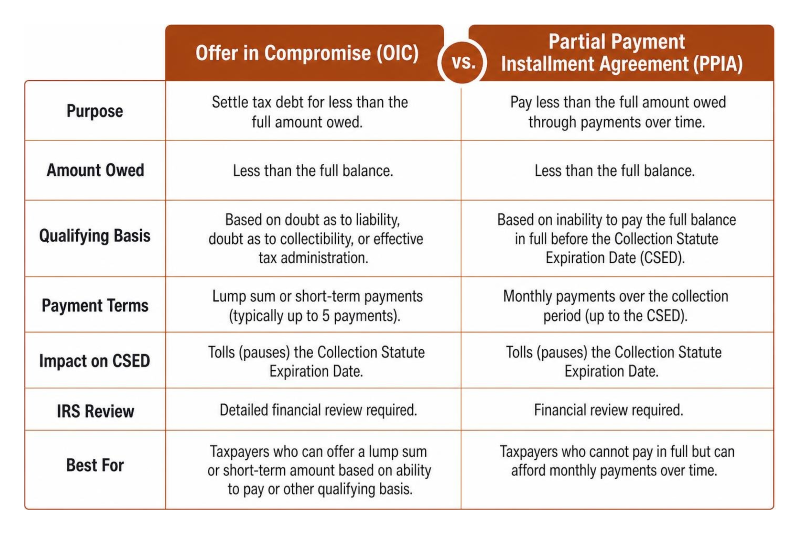
For taxpayers struggling with significant tax debt, settlement programs like the Offer in Compromise (OIC) can be a lifeline. An OIC allows certain taxpayers to resolve their tax liability with the IRS for a lower amount than the total owed, based on their ability to pay, equity in assets, income, and expenses. There are different bases for an OIC, including Doubt as to Liability (where there’s genuine doubt about the amount owed) and Doubt as to Collectibility (where there’s doubt the IRS could collect the full amount).
Alternatively, if a full settlement isn’t feasible, an Installment Agreement allows taxpayers to make monthly payments over time. This can range from a streamlined installment agreement for smaller debts to a more complex Partial Payment Installment Agreement, where the IRS accepts less than the full amount owed over the payment period. The IRS “fresh start” program initiatives have made some of these options more accessible, often including fee waivers for certain agreements.
Here’s a comparison of two key options:
Protecting Paychecks and Assets Through Tax Controversy Resolution
One of the most immediate concerns for taxpayers facing IRS collection is the protection of their income and assets. When the IRS issues a wage garnishment, a significant portion of a paycheck can be withheld. However, legal professionals can intervene to ensure wage exemption limits are respected and, in some cases, negotiate for a release or reduction. This is particularly important for those living paycheck to paycheck, where even a small garnishment can cause severe financial hardship. Beyond wages, the IRS can also impose bank account levies and property liens. Strategic tax controversy resolution can involve negotiating the release of these levies, challenging their validity, or pursuing property lien removal to free up assets. This includes addressing state tax controversies, which often have their own specific rules and collection mechanisms that require expert navigation.

Frequently Asked Questions About Tax Controversies
We encounter many common questions regarding tax debts and collection efforts, especially concerning the timelines involved. Here, we address some of the most pressing concerns taxpayers have about old debts and IRS actions.
Can the IRS garnish wages after 7 years?
This is a frequently asked question, and the answer is often yes. While the “7-year credit rule” is a common benchmark for how long negative information typically stays on your credit report, it does not apply to the IRS’s ability to collect tax debts. As discussed, the IRS generally has 10 years from the date of assessment to collect a tax liability, known as the Collection Statute Expiration Date (CSED). This 10-year period can be extended, or “tolled,” by various actions, such as filing for bankruptcy, entering into an Offer in Compromise, or requesting a Collection Due Process hearing. Therefore, a tax debt that originated more than 7 years ago could still be actively pursued by the IRS, including through wage garnishment, if the CSED has been tolled or has not yet expired. Unlike private creditors who often need to renew judgments, the IRS’s administrative authority allows it to bypass many of these procedural hurdles for federal tax exceptions.

What is the difference between a tax levy and a wage garnishment?
While often used interchangeably, a tax levy and a wage garnishment (which is a type of levy) have distinct applications. A tax levy is a broader term referring to the IRS’s legal seizure of property to satisfy a tax debt. This can include a bank account seizure, where funds are frozen and then taken, or the seizure of other assets like real estate or vehicles. A wage garnishment, specifically, is a continuous wage levy directed at your employer, requiring them to send a portion of your pay directly to the IRS until the debt is paid or the levy is released. Both involve the IRS taking your assets, but a wage garnishment targets your ongoing income stream, while other levies can target specific assets or funds held by third parties. In both cases, employer notifications are part of the process, and certain exempt income protection provisions may apply, but these are often limited for tax debts.
Does credit report removal stop tax debt garnishment?
No, the removal of a debt from your credit report does not stop tax debt garnishment. The 7-year credit purge rule, which dictates how long most negative items remain on a credit report, is a function of credit reporting agencies, not a limitation on the IRS’s legal enforceability. An IRS tax lien, for example, can remain on your credit report for much longer than seven years and can be re-filed. More importantly, even if a tax debt no longer appears on your credit report, the underlying liability to the IRS remains, and the IRS retains its full collection powers, including wage garnishment, until the CSED expires or the debt is satisfied. Therefore, relying on credit bureau reporting rules to resolve a tax debt is a critical mistake.
Conclusion
Navigating the intricate landscape of tax controversies and wage garnishment requires more than just a passing understanding of the rules. The common misconception that debts, especially tax debts, simply disappear after seven years can lead to significant financial peril. We have explored how the IRS’s unique collection powers, including the 10-year Collection Statute Expiration Date and its various tolling events, mean that wage garnishment can indeed occur well beyond the perceived seven-year limit.
From understanding the nuances of audits and administrative appeals to leveraging strategic settlement programs like Offers in Compromise and Installment Agreements, proactive tax defense is your strongest ally. Protecting your paychecks and assets from IRS levies and garnishments demands a thorough knowledge of your rights and the available resolution pathways.
Achieving financial freedom from tax debt hinges on statutory compliance and decisive action. Don’t let myths about debt timelines leave you vulnerable. Seek professional guidance to ensure you are employing the most effective strategies for your unique situation.
You may also like: Ex-HMRC Tax Inspector Amit Puri Confirms HMRC Has Already Written To Over 100,000 People About Making Crypto Tax Disclosures